The Battle of Civetot: The Decisive Defeat of The People's Crusade
1096 · Civetot, Turkey
The People's Crusade, part of the First Crusade, is decisively defeated by the Seljuk forces at the Battle of Civetot.
August 1, 1096
Peter the Hermit's army, part of the People's Crusade, reaches Hungary on its journey to the Holy Land. The People's Crusade was an unauthorized and unsanctioned series of popular movements, led by individuals like Peter the Hermit, before the official First Crusade began.
N/A, Hungary | N/A
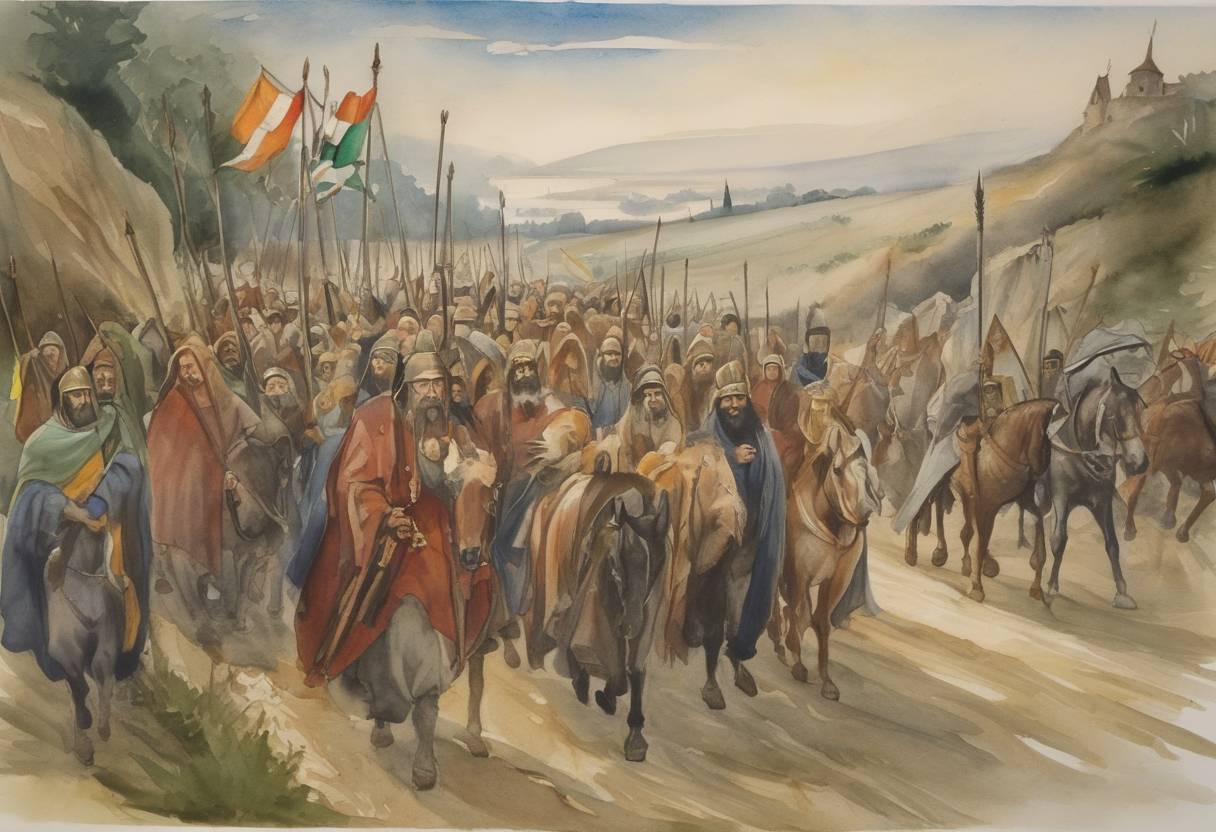
On August 1, 1096, Peter the Hermit’s army, part of what is known as the People’s Crusade, reached the borders of Hungary as part of their journey toward the Holy Land. This movement represented one of the earliest phases of the larger First Crusade, a religious campaign initiated in response to a call to arms by Pope Urban II in 1095 to assist Byzantine Christians and reclaim Jerusalem from Muslim control.
The People’s Crusade was characterized by mass enthusiasm and largely consisted of untrained and poorly equipped peasants and low-ranking knights. It was led by charismatic figures such as Peter the Hermit, a charismatic preacher from Amiens, who inspired thousands with his calls for religious duty and the prospect of spiritual salvation. Unlike the later, more organized phases of the First Crusade, this initiative lacked official sanction or noble leadership, making it precarious from the onset.
Beginning their expedition in April 1096, the People’s Crusade traversed Europe with limited supplies and preparation. Their route took them through regions where the local populations exhibited mixed reactions—ranging from hospitality to hostility—motivated by various socio-economic and political factors, including fear of the large, disorderly mass and the strain they placed on local resources.
Upon reaching Hungary, specifically around the city of Sopron near the border, tension began to escalate. King Coloman of Hungary, aware of the disorderly nature of the People’s Crusade and potential for unrest, was initially reluctant to allow such a large and unpredictable group to pass through his territory. However, negotiated agreements were eventually reached, allowing the passage through Hungary under strict conditions of discipline and order.
Nevertheless, Peter the Hermit’s forces, struggling with internal disorganization and shortages of food, often violated these agreements. This led to instances of looting and violence, further straining relations with local authorities. Such conflicts foreshadowed the challenges that would continue to plague the People’s Crusade as it proceeded through Byzantine lands towards its ultimate destination.
The experiences in Hungary highlighted the lack of cohesion within the People’s Crusade and exposed the difficulties of maintaining a coherent march without sufficient leadership or supplies. The challenges in Hungary were indicative of broader issues that the People’s Crusade would face, which ultimately resulted in disaster upon reaching Asia Minor, where many participants were killed in encounters with Turkish forces.
The movement, though largely unsuccessful in its immediate goals, underscored the fervent religious zeal and the complex socio-political contexts of the 11th century, marking a significant moment in the broader narrative of the Crusades and setting the stage for the later, more organized military efforts of the First Crusade.
Source: en.wikipedia.org