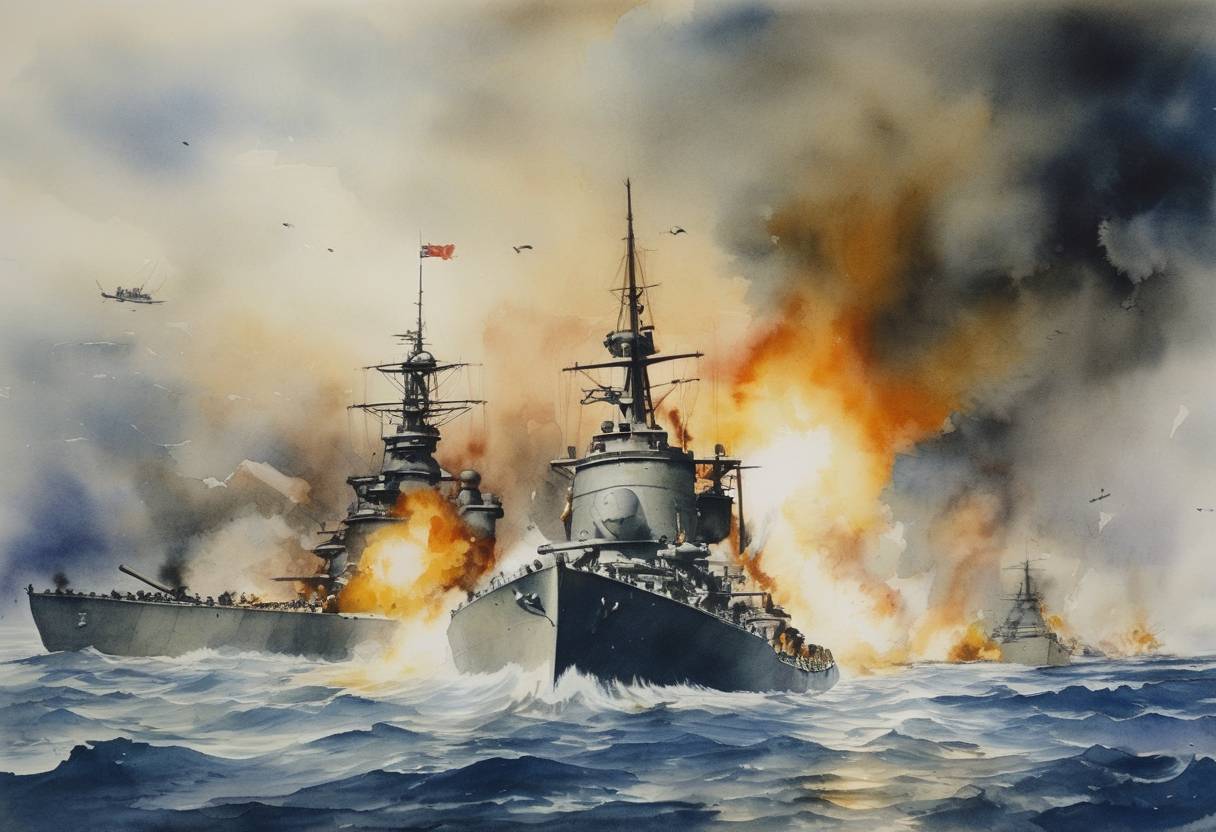
Battle of Leyte Gulf: Conclusion on October 26, 1944
The Battle of Leyte Gulf, which culminated on October 26, 1944, stands as one of the largest and most significant naval battles in history, marking a decisive victory for the Allied forces over the Imperial Japanese Navy during World War II.
Background
The battle was part of the Allied campaign to liberate the Philippines, with Leyte Island serving as a strategic objective. The engagement involved a series of separate clashes over several days, from October 23 to October 26, including notable battles in the Sibuyan Sea, the Surigao Strait, off Cape Engaño, and the Samar area.
Events Leading to October 26
Sibuyan Sea (October 24): The Japanese Center Force, led by Vice Admiral Takeo Kurita, suffered significant losses, including the battleship Musashi. Despite threats of further attacks from U.S. aircraft and submarines, Kurita’s forces pushed towards Leyte Gulf.
Surigao Strait (October 25): U.S. forces successfully repelled the Japanese Southern Force in a nighttime engagement, repeated Allied naval firepower decimated the opposing fleet.
Battle off Samar (October 25): The struggle between Kurita’s Center Force and a smaller U.S. escort carrier group resulted in a surprising defensive stand by the American units, delaying the Japanese advance.
October 26: Decisive Conclusion
Cape Engaño: The final phase of the battle involved an American attack on the Japanese Northern Force, which had been primarily established as a decoy with an inferior main body of aircraft carriers. On October 26, 1944, U.S. carrier planes from Task Force 38, led by Admiral William “Bull” Halsey, launched a series of strikes against remnants of the Japanese fleet. They succeeded in sinking the light aircraft carriers Chiyoda and Chitose, effectively eliminating the remaining threat.
Aftermath and Significance
The Allied victory at Leyte Gulf greatly diminished Japanese naval capabilities. The battle inflicted irreparable damage, leading to the loss of several battleships, carriers, and hundreds of aircraft. The defeat effectively ended Japan’s ability to conduct large-scale naval operations and safeguarded the U.S. landings on Leyte, paving the way for the liberation of the Philippines. The engagement underscored the strategic importance of air superiority and marked a turning point in the Pacific War.
Broader Historical Impact
Leyte Gulf reinforced the shift in naval warfare from traditional ship-to-ship conflict to carrier-based air power. The battle’s outcome hastened Japan’s retreat and contributed to the eventual Allied victory in the Pacific Theater. It remains a testament to the complexity and scale of naval warfare during World War II and a crucial moment in military history.