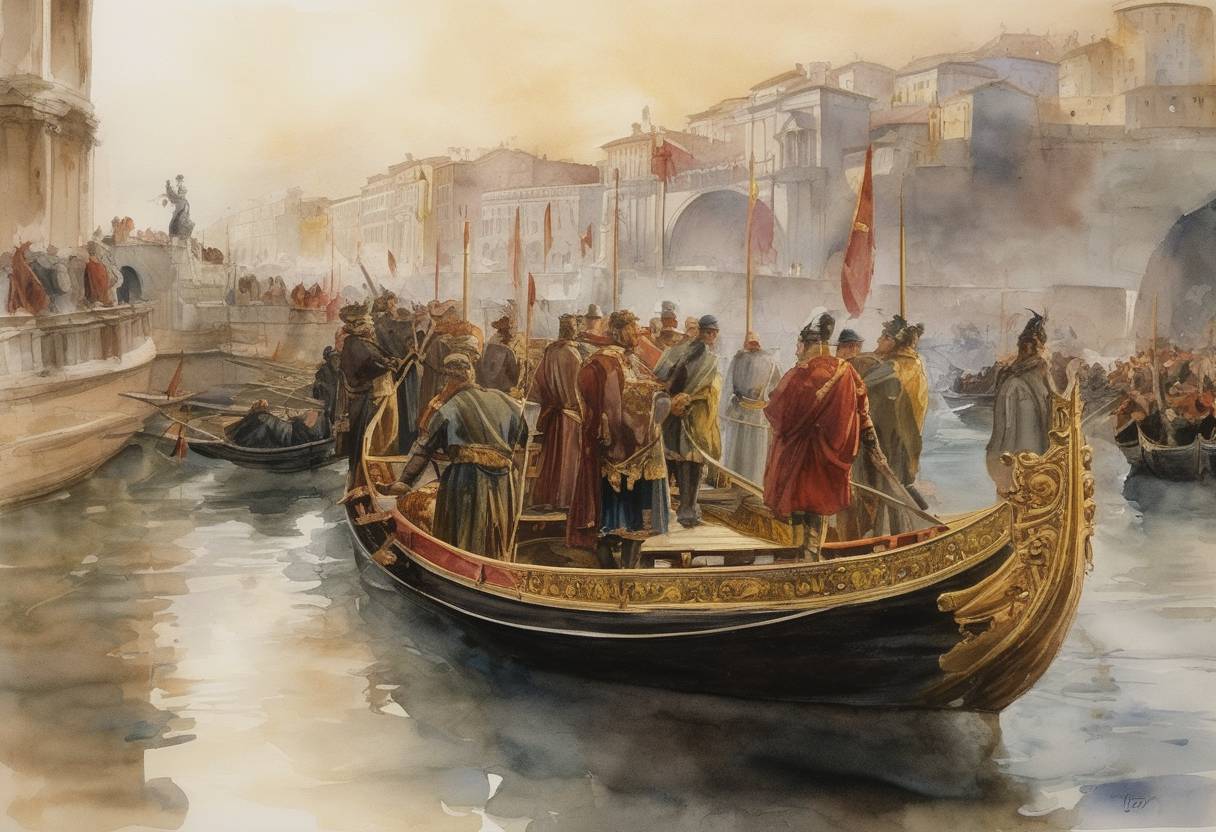
Emperor Henry IV’s Journey to Rome - June 22, 1101
On June 22, 1101, Emperor Henry IV embarked on an important journey to Rome. This voyage was a critical episode amidst the ongoing Investiture Controversy, a significant conflict in medieval Europe primarily involving the Papacy and the Holy Roman Empire, with broader implications for ecclesiastical and secular power.
Background of the Investiture Controversy
The Investiture Controversy originated in the mid-11th century, stemming from disputes over the right to appoint bishops and abbots. Traditionally, secular leaders like the Emperor exerted considerable influence over these appointments, but the Papacy sought to affirm its spiritual authority by reserving this right for itself. This struggle was framed as a broader question of spiritual versus temporal power.
Henry IV and Pope Paschal II
Emperor Henry IV’s relationship with the Papacy was tumultuous. He initially clashed with Pope Gregory VII, most famously resulting in the Walk to Canossa in 1077. By 1101, the conflict had evolved, with Pope Paschal II as the pontiff. Despite earlier attempts at reconciliation, Henry still faced significant challenges to his authority, both from within the empire and from Papal forces.
The Journey to Rome
Henry IV’s decision to travel to Rome in the summer of 1101 was driven by his desire to fortify his position as Emperor. It was a diplomatic mission likely aimed at negotiating with Pope Paschal II, seeking either reconciliation or at least mitigating conflicts that undermined his authority. During the journey, Henry IV had to contend with internal dissent from rebellious princes in his territories, as well as opposition from the Pope.
Historical Significance
Henry IV’s journey was emblematic of the broader power struggles that defined his reign. The Investiture Controversy eventually led to significant changes in the balance of power between the Holy Roman Empire and the Papacy, culminating in the Concordat of Worms in 1122, which partially resolved the dispute by delineating the authority of the Church and the Empire in appointments.
Henry IV’s actions on June 22, 1101, highlight the diplomatic and strategic efforts involved in managing the complexities of medieval European politics and the enduring conflict over the autonomy and influence of ecclesiastical institutions.