The Great Baltimore Fire of 1904
Overview
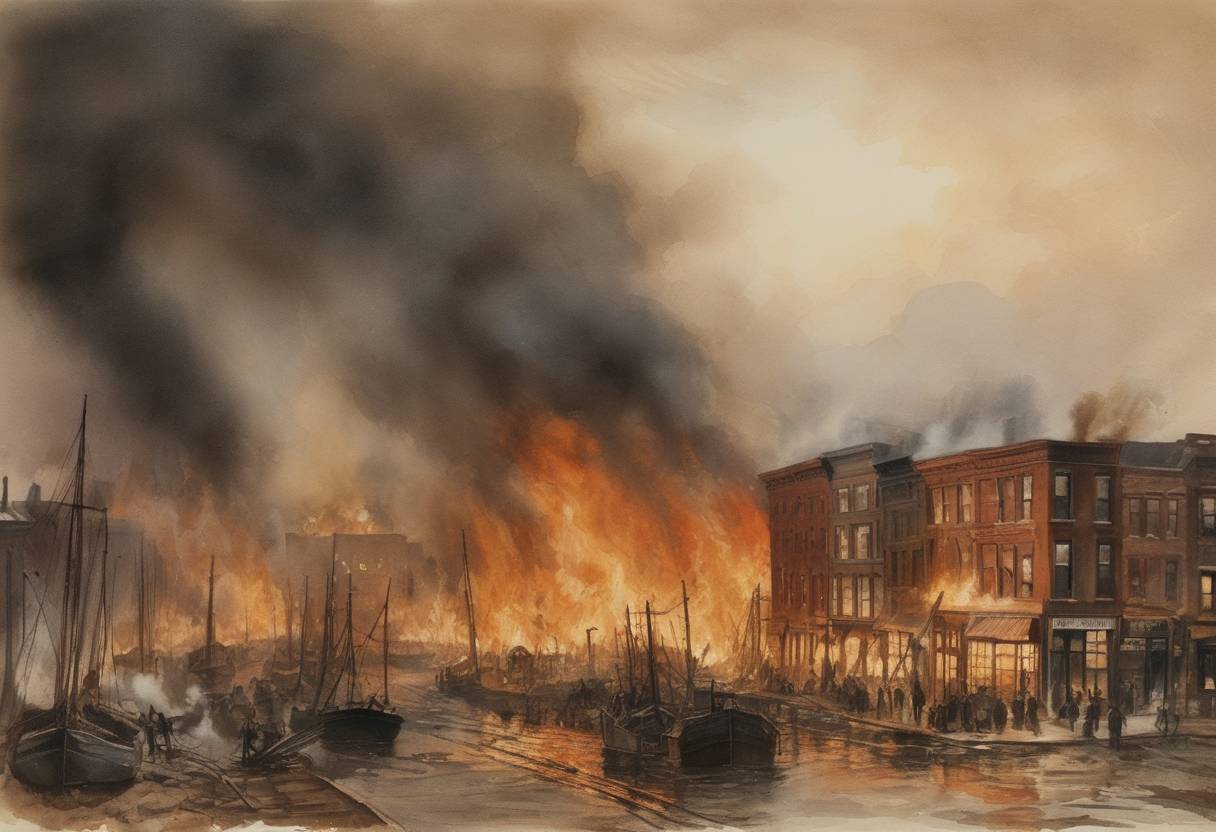
The Great Baltimore Fire commenced on Sunday, February 7, 1904, engulfing the downtown area of Baltimore, Maryland, and was not fully extinguished until 30 hours later. The conflagration became a defining moment in the city’s history, reshaping its urban landscape and influencing fire safety protocols nationwide.
Incident Timeline
- Origin: The fire is believed to have started at the John E. Hurst and Company building, a six-story dry goods store located at the intersection of German (now Redwood) and Liberty Streets.
- Spread: Fueled by high winds and the wooden, interconnected buildings of the era, the fire spread rapidly, engulfing significant portions of downtown Baltimore. Firefighters from nearby Washington D.C., Philadelphia, and further afield responded to the blaze, although many faced challenges due to incompatible hose thread sizes.
- Containment: The fire was eventually contained on the afternoon of February 8, after firefighters resorted to using explosives to create firebreaks, demolishing buildings to halt the fire’s spread.
Damage and Impact
- Destruction: The fire consumed over 1,500 buildings and covered an area of more than 140 acres. Despite the extensive property damage, there were few reported casualties.
- Economic Impact: The estimated financial loss reached \(80 million (equivalent to over \)2 billion today), devastating the local economy and leaving thousands unemployed.
- Reconstruction: The disaster led to a significant rebuilding effort that transformed Baltimore’s architectural landscape and improved building codes and planning. The calamity highlighted the need for standardized fire equipment, specifically the standardization of fire hose connections.
Broader Significance
- Firefighting Innovations: The disaster spurred improvements in urban firefighting strategies and infrastructure, including the establishment of uniform fire hydrant connections across the United States.
- Urban Development: The fire paved the way for modern fireproof construction standards and the development of modern urban planning principles, reshaping how cities across the nation prepared for and responded to large-scale emergencies.
The Great Baltimore Fire is remembered not only for its immediate impact on the city but also for its long-term influence on urban development and fire safety regulations, serving as a catalyst for change across the United States.