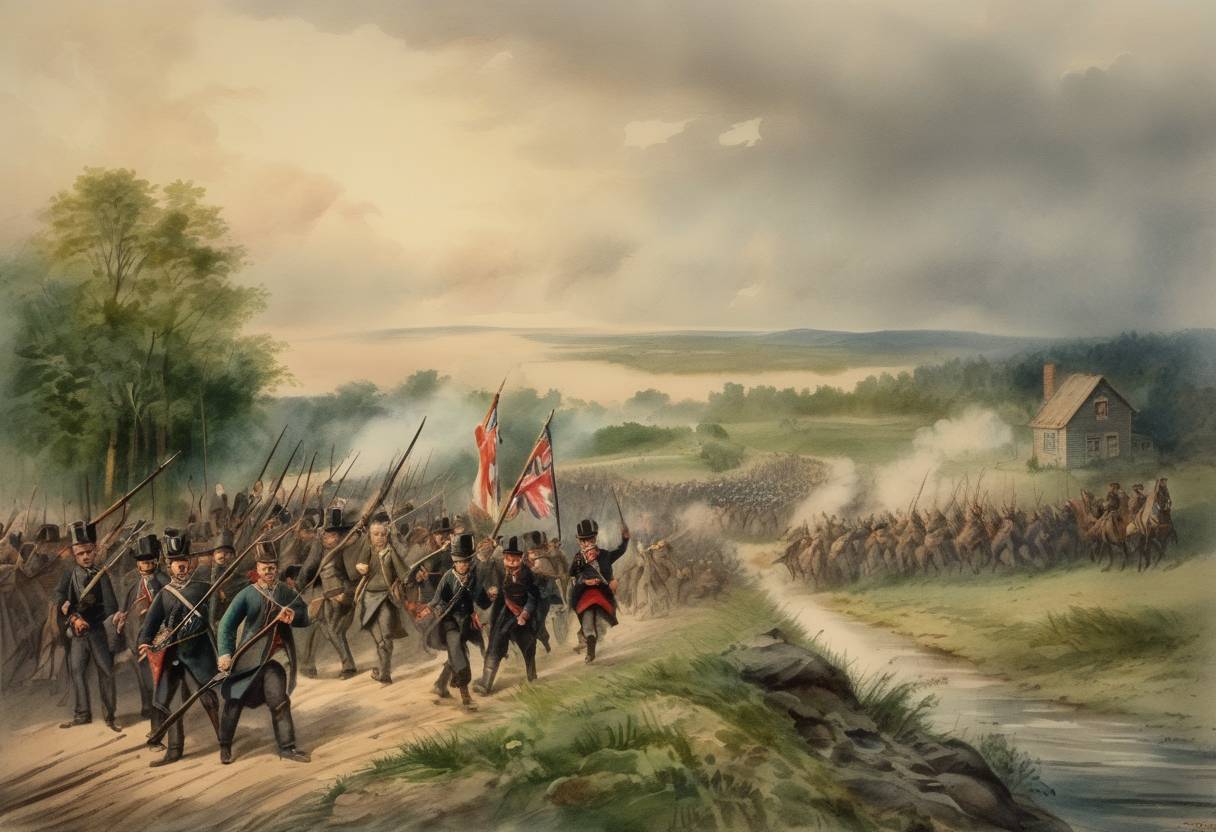
The Fenian Raids: Battle of Ridgeway
On May 31, 1866, the Fenian Brotherhood, a group of Irish nationalists based in the United States, launched a series of incursions into Canadian territory in their efforts to pressure Britain to withdraw from Ireland. The Fenians were comprised largely of Irish-American Civil War veterans, motivated by a desire to support Irish independence. This date marked the beginning of what would culminate in the Battle of Ridgeway on June 2, 1866, during the infamous Fenian Raids.
Background
Following the American Civil War, many Irish immigrants who had served in the Union Army returned to civilian life with military experience and a strong commitment to the cause of Irish nationalism. The Fenian Brotherhood believed that attacking British interests in Canada would compel the British government to negotiate regarding Ireland’s future.
The Invasion Begins
On May 31, 1866, approximately 800 Fenians crossed the Niagara River from Buffalo, New York, into Canada West (now Ontario), near the town of Fort Erie. They were led by John O’Neill, a prominent Fenian officer and ex-Civil War cavalry captain.
The Strategy
The Fenians aimed to capture territory in Canada, leveraging it as a bargaining chip to secure Irish independence. Their initial target was the strategically advantageous location at Ridgeway, intending to advance from there.
Outcome and Battle
The encounter at Ridgeway on June 2, 1866, saw Fenian forces engage with the Canadian militia. Despite being outnumbered, the Fenians, drawing on their military training and battlefield experience, managed to defeat the untested militia units in a skirmish marked by confusion and lack of coordination on the Canadian side.
Aftermath
Although initially successful, the Fenians could not sustain their occupation due to lack of reinforcements and logistical support. Under mounting pressure from both Canadian and American authorities, the Fenian forces retreated back to the United States.
Historical Impact
The Fenian Raids, particularly the Battle of Ridgeway, had significant implications:
- They prompted Canadian colonial governments to enhance their defense capabilities and consider their political unity, eventually contributing to discussions that led to Canadian Confederation in 1867.
- The raids further strained U.S.-British relations, despite U.S. authorities ultimately arresting and prosecuting Fenian ringleaders.
- In Ireland, these events underscored the transatlantic support for Irish independence, though they did not directly expedite Ireland’s freedom from British rule.
The Fenian Raids remain a key chapter in the complex web of North American and Irish political struggles during the 19th century.