The Battle of Plassey: June 23, 1757
1757 · Plassey, India
The Battle of Plassey took place, marking a decisive victory for the British East India Company over the Nawab of Bengal and his French allies, leading to British control over Bengal.
January 28, 1846
The Battle of Aliwal took place during the First Anglo-Sikh War, in which the British forces, led by Sir Harry Smith, defeated the Sikh army.
Aliwal, British India | British East India Company
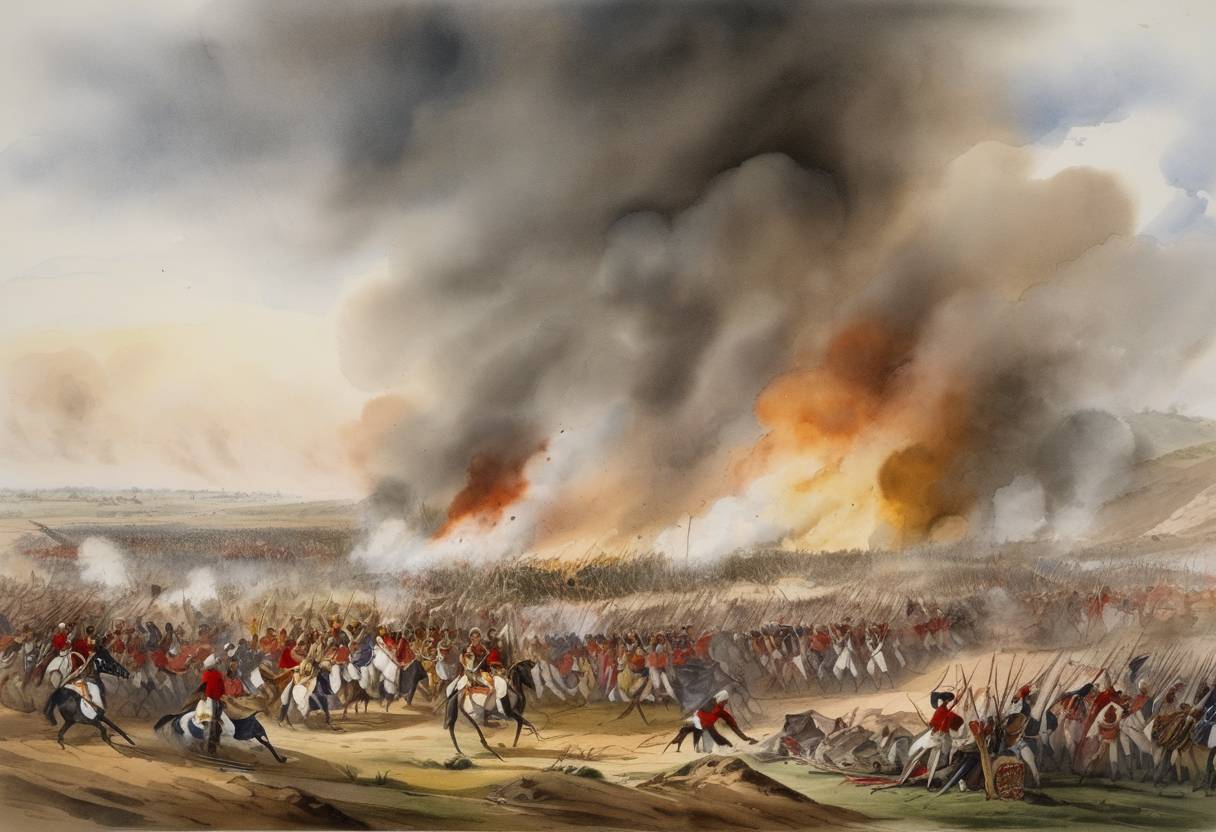
The Battle of Aliwal took place on January 28, 1846, during the First Anglo-Sikh War, a confrontation between the British East India Company and the Sikh Empire. This conflict resulted in a decisive victory for the British forces, which significantly impacted the course of the war.
The First Anglo-Sikh War (1845-1846) erupted due to tensions between the British East India Company and the Sikh Empire under Maharaja Ranjit Singh’s successors. After Ranjit Singh’s death in 1839, the once-cohesive state of Punjab was weakened by internal strife and became vulnerable to British expansionist interests. The ensuing hostilities eventually escalated into open conflict by the end of 1845.
Sir Harry Smith: A veteran of the Napoleonic Wars and the British commander, Major General Sir Harry Smith was tasked with confronting the Sikh forces. His leadership and tactical acumen were critical in securing a British victory.
Ranjodh Singh Majithia: The Sikh commander, Sardar Ranjodh Singh, led a formidable force intent on resisting British advances into the Punjab region.
The engagement occurred in the village of Aliwal, located on the banks of the Sutlej River. The Sikh forces, numbering around 10,000 men and supported by artillery, were positioned strategically to repulse the British advance. However, Smith’s shrewd and aggressive tactics dismantled the Sikh defenses.
British Strategy: Smith executed a series of disciplined maneuvers, effectively using his infantry and cavalry to outflank and disrupt the Sikh positions. His forces maintained steadfast formations despite heavy artillery exchanges.
Sikh Defense: The Sikhs, while valiant in their resistance, were hampered by inferior positioning and a lack of cohesive strategy. Their artillery, although robust, failed to sufficiently counter the mobile British units.
Turning Point: The battle’s tipping point was the capture of key villages and the folding of the Sikh flanks. Smith’s forces managed to turn the Sikh artillery against them, further compounding their defeat.
The British victory at Aliwal was pivotal in the overall campaign strategy against the Sikh Empire. It facilitated further advances into Punjab, diminishing the morale and operational capacity of the Sikh forces. This event accelerated the disintegration of Sikh resistance and paved the way for the British occupation of Punjab.
The Battle of Aliwal is remembered for its demonstration of British military prowess and the effective use of combined arms tactics. It remains a notable example of the British strategy during the colonial era, showcasing both the opportunities and challenges of expanding an empire in the Indian subcontinent. The conquest of Punjab that followed the First Anglo-Sikh War cemented British dominance over northern India and brought the entirety of present-day India under British control by the mid-19th century.
Source: www.britannica.com