John Wesley Charters the First Methodist Church in the United States
1784 · Baltimore, United States
John Wesley charters the first Methodist Church in the United States, marking a key development in the spread of Methodism.
June 1, 1837
The Congregational Church of Hudson, Ohio, is organized by 37 members, marking a significant development in the establishment of religious institutions in the American Midwest.
Hudson, USA | Congregational Church
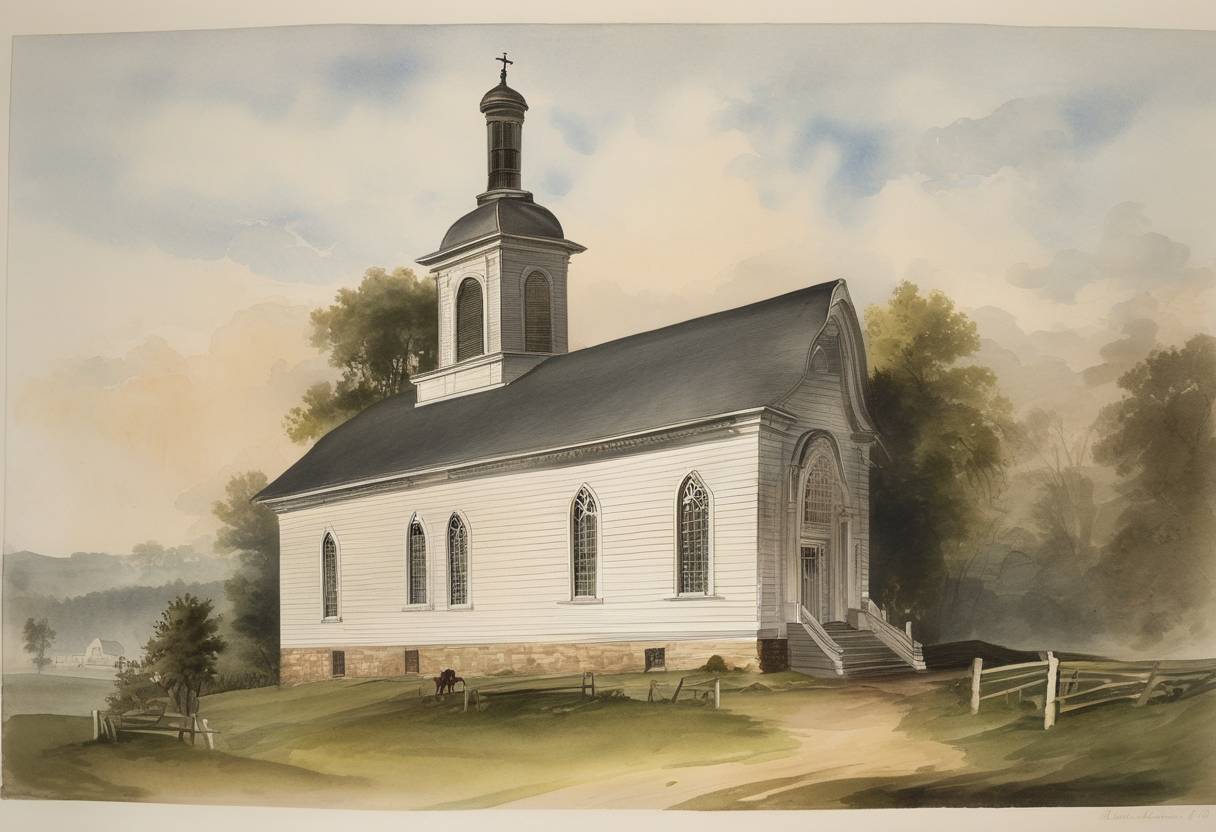
On June 1, 1837, The Congregational Church of Hudson, Ohio, was officially organized, marking an important moment in the establishment of religious institutions in the American Midwest. This event was a reflection of the broader westward expansion and settlement pattern that characterized the United States in the early 19th century.
The early 1800s in America were marked by a period of rapid growth and movement, often referred to as the “Second Great Awakening.” This was a Protestant religious revival that encouraged the spread of evangelical denominations and had a significant influence on the social fabric and religious landscape of the nation. Many settlers in the Midwest during this time originated from New England, bringing with them their religious traditions, including Congregationalism.
The formation of The Congregational Church in Hudson was emblematic of the spread of Congregationalist churches into Ohio’s Western Reserve. The Western Reserve was a region of northeastern Ohio that was initially claimed by Connecticut and settled by individuals from New England, where Congregationalism was predominant.
Charter Membership: Upon its founding, the church comprised 37 members. This initial group included notable figures within the community, who were likely instrumental in both the church’s establishment and in the broader development of Hudson as a center for learning and culture.
Architectural Impact: The establishment of the church contributed to the town’s architectural evolution, as the church building often served as a central point of community gatherings and civic discourse.
Cultural Influence: As was typical of Congregational churches, it likely played a significant role in Hudson’s cultural and educational development. Such churches often supported the establishment of schools and other community institutions, emphasizing the value placed on education and moral virtues aligned with religious teachings.
The creation of the Congregational Church in Hudson was an essential step in the religious and community development of the region. Over time, the church would serve not only as a place of worship but also as a community hub that facilitated social, educational, and civic initiatives.
In conclusion, the founding of The Congregational Church of Hudson, Ohio, on June 1, 1837, illustrates a significant phase in the westward spread of religious and cultural institutions, contributing to the unique historical and social landscape of the American Midwest.
Source: digitalheritage.org