Establishment of the March of Dimes
1938 · Washington D.C., United States
The March of Dimes was established by President Franklin D. Roosevelt as the National Foundation for Infantile Paralysis, aimed at combating polio.
March 26, 1953
Dr. Jonas Salk announces on a national radio show that he has successfully tested a vaccine against poliomyelitis, the virus that causes the crippling disease of polio.
Ann Arbor, United States | University of Pittsburgh
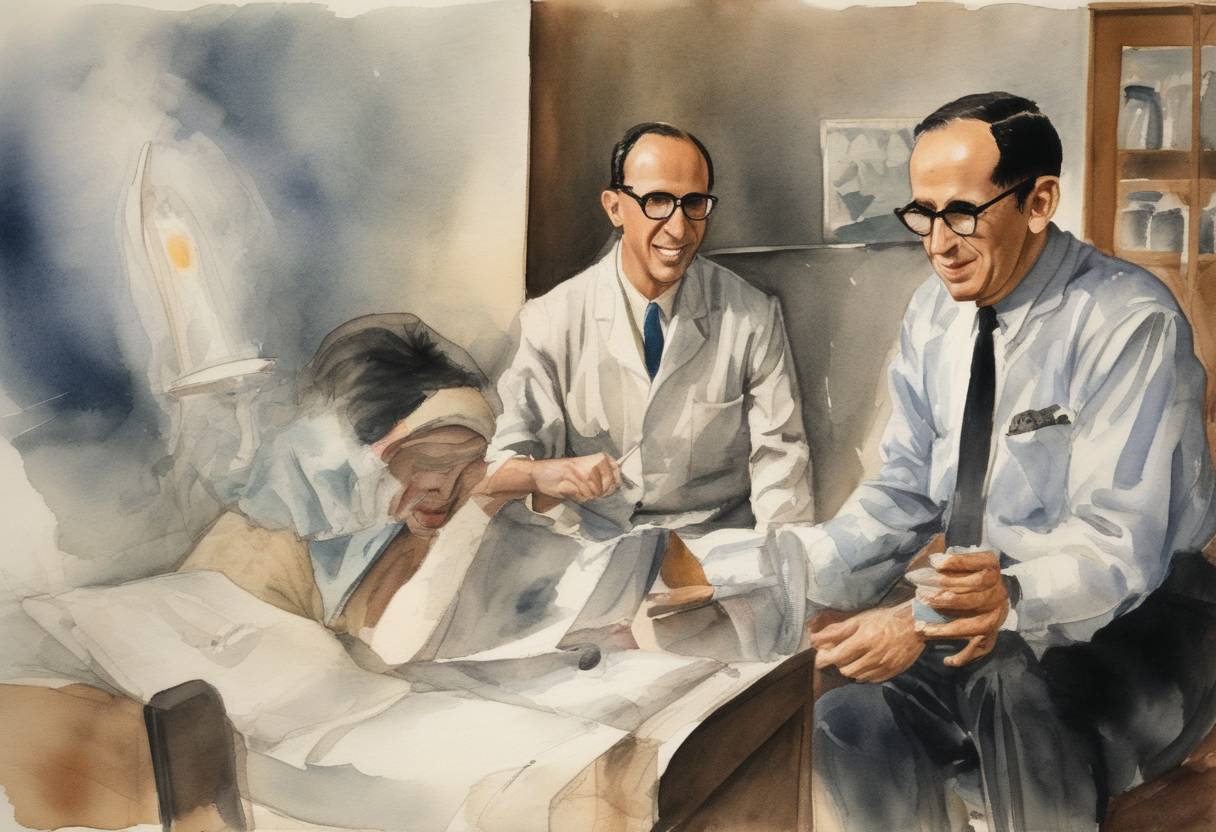
On March 26, 1953, Dr. Jonas Salk made a groundbreaking announcement on a national radio show, revealing that he had successfully tested a vaccine against poliomyelitis, a virus that causes the devastating disease polio. This announcement marked a significant milestone in medical history and public health.
Polio was a highly feared disease during the first half of the 20th century, primarily affecting children and leading to paralysis, with some cases resulting in death. Epidemics were common in the United States and worldwide, prompting an urgent need for a medical solution.
Salk, an American virologist and medical researcher, began his work on the polio vaccine in the early 1950s at the University of Pittsburgh. Unlike previous attempts to create a vaccine, Salk’s method focused on using a killed (inactive) version of the polio virus to stimulate immunity without causing the disease itself.
Upon completing initial laboratory tests and with promising results from pilot studies, Salk chose March 26, 1953, to publicly share his findings via a radio broadcast. He reported positive outcomes from trials conducted primarily on children and volunteers who received the vaccine, demonstrating its safety and effectiveness in preventing polio.
This announcement led to widespread optimism and was a prelude to the extensive field trials conducted in 1954. The success of Salk’s vaccine significantly reduced the incidence of polio. By 1955, the U.S. government had licensed the vaccine for widespread use, contributing to a dramatic decline in polio cases and bringing relief to millions globally. Ultimately, Salk’s discovery laid the foundation for the eventual eradication of polio in many parts of the world and heralded a new era of vaccine development.
Dr. Salk’s contribution to science and humanity is remembered as one of the greatest achievements in modern medicine, showcasing the profound impact of vaccines on global health.
Source: www.history.com