Queen Victoria Proclaimed Empress of India - January 1, 1877
1877 · Delhi, India
Queen Victoria was proclaimed Empress of India as part of the British Empire's structural reformation.
March 29, 1849
The United Kingdom formally annexes the Punjab region after the Second Anglo-Sikh War, marking the end of Sikh sovereignty and the expansion of British rule in India.
Punjab, India | British Empire
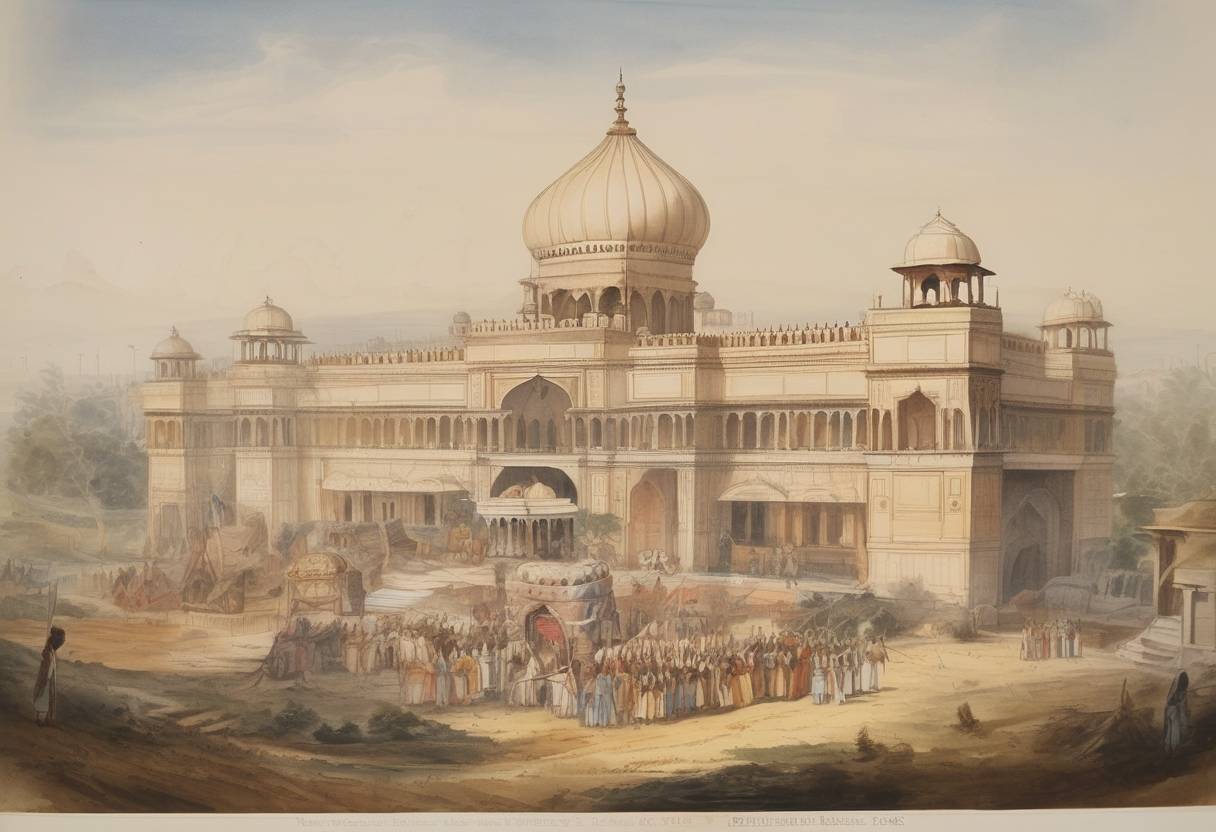
On March 29, 1849, the United Kingdom formally annexed the Punjab region following the conclusion of the Second Anglo-Sikh War. This event marked a significant expansion of British rule in India and the end of Sikh sovereignty in the region.
The Punjab region, located in the northwestern part of the Indian subcontinent, was a powerful and strategically important area. It was ruled by the Sikh Empire, which was established by Maharaja Ranjit Singh in the early 19th century. The empire was known for its military prowess and had maintained a degree of independence despite the growing influence of the British East India Company in India.
The First Anglo-Sikh War (1845-1846) was fought between the Sikh Empire and the British East India Company. The war ended with the Treaty of Lahore, which resulted in significant territorial concessions to the British and the imposition of a British resident in Lahore, effectively reducing Sikh autonomy.
Tensions remained high, leading to the Second Anglo-Sikh War (1848-1849). The conflict was sparked by political instability and revolts within the Sikh Empire, which the British used as a pretext to assert further control. The war culminated in the decisive Battle of Gujrat on February 21, 1849, where the British forces defeated the Sikh army.
Following the British victory, the Governor-General of India, Lord Dalhousie, decided to annex the Punjab region. On March 29, 1849, the formal proclamation of annexation was made, and the Punjab became a part of British India. The young Maharaja Duleep Singh, the last ruler of the Sikh Empire, was deposed and later exiled to Britain.
The annexation of the Punjab was a pivotal moment in the history of British India. It demonstrated the British strategy of using military force and political maneuvering to expand their empire. The event also set the stage for further colonial expansion and consolidation in the Indian subcontinent, shaping the region’s history for decades to come.
Source: en.wikipedia.org