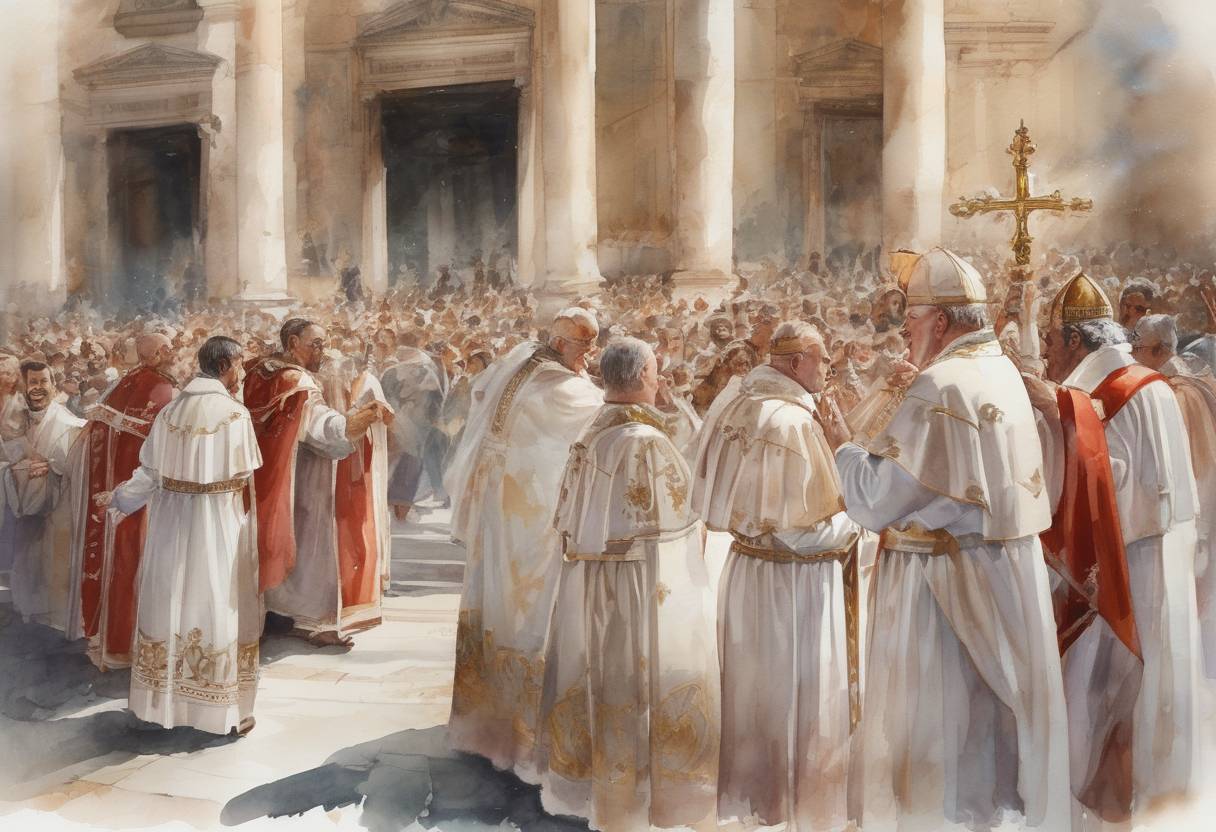
Election of Pope Eugene I
On August 10, 654, Eugene I was elected as the 75th pope of the Roman Catholic Church, succeeding Pope Martin I. This election took place under complex and challenging circumstances, reflecting the intricate interplay between religious and political powers of the time.
Context and Background
Pope Martin I’s Exile: Pope Martin I, Eugene’s predecessor, had been exiled by the Byzantine Emperor Constans II. This was primarily due to Martin’s opposition to the Monothelitism doctrine, which was supported by the emperor. Monothelitism proposed that Christ had a single divine will, a theological stance that Martin I and the Roman Church rejected as heretical.
Byzantine Influence: The Byzantine Empire exerted significant influence over the papacy during this period. The emperor’s ability to exile a pope underscored the tension between the Eastern and Western branches of Christianity and the political leverage the Byzantine rulers held over the papal office.
Election of Eugene I
Eugene I’s Ascension: Eugene I was elected pope while Martin I was still alive, albeit in exile. This unusual circumstance was a result of the Byzantine-imposed vacancy in the papal office, necessitating a new leader for the Church in Rome.
Character and Leadership: Known for his piety and diplomatic skills, Eugene I was seen as a conciliatory figure. His election was likely influenced by the need for a pope who could navigate the delicate relationship with the Byzantine authorities while maintaining the doctrinal integrity of the Church.
Papacy of Eugene I
Diplomatic Challenges: Eugene I’s papacy was marked by efforts to balance the demands of the Byzantine Empire with the theological positions of the Roman Church. He faced the ongoing challenge of addressing the Monothelitism controversy without provoking further conflict with the emperor.
Legacy: Eugene I’s tenure as pope was relatively short, lasting until his death in 657. Despite the brevity of his papacy, he is remembered for his efforts to maintain the Church’s independence and doctrinal purity during a period of significant external pressure.
Historical Significance
Church and State Relations: The election of Eugene I highlights the complex relationship between the Church and secular powers, particularly the Byzantine Empire, during the early medieval period. It underscores the challenges faced by the papacy in asserting religious authority while navigating political realities.
Theological Controversies: The events surrounding Eugene I’s election and papacy are emblematic of the broader theological disputes that characterized early Church history, particularly the debates over Christological doctrines.
In summary, the election of Pope Eugene I on August 10, 654, was a pivotal moment in the history of the papacy, reflecting the intricate dynamics between religious leadership and imperial politics during a time of theological and political upheaval.