Desmond Doss Receives the Medal of Honor
1945 · Washington, D.C., United States
Conscientious objector Desmond Doss receives the Medal of Honor for his actions during the Battle of Okinawa in World War II.
July 16, 1945
The United States conducts the first test of a nuclear weapon, codenamed Trinity, in the New Mexico desert.
Alamogordo, United States | United States Army
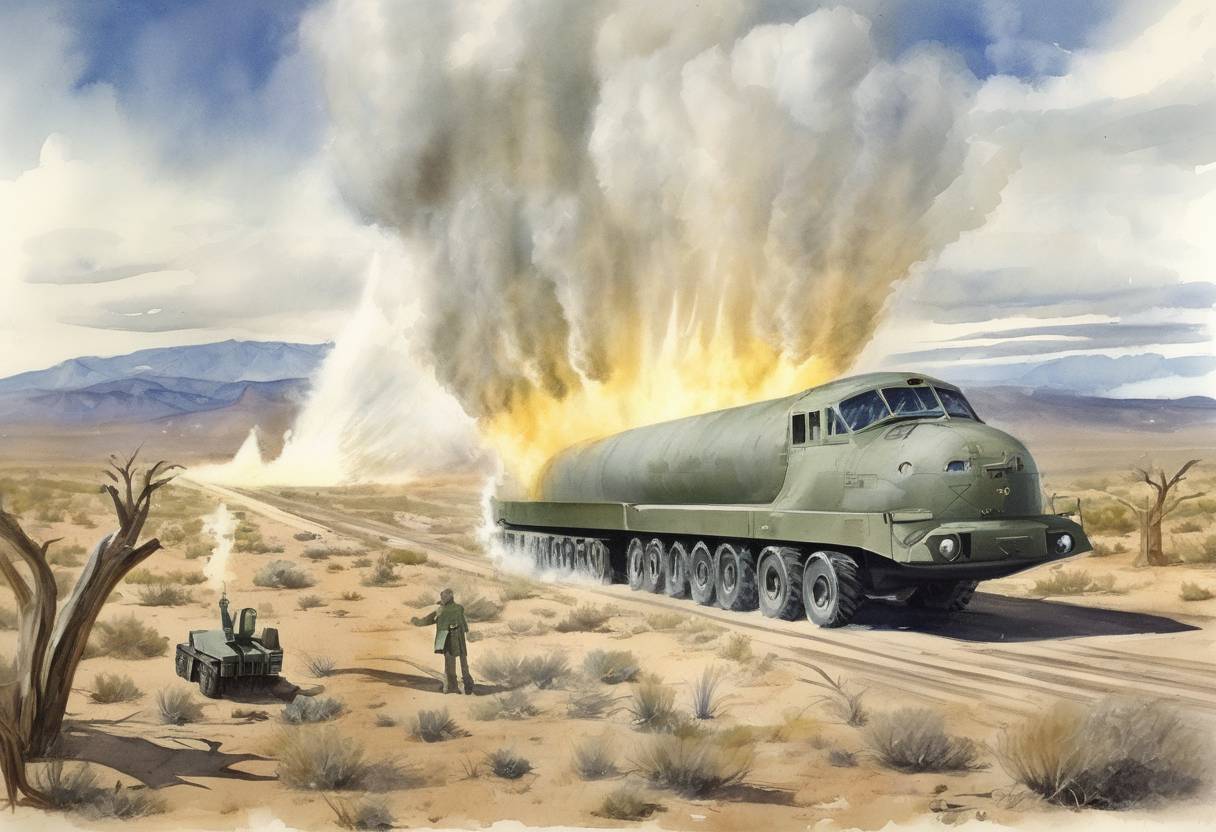
On July 16, 1945, the United States conducted the first successful test of a nuclear weapon, codenamed “Trinity,” in the New Mexico desert. This pivotal event marked a significant moment in history, as it was the first detonation of an atomic bomb, ushering in the nuclear age.
The Trinity Test was part of the Manhattan Project, a top-secret research and development initiative during World War II aimed at building an atomic bomb. The project was a response to fears that Nazi Germany was developing its own nuclear weapons. Led by physicist J. Robert Oppenheimer, the project brought together some of the greatest scientific minds of the time, including Enrico Fermi, Richard Feynman, and Niels Bohr.
The test took place at the White Sands Proving Ground, located in the Jornada del Muerto desert in New Mexico. The site was chosen for its remote location, which provided a measure of secrecy and safety from populated areas.
At precisely 5:29:45 a.m. local time, the plutonium-based implosion-type bomb was detonated atop a 100-foot steel tower. The explosion produced a flash of light visible for over 200 miles and a mushroom cloud that rose to over 40,000 feet. The energy released was equivalent to approximately 20 kilotons of TNT, far exceeding the expectations of the scientists involved.
The success of the Trinity Test confirmed the viability of nuclear weapons and had immediate implications for the ongoing war in the Pacific. Just weeks later, atomic bombs were dropped on the Japanese cities of Hiroshima and Nagasaki in August 1945, leading to Japan’s surrender and the end of World War II.
The Trinity Test not only demonstrated the destructive power of nuclear weapons but also initiated a new era in international relations and military strategy. It sparked a nuclear arms race during the Cold War and raised ethical and moral questions about the use of such weapons.
The successful test solidified the United States’ position as a dominant military power post-World War II. It also led to the establishment of policies and treaties aimed at controlling nuclear proliferation, such as the Treaty on the Non-Proliferation of Nuclear Weapons (NPT).
In summary, the Trinity Test on July 16, 1945, was a landmark event that had profound and lasting impacts on global politics, warfare, and scientific research. Its legacy continues to influence discussions on nuclear energy and disarmament today.
Source: en.wikipedia.org