Thomas Edison Receives Patent for the Electric Incandescent Lamp
1880 · Menlo Park, United States
Thomas Edison receives the patent for the electric incandescent lamp.
February 19, 1878
Thomas Edison patented the phonograph, a device for the mechanical recording and reproduction of sound.
Menlo Park, United States | Edison Speaking Phonograph Company
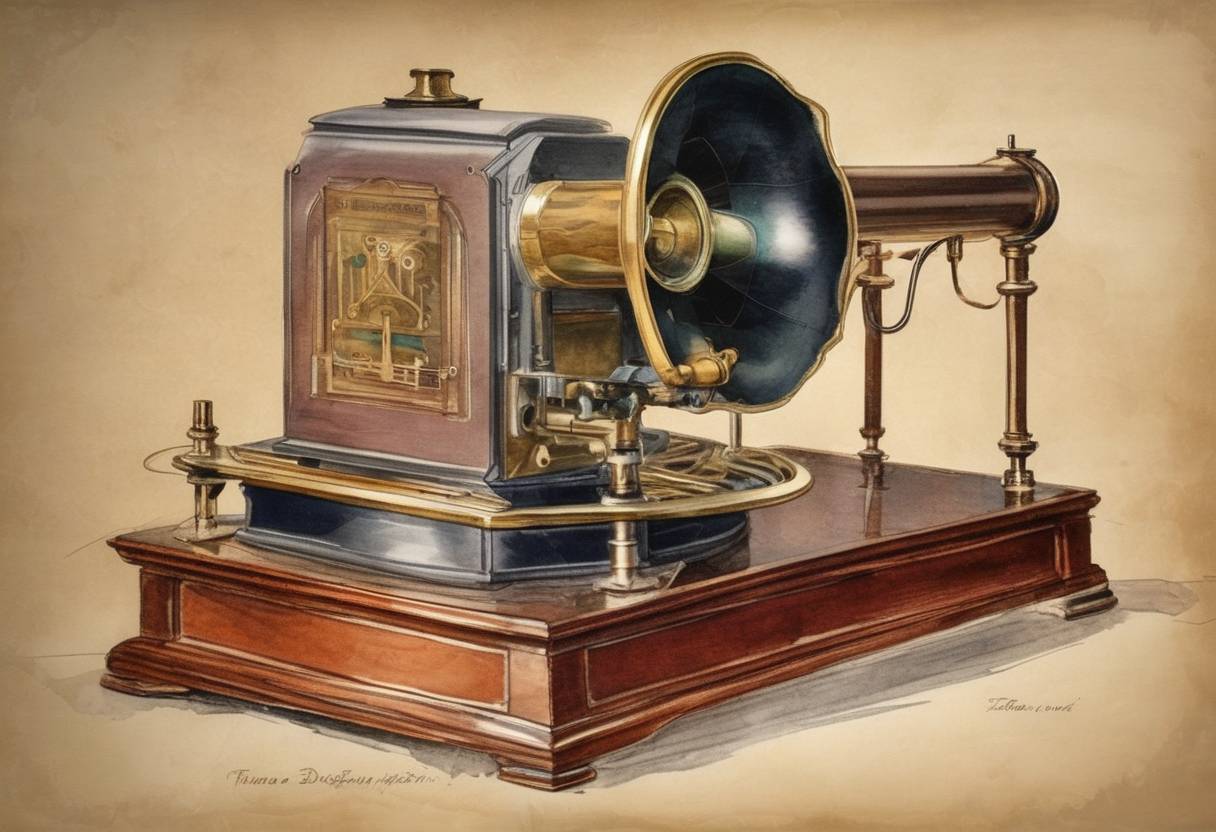
On February 19, 1878, Thomas Edison was granted U.S. Patent No. 200,521 for his invention of the phonograph, a groundbreaking device for the mechanical recording and reproduction of sound. This invention marked a significant milestone in the history of audio technology and had far-reaching implications for the music industry, communication, and entertainment.
Thomas Edison, often referred to as “The Wizard of Menlo Park,” was an American inventor and businessman who held over 1,000 patents. Prior to the phonograph, Edison had already achieved fame with his invention of the electric light bulb. The phonograph, however, was one of his most original and influential inventions.
The phonograph was the first device capable of both recording and reproducing sound. Edison’s original design consisted of a cylinder wrapped in tin foil, which was rotated by a hand crank. Sound vibrations were captured by a diaphragm and a stylus, which etched the vibrations onto the foil as grooves. When the process was reversed, the stylus would trace the grooves, and the diaphragm would reproduce the original sound.
The phonograph was revolutionary because it introduced the concept of recorded sound, which had previously been unimaginable. It paved the way for the development of the music industry, allowing for the mass production and distribution of music. It also had applications in business, education, and entertainment, influencing the way people consumed media.
Edison’s phonograph not only showcased his inventive genius but also laid the foundation for the modern audio industry, influencing countless technological advancements and cultural shifts in the years to come.
Source: en.wikipedia.org