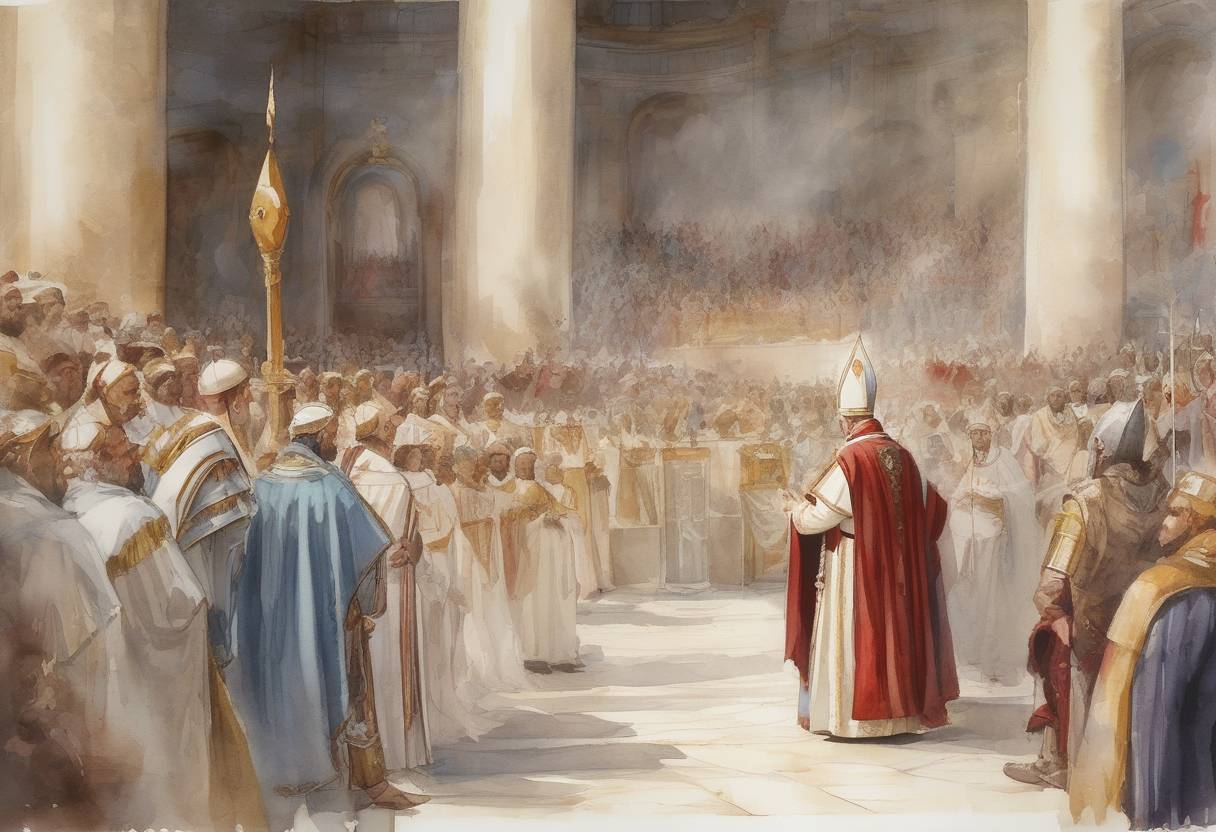
Pope Sylvester I Begins His Papacy
On January 31, 314, Pope Sylvester I began his papacy, succeeding Pope Miltiades. His tenure as the Bishop of Rome marked a significant period in the early Christian Church, coinciding with the reign of Emperor Constantine the Great and the aftermath of the Edict of Milan.
Context and Background
Predecessor: Pope Miltiades, who served from 311 to 314, was known for his role during the time when Christianity was transitioning from a persecuted faith to one that was increasingly accepted within the Roman Empire. His papacy saw the issuance of the Edict of Milan in 313, which granted religious tolerance to Christians.
Constantine the Great: The Roman Emperor Constantine played a crucial role in the history of Christianity. His conversion to Christianity and subsequent policies greatly influenced the Church’s development and its relationship with the Roman state.
Key Events During Sylvester I’s Papacy
Council of Nicaea (325): Although Pope Sylvester I did not attend the First Council of Nicaea personally, he was represented by legates. This council was pivotal in addressing the Arian controversy and establishing the Nicene Creed, which articulated foundational Christian beliefs.
Construction of Major Churches: Under Constantine’s patronage, significant church buildings were constructed during Sylvester’s papacy, including the original St. Peter’s Basilica and the Basilica of St. John Lateran. These constructions symbolized the newfound prominence and acceptance of Christianity within the Roman Empire.
Relations with Constantine: Sylvester’s papacy was marked by a cooperative relationship with Emperor Constantine, which helped to solidify the Church’s influence and authority. This period saw the beginning of the intertwining of church and state affairs.
Aftermath and Significance
Legacy: Pope Sylvester I’s papacy is remembered for its role in the early establishment of the Church’s structures and doctrines. His leadership during a time of significant transition helped lay the groundwork for the Church’s future development.
Canonization: Sylvester I was later canonized as a saint, and his feast day is celebrated on December 31 in the Roman Catholic Church.
Pope Sylvester I’s papacy was a defining era for the early Christian Church, characterized by its growing legitimacy and influence within the Roman Empire. His leadership during this transformative period helped shape the future of Christianity.