Liberation of Saint-Pierre-le-Moûtier by Joan of Arc
1429 · Saint-Pierre-le-Moûtier, France
Joan of Arc liberated Saint-Pierre-le-Moûtier in the Loire Valley during the Hundred Years' War.
May 7, 1429
Joan of Arc led the French army in the successful lifting of the Siege of Orléans during the Hundred Years' War, marking a turning point in favor of the French against the English.
Orléans, France | French Army
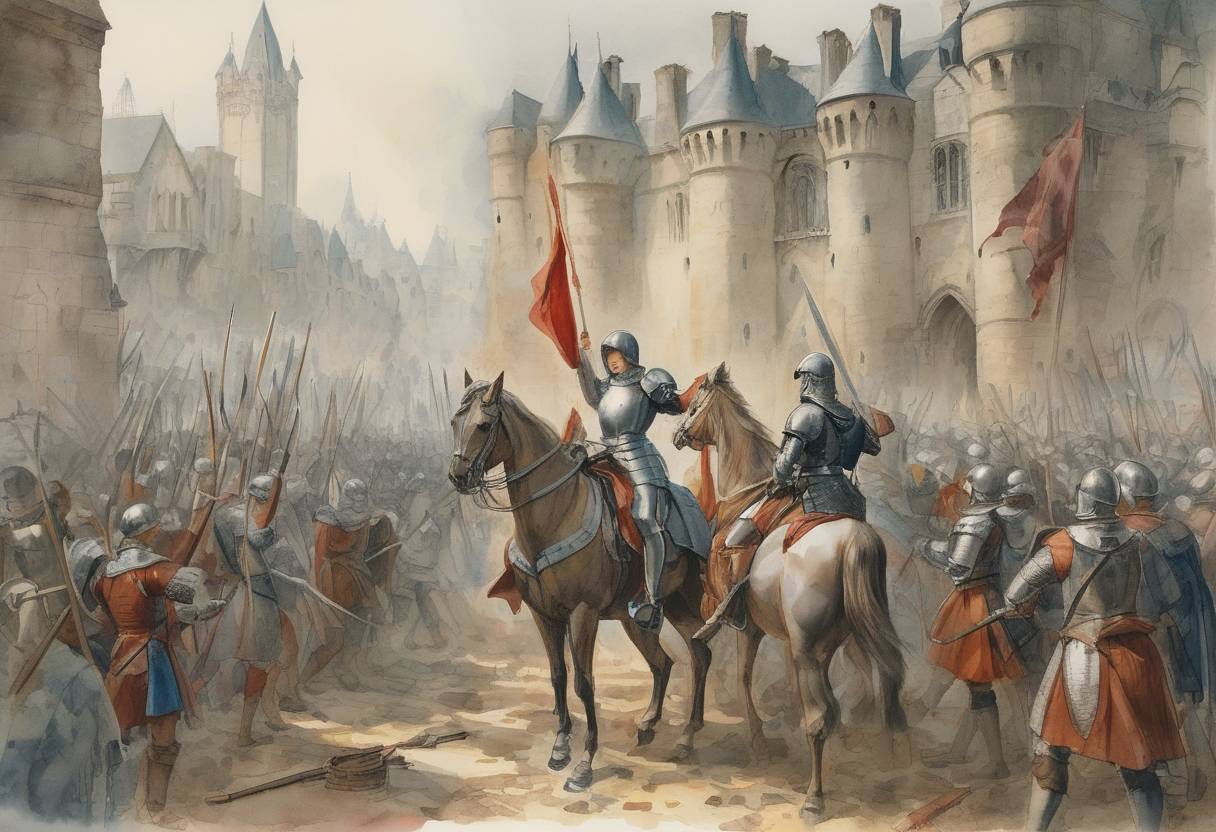
The Siege of Orléans, a pivotal event during the Hundred Years’ War, marked a significant turning point in favor of the French forces against the English. On May 7, 1429, Joan of Arc, a young peasant girl who claimed divine guidance, played a crucial role in lifting the siege, altering the course of the war.
The Hundred Years’ War (1337-1453) was a protracted conflict between the Kingdom of England and the Kingdom of France, primarily over claims to the French throne. By the early 15th century, the English had gained substantial ground in France, controlling large territories. The city of Orléans, located on the Loire River, was strategically vital for the French as it served as a gateway to the southern part of the country.
In October 1428, English forces, led by the Earl of Salisbury, began the siege of Orléans. The city’s fall would have opened the path for the English to advance further into France, potentially leading to complete English domination.
Joan of Arc, born in 1412 in Domrémy, France, claimed to have received visions from saints instructing her to support Charles VII, the uncrowned King of France, and help drive the English out of France. Despite initial skepticism, she gained the trust of Charles VII and was granted command of a small army.
Joan arrived at Orléans on April 29, 1429, bringing much-needed supplies and reinforcements. Her presence inspired the French troops and boosted morale among the besieged citizens.
On May 7, Joan led a bold assault on the English fortifications surrounding Orléans. The French targeted the English stronghold known as “Les Tourelles,” a critical fortification on the southern bank of the Loire River. Joan’s leadership and fervor galvanized the French soldiers, who launched a fierce attack.
Despite being wounded by an arrow, Joan returned to the battlefield, rallying the troops for a final push. Her determination and the renewed vigor of the French forces overwhelmed the English, who were forced to retreat. By the next day, the English lifted the siege and withdrew, marking a decisive victory for the French.
The lifting of the Siege of Orléans was a turning point in the Hundred Years’ War. It marked the beginning of a series of French victories that would eventually lead to the coronation of Charles VII in Reims and the eventual expulsion of the English from most of France.
Joan of Arc’s role in the victory at Orléans solidified her status as a national heroine and a symbol of French unity and resistance. Her actions not only changed the course of the war but also left a lasting legacy in French history and culture.
The events at Orléans demonstrated the power of leadership and morale in warfare and underscored the importance of strategic locations in military campaigns. Joan’s involvement in the siege remains a testament to her extraordinary impact on the course of history.
Source: en.wikipedia.org