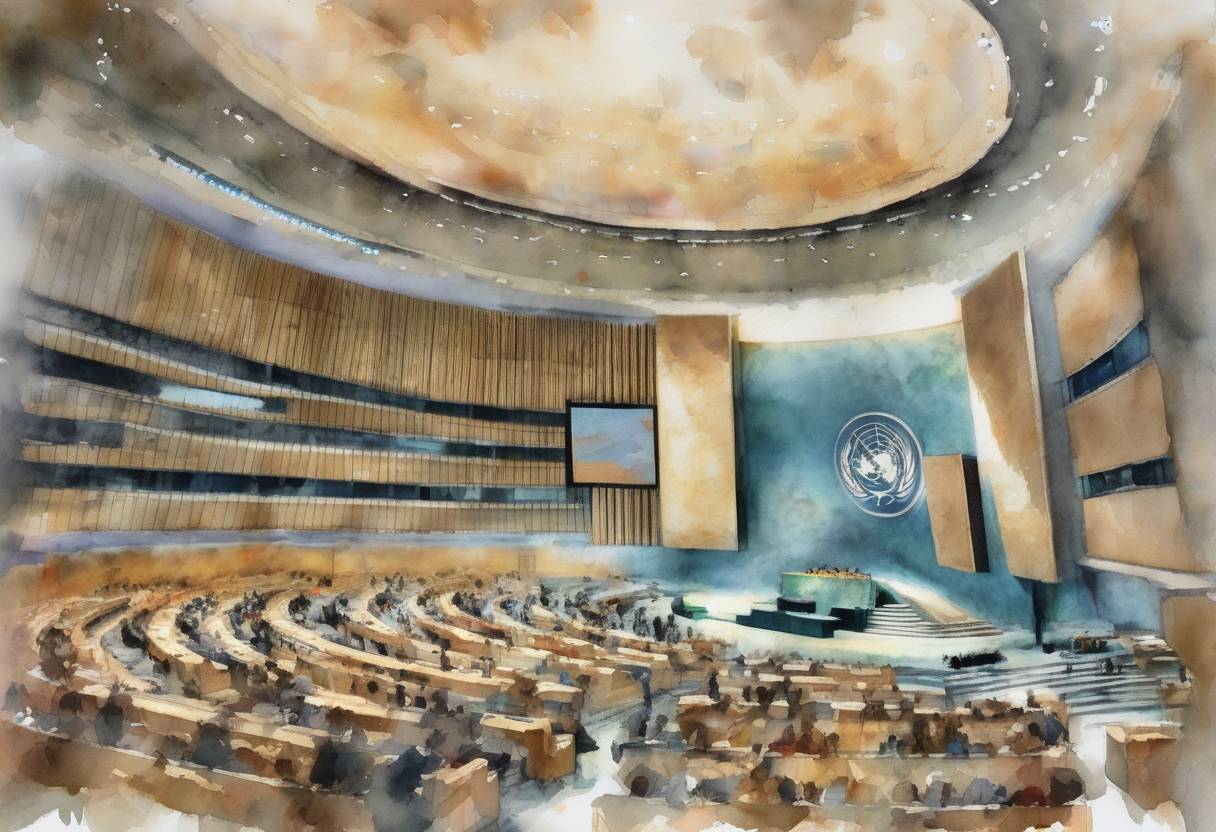
United Nations General Assembly Resolution on Syria - May 15, 2013
On May 15, 2013, the United Nations General Assembly adopted a resolution condemning the Syrian government for its role in the ongoing Syrian Civil War. This resolution was part of the international community’s response to the escalating conflict in Syria, which began in 2011 as part of the broader wave of the Arab Spring protests.
Context Leading Up to the Resolution
- Syrian Civil War: The conflict began in March 2011 with protests against the government of President Bashar al-Assad. These demonstrations were part of the Arab Spring, a series of anti-government protests across the Arab world.
- Escalation of Violence: The Syrian government’s harsh crackdown on protesters led to an armed rebellion. Over time, the conflict evolved into a complex civil war involving various factions, including the Syrian government, opposition groups, and extremist organizations.
- Humanitarian Crisis: By 2013, the war had resulted in significant civilian casualties and a humanitarian crisis, with millions of Syrians displaced internally and as refugees in neighboring countries.
Key Aspects of the Resolution
- Condemnation of the Syrian Government: The resolution explicitly condemned the Syrian government for its role in the violence and human rights violations against its own citizens.
- Call for Political Transition: It called for a political transition in Syria, urging the government and opposition to engage in dialogue to end the conflict.
- Humanitarian Access: The resolution emphasized the need for unhindered humanitarian access to provide aid to those affected by the conflict.
Voting and International Response
- Voting Outcome: The resolution was adopted with a significant majority, reflecting widespread international concern over the situation in Syria. However, it was non-binding, meaning it did not have the power to enforce action.
- Opposition and Abstentions: Several countries, including Russia and China, either voted against the resolution or abstained, citing concerns over sovereignty and the potential for external intervention.
Aftermath and Significance
- Continued Conflict: Despite the resolution, the Syrian Civil War continued, with ongoing violence and humanitarian challenges. The conflict has had lasting impacts on regional stability and global geopolitics.
- International Efforts: The resolution was part of broader international efforts to address the Syrian crisis, including peace talks and humanitarian initiatives. However, achieving a lasting resolution to the conflict proved challenging.
The adoption of this resolution highlighted the international community’s condemnation of the violence in Syria and underscored the complexities of addressing such a multifaceted conflict through diplomatic means.