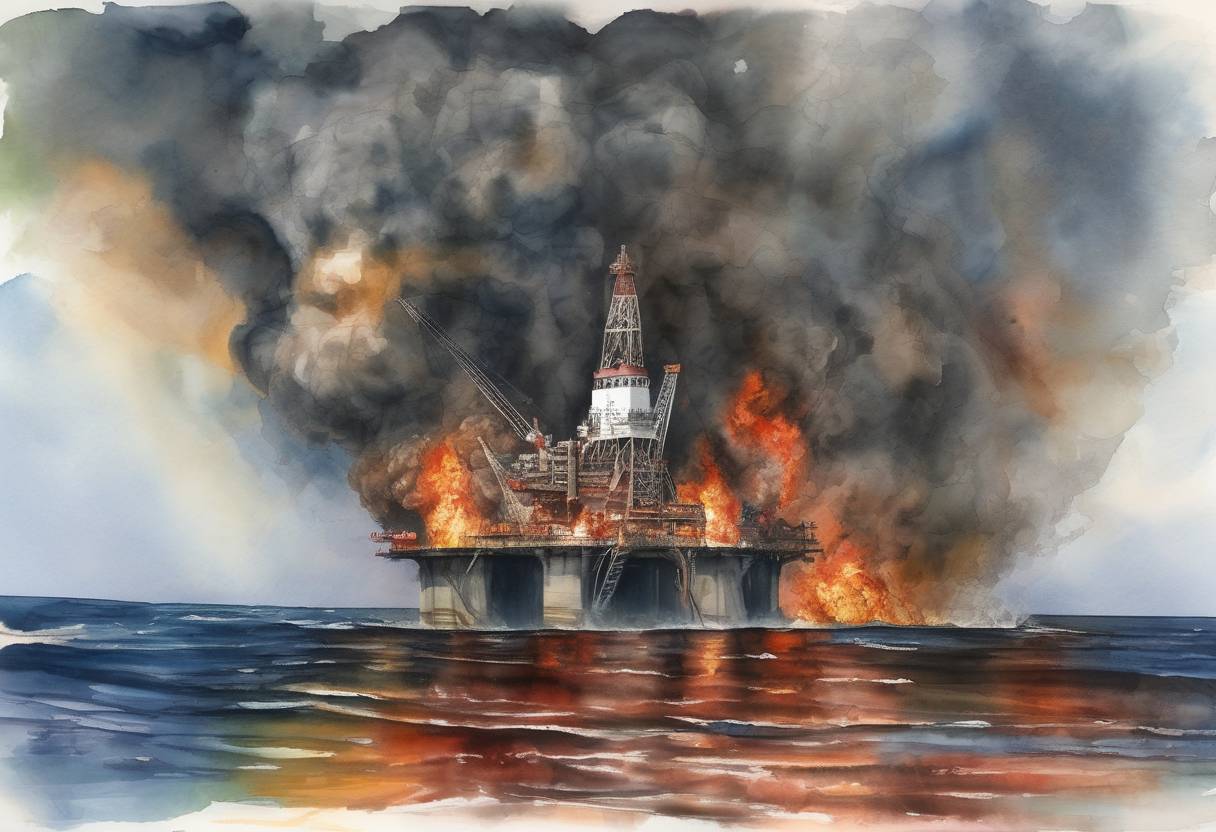
Deepwater Horizon Oil Rig Explosion - April 20, 2010
On April 20, 2010, the Deepwater Horizon oil rig, operated by Transocean and owned by BP, experienced a catastrophic blowout while drilling an exploratory well in the Macondo Prospect, located in the Gulf of Mexico. This event marked the beginning of one of the largest environmental disasters in U.S. history.
Background
- Deepwater Horizon: A semi-submersible offshore drilling rig, Deepwater Horizon was built in 2001 and was capable of operating in waters up to 10,000 feet deep.
- Macondo Prospect: The site of the drilling operation, located approximately 41 miles off the coast of Louisiana.
The Explosion
- Date and Time: The explosion occurred on April 20, 2010, at approximately 9:45 PM CDT.
- Cause: The blowout was caused by a surge of natural gas that traveled up the drill column, igniting on the platform and leading to a massive explosion.
- Casualties: The explosion resulted in the tragic loss of 11 crew members’ lives and injured 17 others.
Environmental Impact
- Oil Spill: Following the explosion, the rig sank on April 22, 2010, causing a sea-floor oil gusher that lasted for 87 days.
- Volume of Spill: An estimated 4.9 million barrels (approximately 210 million gallons) of oil were discharged into the Gulf of Mexico.
- Affected Areas: The spill impacted the coastlines of Louisiana, Mississippi, Alabama, and Florida, severely affecting marine and wildlife habitats, as well as local economies dependent on fishing and tourism.
Response and Aftermath
- Containment Efforts: Multiple attempts were made to cap the well, including the use of containment domes and a “top kill” procedure. The well was finally sealed on September 19, 2010.
- Legal and Financial Repercussions: BP faced extensive legal challenges, resulting in billions of dollars in fines and settlements. In 2015, BP agreed to a $18.7 billion settlement with the U.S. government and five Gulf states.
- Regulatory Changes: The disaster prompted significant changes in offshore drilling regulations and safety standards, including the establishment of the Bureau of Safety and Environmental Enforcement (BSEE).
Broader Historical Significance
The Deepwater Horizon disaster underscored the risks associated with deepwater drilling and highlighted the need for improved safety measures and environmental protections. It also sparked a national conversation about energy policy and the environmental costs of fossil fuel dependency.
The incident remains a pivotal moment in environmental history, serving as a stark reminder of the potential consequences of industrial accidents on natural ecosystems and human communities.