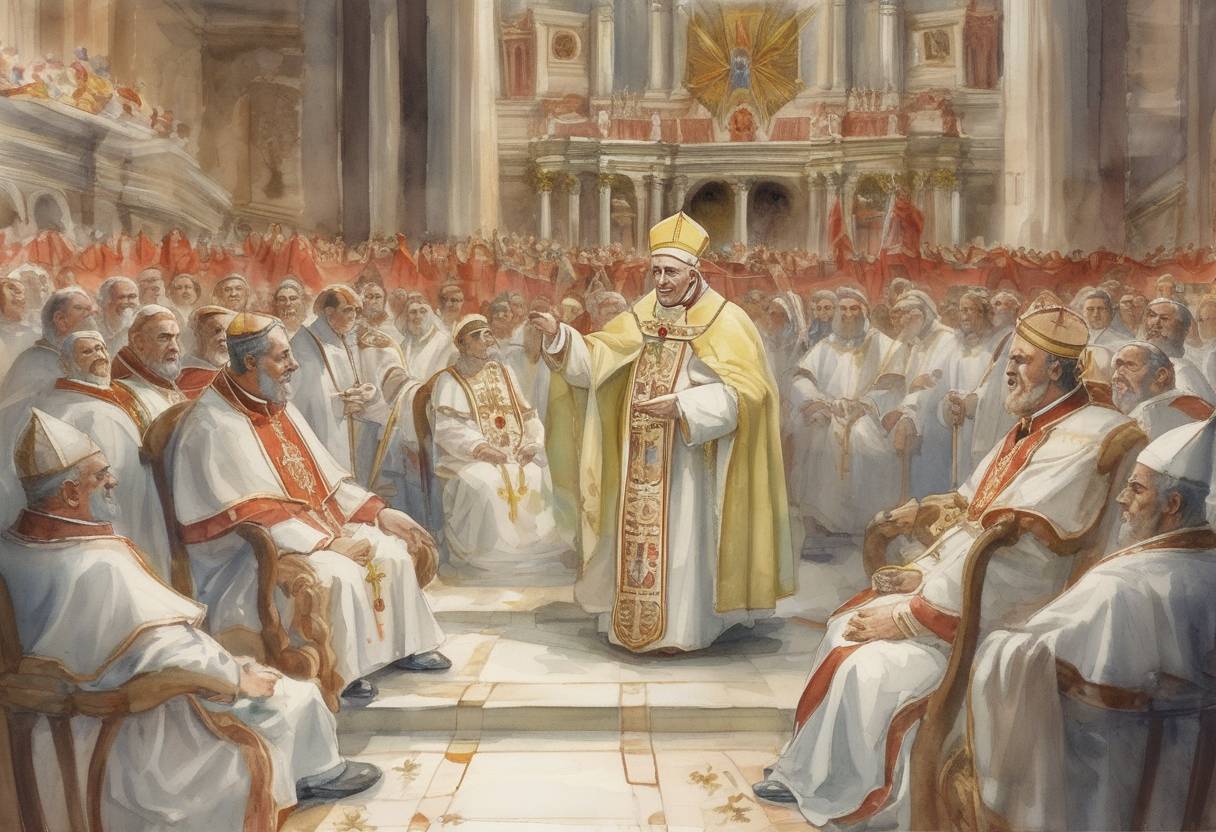
Election of Pope Leo IV
On April 10, 847, Pope Leo IV was elected as the 103rd pope of the Catholic Church, succeeding Pope Sergius II. His papacy came at a time of significant challenges for the Church and the city of Rome, particularly due to threats from external forces such as the Saracens.
Context Leading to His Election
Pope Sergius II’s Papacy: Pope Sergius II, who reigned from 844 to 847, faced numerous difficulties, including the threat of Saracen raids. His tenure was marked by efforts to maintain the stability of Rome and the Papal States amidst these external pressures.
Saracen Threat: The Saracens, Muslim raiders from North Africa, had been a persistent threat to the Italian peninsula during this period. Their attacks culminated in the sacking of Rome in 846, which highlighted the need for a strong and decisive leader to protect the city and its inhabitants.
Key Events During Leo IV’s Papacy
Fortification of Rome: One of Pope Leo IV’s most significant contributions was the fortification of Rome. He initiated the construction of the Leonine Wall, a defensive wall that enclosed the Vatican Hill and the area around St. Peter’s Basilica. This project was crucial in protecting the city from future invasions.
Naval League: To counter the Saracen threat, Leo IV organized a naval league comprising various Italian maritime cities. This coalition successfully defeated the Saracens in the Battle of Ostia in 849, a significant victory that secured the safety of Rome’s coastal regions.
Church Reforms and Synods: Leo IV was also known for his efforts to reform the Church. He convened several synods to address issues of clerical discipline and to strengthen the Church’s spiritual and administrative structures.
Aftermath and Legacy
Strengthened Papal Authority: Leo IV’s actions during his papacy helped to strengthen the authority and influence of the papacy both within Rome and across Christendom. His leadership during a time of crisis demonstrated the importance of a strong papal figure in maintaining the Church’s stability.
Cultural and Architectural Contributions: Beyond his military and administrative achievements, Leo IV also contributed to the cultural and architectural heritage of Rome. His fortifications and restorations of churches and basilicas left a lasting impact on the city’s landscape.
Pope Leo IV’s papacy, which lasted until his death in 855, was marked by his resilience and strategic acumen in the face of external threats. His efforts to protect and fortify Rome ensured the city’s survival during a turbulent period and solidified his legacy as a pivotal figure in the history of the Catholic Church.