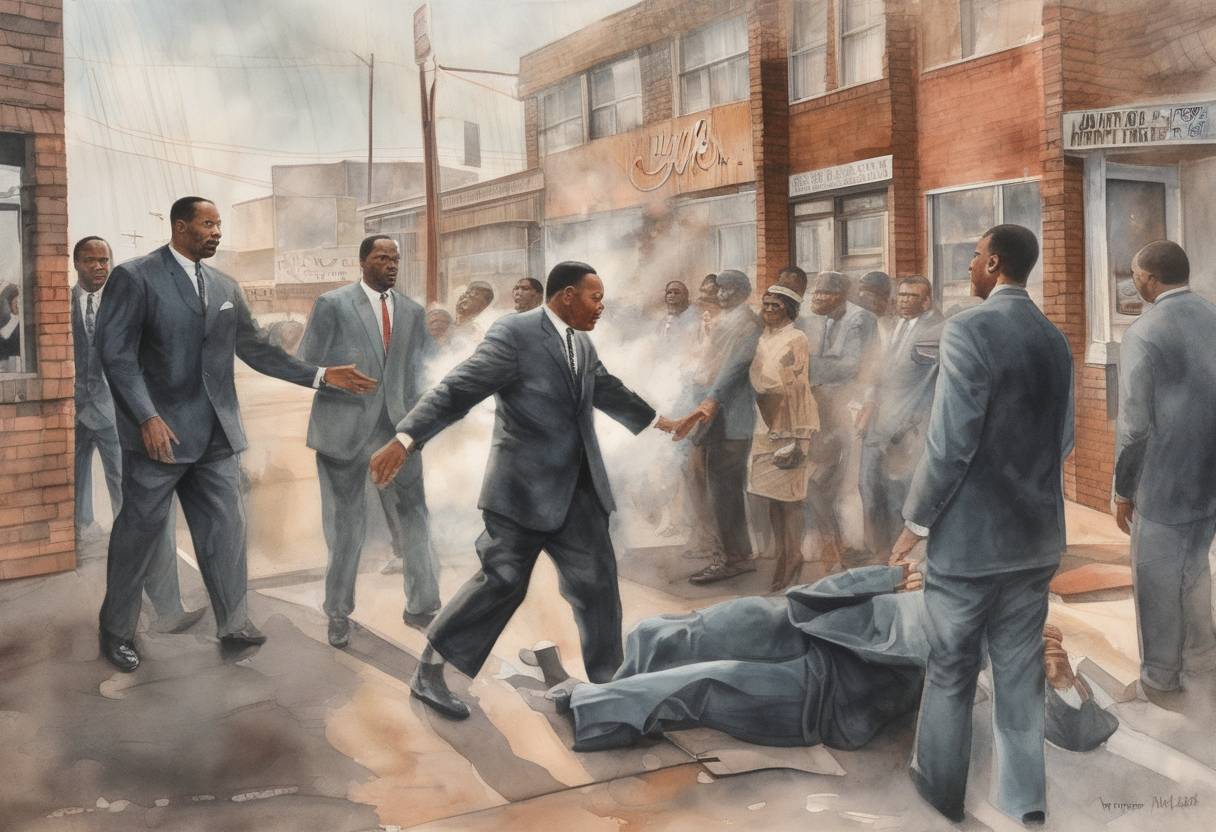
Assassination of Martin Luther King Jr. - April 4, 1968
On April 4, 1968, the world was shaken by the assassination of Dr. Martin Luther King Jr., a pivotal leader in the American civil rights movement. King was fatally shot at the Lorraine Motel in Memphis, Tennessee, an event that not only marked a tragic loss for the nation but also ignited widespread unrest and mourning.
Context Leading Up to the Assassination
Dr. Martin Luther King Jr. had been a prominent figure in the struggle for civil rights, advocating for nonviolent resistance and equality for African Americans. By 1968, King had expanded his focus to include economic justice and opposition to the Vietnam War. He was in Memphis to support a strike by African American sanitation workers, who were protesting against poor working conditions and unfair treatment.
The Assassination
- Date and Location: April 4, 1968, at the Lorraine Motel in Memphis, Tennessee.
- Time: King was shot at approximately 6:01 PM.
- Perpetrator: James Earl Ray, a fugitive from the Missouri State Penitentiary, was later apprehended and convicted for the assassination.
King was standing on the balcony of his motel room when he was struck by a single bullet. Despite being rushed to St. Joseph’s Hospital, he was pronounced dead at 7:05 PM.
The assassination of Martin Luther King Jr. led to an immediate and profound reaction across the United States:
- Riots and Unrest: The news of King’s death sparked riots in over 100 cities across the country, including major disturbances in Washington D.C., Chicago, and Baltimore. The unrest highlighted the deep-seated racial tensions and frustrations that persisted in American society.
- National Mourning: A period of mourning ensued, with millions of Americans grieving the loss of a leader who had become a symbol of hope and change. King’s funeral was held on April 9, 1968, in Atlanta, Georgia, attended by thousands of mourners and watched by millions on television.
Broader Historical Significance
- Civil Rights Movement: King’s assassination marked a turning point in the civil rights movement. While it led to increased momentum for civil rights legislation, it also signaled a shift towards more radical approaches among some activists who felt disillusioned by the slow pace of change.
- Legislative Impact: The assassination contributed to the passage of the Civil Rights Act of 1968, also known as the Fair Housing Act, which was signed into law by President Lyndon B. Johnson on April 11, 1968. This act aimed to eliminate discrimination in housing.
Dr. Martin Luther King Jr.’s legacy continues to influence civil rights activism and discourse on racial equality worldwide. His commitment to nonviolence and justice remains a guiding principle for many who strive for social change.