The Death of Carloman and the Rise of Pepin the Short
747 · Vienne, Frankish Kingdom
The death of Carloman, the Frankish mayor of the palace of Austrasia, occurs, leading to the consolidation of power by his brother Pepin the Short.
January 19, 0639
Dagobert I, King of the Franks, dies and is succeeded by his son Clovis II in Neustria and Burgundy, while his other son, Sigebert III, continues to rule in Austrasia.
Épinay-sur-Seine, Frankish Kingdom | Frankish Kingdom
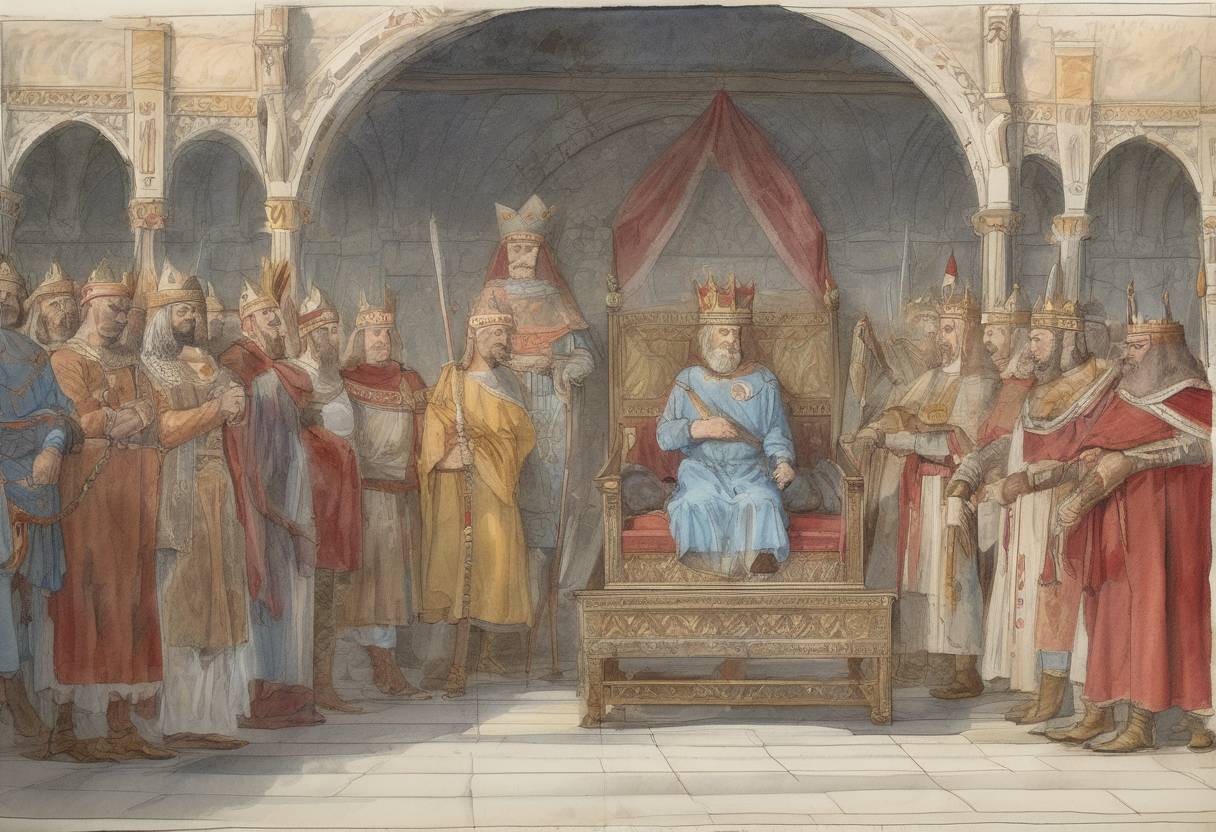
On January 19, 639, Dagobert I, King of the Franks, passed away, marking a significant transition in the Merovingian dynasty. His death led to the division of his kingdom between his sons, Clovis II and Sigebert III, which was a common practice among the Merovingian kings to ensure the continuation of their lineage and control over their territories.
Dagobert I was one of the last powerful Merovingian kings, ruling from 629 until his death in 639. He was the son of Chlothar II and became king after his father’s death. His reign is noted for its consolidation of power and efforts to strengthen the Frankish state. Dagobert was known for his administrative reforms, support of the church, and efforts to maintain the unity of the Frankish territories.
Upon Dagobert’s death, the Frankish kingdom was divided as follows:
Clovis II: He inherited the regions of Neustria and Burgundy. Clovis II was still a child at the time of his father’s death, which meant that his mother, Nanthild, and the mayor of the palace, Erchinoald, played significant roles in the governance of his territories during his minority.
Sigebert III: Already ruling Austrasia since 634, Sigebert III continued his reign in this eastern part of the Frankish kingdom. He was also a child when he began his rule, and his reign was characterized by the increasing power of the local nobility and the mayor of the palace, Grimoald the Elder.
The division of the kingdom between Clovis II and Sigebert III marked the continuation of the Merovingian tradition of partitioning the realm among heirs, which often led to internal conflicts and weakened central authority. This fragmentation contributed to the eventual decline of Merovingian power and the rise of the Carolingian dynasty.
Dagobert I’s death and the subsequent succession highlight the challenges of maintaining a unified Frankish kingdom and foreshadow the increasing influence of the mayors of the palace, who would eventually overshadow the Merovingian kings and pave the way for the Carolingian rulers, such as Charles Martel and Charlemagne.
In summary, the death of Dagobert I and the succession of his sons were pivotal moments in the history of the Frankish kingdom, setting the stage for future political dynamics and the eventual transformation of the Frankish realm under new leadership.
Source: en.wikipedia.org