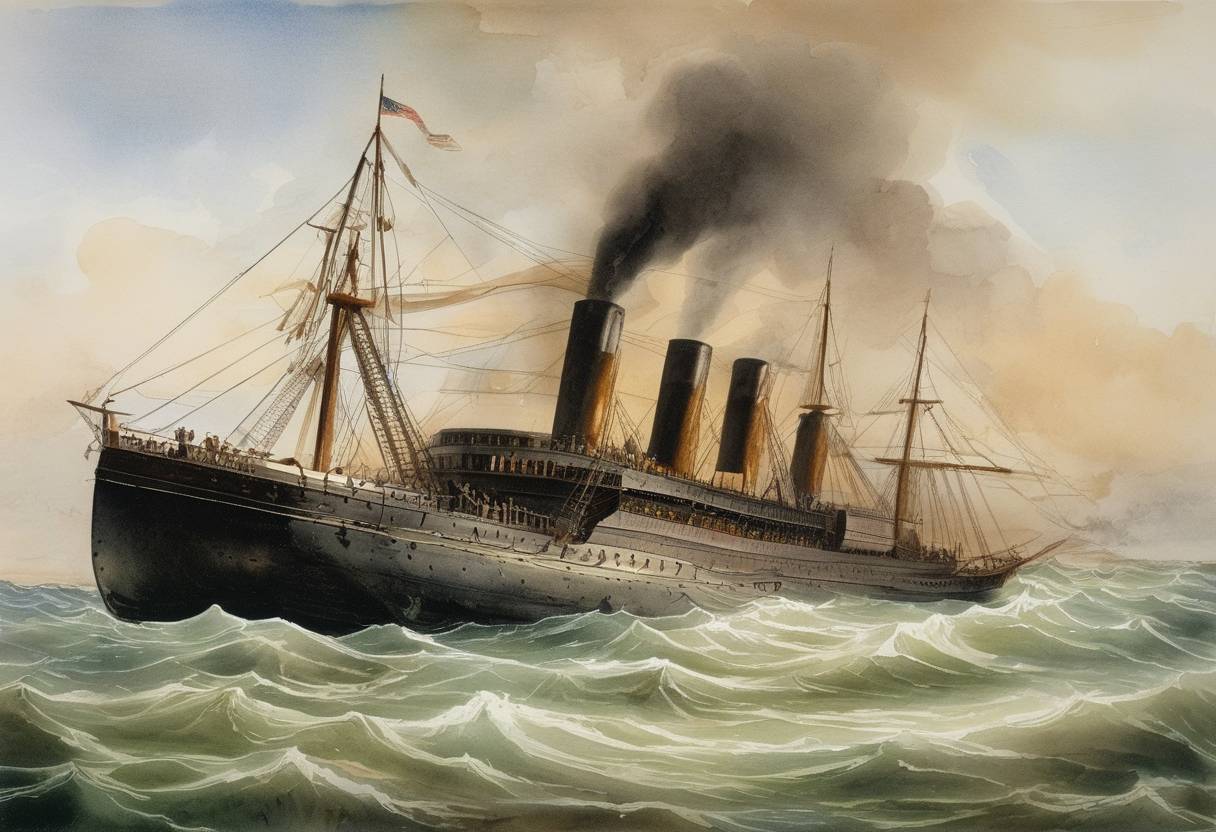
The Sinking of the SS Central America
On September 12, 1857, the SS Central America, a commercial steamship, met a tragic fate off the coast of the Carolinas. This catastrophe occurred as the ship encountered a hurricane, leading to its sinking and significant loss of life and wealth.
Background
The SS Central America, often referred to as the “Ship of Gold,” played an integral role during the California Gold Rush era. It was responsible for transporting passengers and a substantial amount of gold from the West Coast to the East Coast of the United States. The vessel was a sidewheel steamer, approximately 280 feet in length, and had been in operation since 1853.
The Voyage
On September 3, 1857, SS Central America departed from the port of Aspinwall (modern-day Colón, Panama), carrying 477 passengers and 101 crew members along with nearly 10 tons of gold, comprising shipments destined for banks and personnel wealth carried by individuals. Panama was an essential transit point where gold and passengers from the California Gold Rush would cross the isthmus to board ships on the Atlantic side for the journey back to the eastern United States.
The Hurricane
During its journey, SS Central America sailed into a massive hurricane. The storm’s fierce winds and torrential rains significantly compromised the vessel’s structural integrity. Over a period of days, the crew battled to keep the ship afloat, with passengers aiding in bailing water. Despite their efforts, the steamer’s engines ultimately failed, rendering the ship powerless against the storm. On September 12, water had breached the hull beyond remedy, and the ship began to sink.
The Aftermath
Approximately 425 lives were lost that tragic day, along with the treasure it carried. The ship’s captain, William Lewis Herndon, went down with his vessel, embodying maritime tradition and the ethos of a steadfast leader. Survivors reported that women and children were prioritized for evacuation, which resulted in some being rescued by passing ships, such as the brig Marine.
Historical Significance
The loss of SS Central America had an extensive impact beyond maritime circles. The gold it carried was highly valuable, and its loss contributed to a financial panic in New York, heavily impacting banks and investors accentuating the Panic of 1857. This panic was one of the first worldwide economic crises, underscoring the interconnectedness of gold, financial markets, and the broader economy.
The SS Central America was rediscovered in the late 20th century, in 1988, which reignited public fascination with the Gold Rush era and maritime history. The recovery operations yielded significant quantities of gold and artifacts, providing further insights into the mid-19th century and sparking legal battles over the ownership of the discovered treasures.