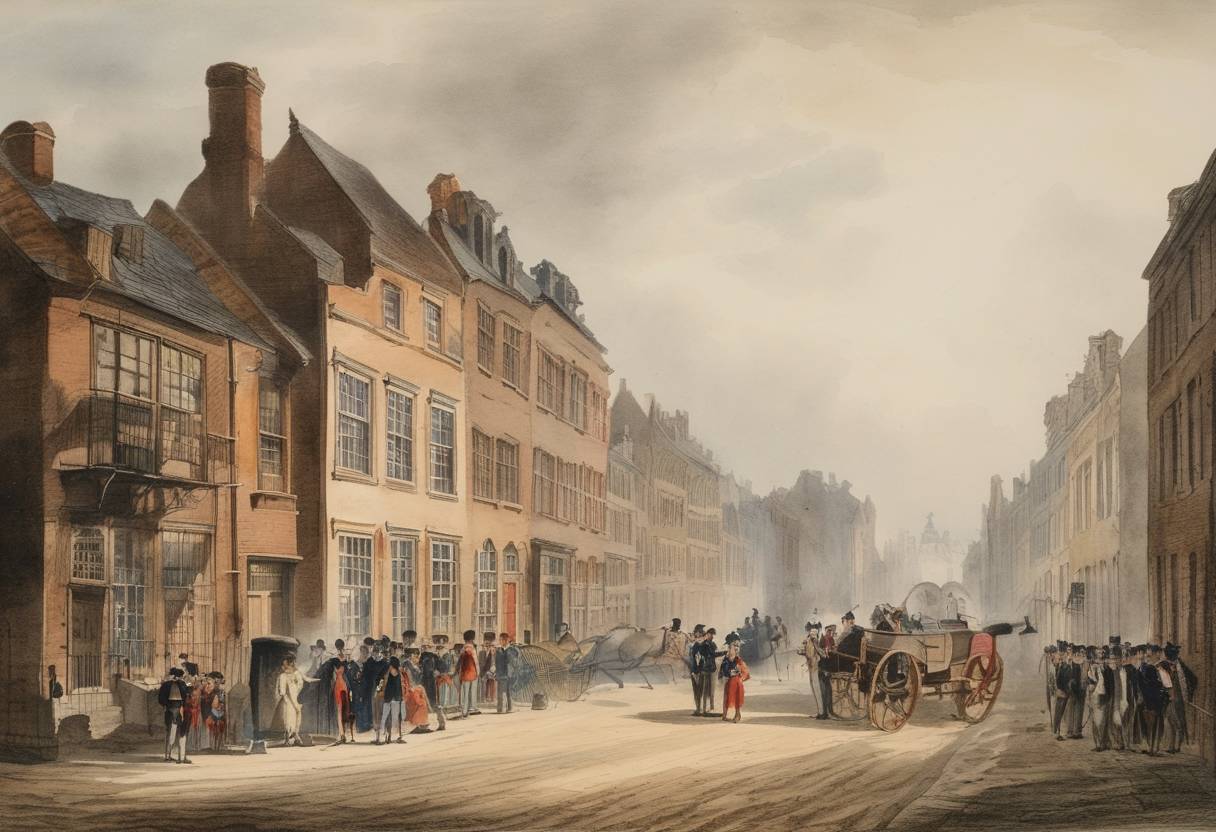
Treaty of Ghent
Date Signed: December 24, 1814
Location: Ghent, United Netherlands (present-day Belgium)
Key Figures: British and American Negotiators
Background
The War of 1812, fought between the United States and the United Kingdom along with their respective allies, stemmed from various grievances, including trade restrictions brought about by the British war with France, the impressment of American sailors into the Royal Navy, British support of Native American tribes against American expansion, and other territorial disputes.
Negotiations
Negotiations for peace commenced in August 1814 in Ghent. The talks involved prominent American statesmen such as John Quincy Adams, Henry Clay, and Albert Gallatin, and the British were represented by experienced diplomats including Lord Gambier, Henry Goulburn, and William Adams.
The discussions aimed to resolve issues that had persisted since the war’s inception. Initially, Britain demanded concessions from the U.S., including the creation of a Native American buffer state in the Northwest Territory and control of the Great Lakes, but these demands were eventually dropped.
The Treaty
The Treaty of Ghent was finally agreed upon on December 24, 1814. The treaty essentially restored relations between the two nations to the status quo ante bellum, meaning that no territorial gains were made by either side. The primary agreement included:
- The cessation of hostilities and restoration of conquered territories to the pre-war borders.
- The release of all prisoners of war.
- Future efforts were pledged to suppress the African slave trade.
Ratification and Implementation
Although the treaty was signed on December 24, 1814, it required ratification by both the British Parliament and the United States Senate before it became effective. The British Parliament ratified it in December 1814, and the treaty was not ratified by the U.S. until February 17, 1815.
Importantly, due to slow communication, the Battle of New Orleans took place in January 1815, after the treaty was signed but before the news of peace reached combatants, resulting in a major American victory.
Historical Significance
The Treaty of Ghent marked the end of hostilities between the United States and the United Kingdom, effectively closing the War of 1812. Although it did not address many of the issues that had caused the war, such as maritime rights, the peace treaty set the stage for improved relations between the two nations and paved the way for a long-lasting peaceful relationship and eventual partnership.