Fidel Castro Announces His Resignation as President of Cuba
2008 · Havana, Cuba
Fidel Castro announces his resignation as President of Cuba, ending nearly 50 years of rule.
October 3, 1965
Fidel Castro announces that anyone who wants to leave Cuba can do so without opposition. This leads to the 'Freedom Flights', a series of flights that carried hundreds of thousands of Cubans to the United States.
Havana, Cuba | Cuban Government
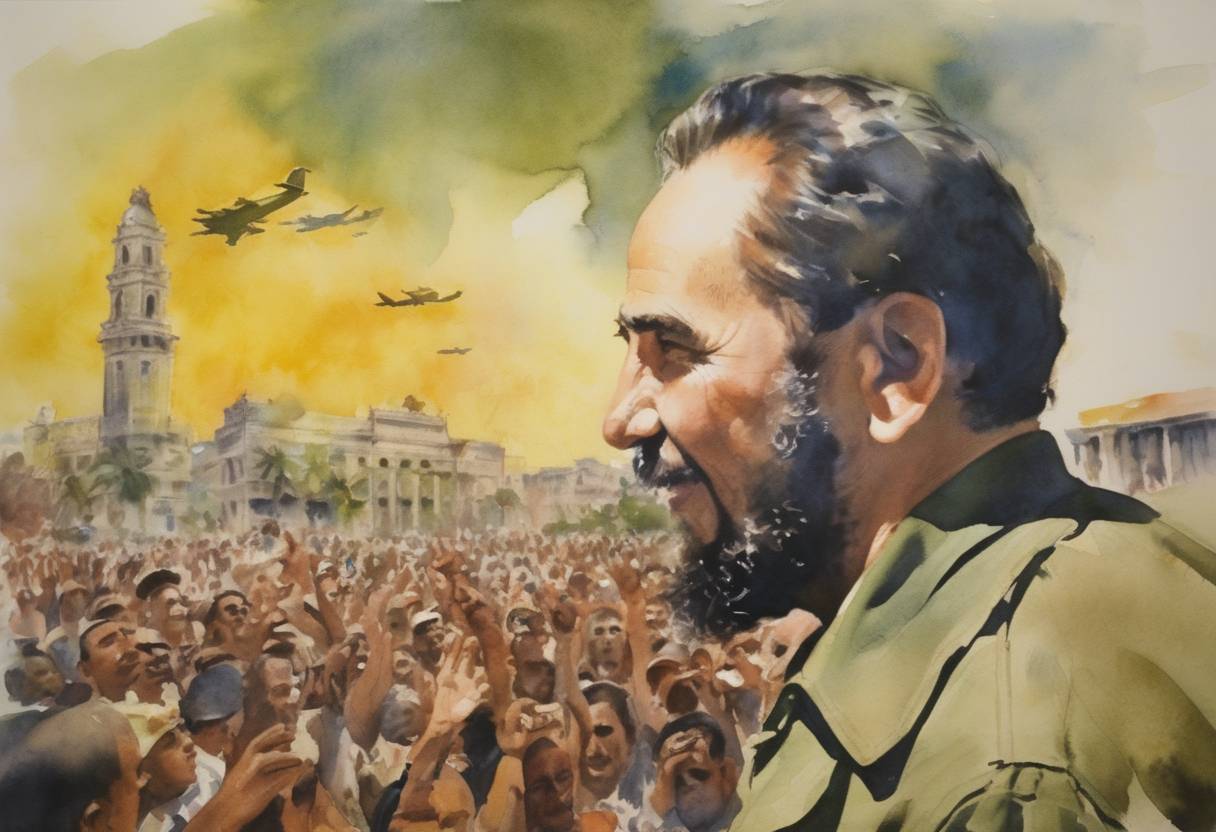
On October 3, 1965, Fidel Castro, the leader of the Cuban government, made a pivotal announcement that significantly affected the Cuban population and U.S.-Cuban relations. During a speech broadcasted on Cuban television and radio, Castro declared that any Cuban wishing to leave the island would be permitted to do so without governmental opposition. This policy shift occurred amid increasing economic difficulties and political dissent within Cuba following the Cuban Revolution.
Since the Cuban Revolution of 1959, which resulted in the overthrow of dictator Fulgencio Batista, Fidel Castro had established a socialist government closely aligned with the Soviet Union. Consequently, many Cubans, particularly those opposed to Castro’s policies or seeking greater economic opportunities, desired to emigrate, especially to the United States, where many had familial and cultural ties.
Before Castro’s 1965 announcement, emigration from Cuba was heavily restricted, reflecting the government’s concerns over losing skilled labor and potential political dissidents. However, with mounting internal pressures—including a stagnating economy and social unrest—the Cuban government decided to allow those wishing to leave the opportunity to do so legally.
The announcement led directly to the establishment of the “Freedom Flights,” a series of airborne evacuations that began in December 1965 and continued until 1973. These flights represented one of the largest airlifts of refugees in history, as they transported approximately 300,000 Cubans to the United States. The program was a result of negotiations between the United States and Cuba, with the U.S. agreeing to receive those who wished to emigrate in exchange for organized and safe departure.
The Freedom Flights primarily departed from Varadero, Cuba, and arrived in Miami, Florida. Initially focused on reuniting families, the flights quickly expanded to include a broader cross-section of Cuban society. Most of the refugees settled in South Florida, significantly shaping the cultural and demographic landscape of the region.
The Freedom Flights marked a crucial chapter in Cuban-American history, highlighting the deep personal and political divides that the Cuban Revolution had caused. For many Cubans, leaving was not only a physical journey but also a profound emotional separation from their homeland.
The mass emigration had lasting impacts on both countries. In the United States, it contributed to the growing Cuban exile community, which became an influential political and cultural force, particularly in Florida. For Cuba, the policy alleviated some immediate economic pressures by reducing the population, although it also resulted in a significant “brain drain” as many skilled professionals exited the country.
This event was part of a broader pattern of migration and exile related to Cold War dynamics, illustrating the complex interplay of ideology, policy, and human impacts during this era. The Freedom Flights remain a significant symbol of the Cuban diaspora’s experience and the enduring legacy of the Castro regime’s policies.
Source: www.britannica.com