The Treaty of Rheinfelden (June 5, 1283)
1283 · Rheinfelden, Switzerland
The Treaty of Rheinfelden was signed, which was an agreement between the Habsburg brothers Albert I and Rudolf II, dividing their inheritance and territories.
December 9, 1315
The Battle of Morgarten, which actually took place on November 15, 1315, resulted in a confederation of the three Swiss cantons of Uri, Schwyz, and Unterwalden. On December 9, 1315, these cantons renewed their alliance with the Pact of Brunnen, which was a step toward the formation of modern Switzerland.
Brunnen, Switzerland | Swiss Confederacy
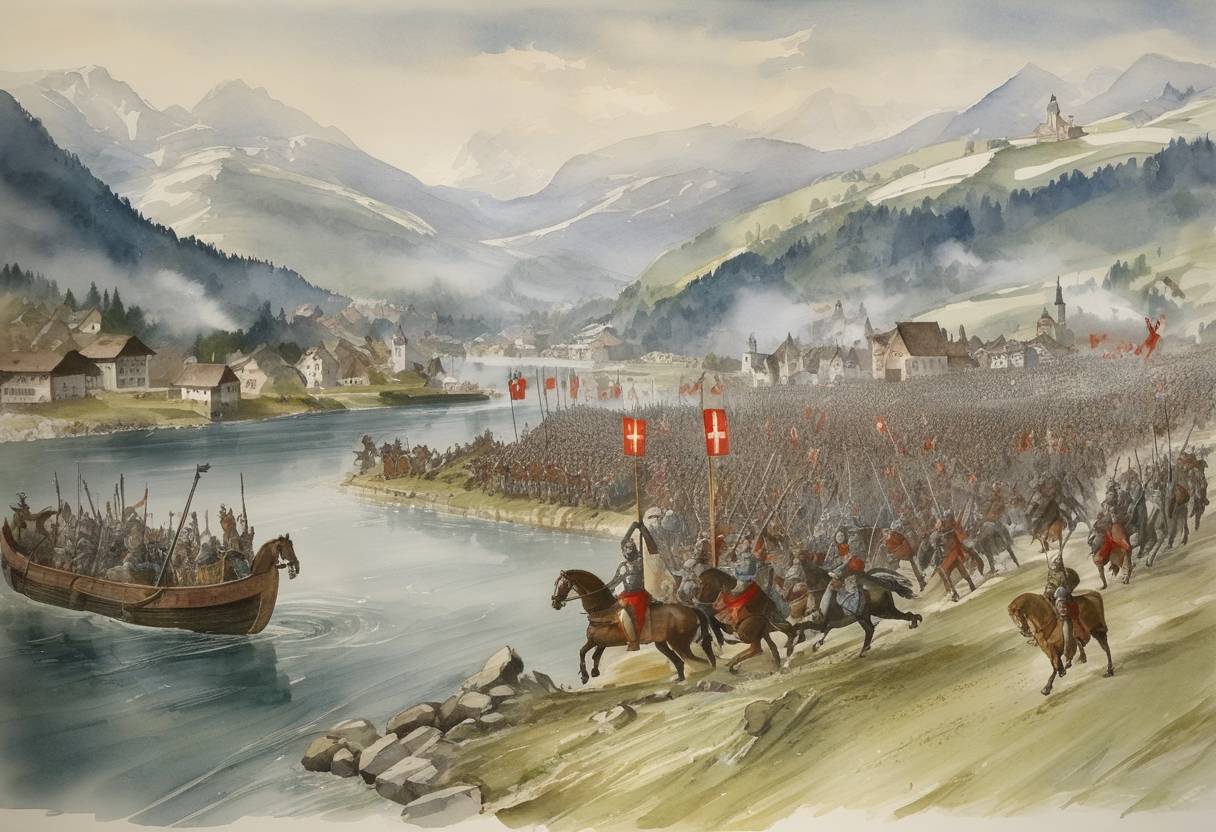
On December 9, 1315, the leaders of the cantons of Uri, Schwyz, and Unterwalden gathered to renew their alliance with the signing of the Pact of Brunnen. This crucial event was precipitated by their decisive victory at the Battle of Morgarten less than a month earlier on November 15, 1315. This battlefield triumph against the Habsburg forces catalyzed the reaffirmation and strengthening of a union that paved the way for the eventual formation of the Swiss Confederation.
The strategic alliance between these cantons originally formed due to mutual defense interests. The Battle of Morgarten highlighted the need for a robust collective defense mechanism, as the Swiss forces had successfully repelled a larger and better-equipped army. This victory not only boosted the morale of the Swiss but also showcased the effectiveness of collaborative military efforts.
By renewing their alliance with the Pact of Brunnen on December 9, the cantons emphasized their commitment to mutual support and ensured ongoing cooperation against external threats. This pact underscored the importance of unity and collective identity among the Swiss, sowing the seeds for a federal structure that later evolved into modern Switzerland.
The Pact of Brunnen reinforced existing agreements and included provisions that would guide military cooperation, conflict resolution, and the administration of shared territories. It set a precedent for the development of additional alliances, eventually leading to a broader Swiss Confederation.
This alliance and its successful military defense strategies underscored the transformative power of regional cooperation. The cooperative framework established by the Pact of Brunnen fostered a sense of solidarity, which was crucial in maintaining autonomy from encroaching external powers such as the Habsburgs.
The events surrounding the Pact of Brunnen are celebrated as an integral chapter in Swiss history, symbolizing the emergence of Swiss national identity and sovereignty. As a foundational step in Swiss unification, it became a cornerstone for the evolving political landscape of the region.
The Pact of Brunnen’s legacy can be traced throughout Swiss history, symbolizing the resilience and unity that have been hallmarks of Swiss society and governance.
Source: en.wikipedia.org