The de Havilland Comet's Maiden Flight
1949 · Hatfield, United Kingdom
The de Havilland Comet, the world's first commercial jet airliner, makes its maiden flight.
September 6, 1952
A prototype aircraft made by de Havilland, the DH.110, disintegrates and crashes at the Farnborough Airshow, killing 29 spectators and the test pilot.
Farnborough, United Kingdom | de Havilland
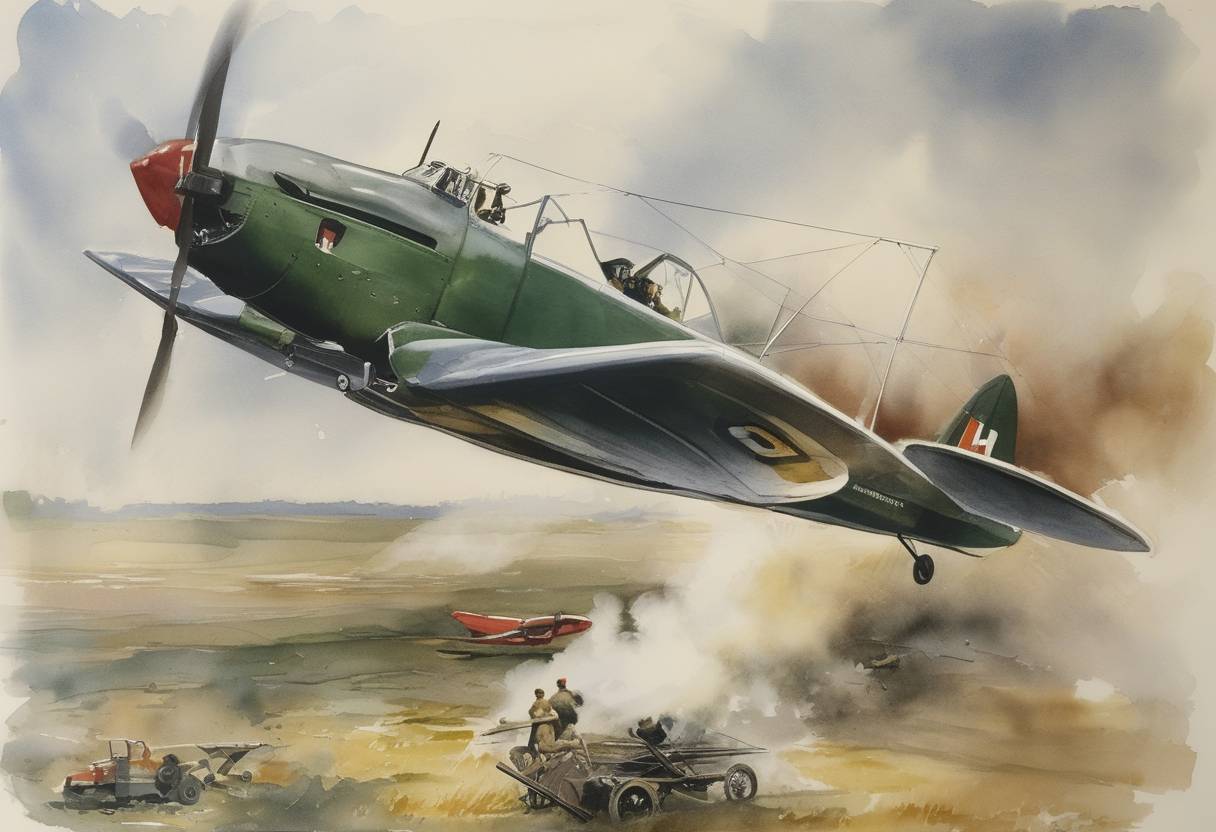
On September 6, 1952, a tragic incident struck the Farnborough Airshow in Hampshire, England, when a prototype aircraft, the de Havilland DH.110, disintegrated mid-air, resulting in the deaths of 29 spectators along with the test pilot, John Derry, and his onboard flight test observer, Tony Richards.
The de Havilland DH.110 was an innovative twin-engine jet fighter designed to meet the British Royal Navy’s specification for an all-weather, anti-submarine defense interceptor. Known for its distinctive twin-boom design, it was an aircraft with great promise in an era of rapid aeronautical advancements.
During a demonstration flight at the Farnborough Airshow, the DH.110 was performing a series of high-speed maneuvers. Approximately two minutes into the flight, while the aircraft was traveling at around supersonic speeds, it executed a demonstration of a high-speed pass. As the aircraft broke the sound barrier, the stress placed on the airframe was immense.
Without warning, the aircraft experienced a catastrophic structural failure. The DH.110 disintegrated in the air, causing debris to rain down over the spectators below. The engine and wing sections plummeted uncontrolled, directly impacting the viewing area where a large crowd had gathered to witness the airshow.
The disaster resulted in the immediate deaths of 29 spectators and the pilot and co-pilot in the aircraft. Approximately 60 individuals were reported injured due to the falling debris.
This incident led to significant discussions and reviews within the aviation industry regarding safety protocols at airshows, particularly concerning the need for enhanced spectator safety and restrictions on flight demonstrations immediately over crowds.
Despite this tragedy, the lessons learned became pivotal in advancing airshow safety worldwide. Subsequent regulations and improvements further shaped how aerial demonstrations were conducted and laid the groundwork for stricter controls to prevent similar incidents in the future.
The DH.110 itself did eventually achieve operational success, later re-designated as the de Havilland Sea Vixen, serving the Royal Navy until the 1970s. The Farnborough disaster remains a somber reminder of the inherent risks linked with aerial innovation and public demonstrations.
Source: aviation-safety.net