The Siege of Vienna Ends - October 3, 1529
1529 · Vienna, Austria
The Siege of Vienna ended, with the Ottoman Empire failing to capture the city from the Habsburgs, thus marking a key turning point in the Ottoman-Habsburg wars.
August 28, 1521
The Ottoman Turks occupy Belgrade and annex it into the Ottoman Empire, marking the end of the Siege of Belgrade.
Belgrade, Serbia | Ottoman Empire
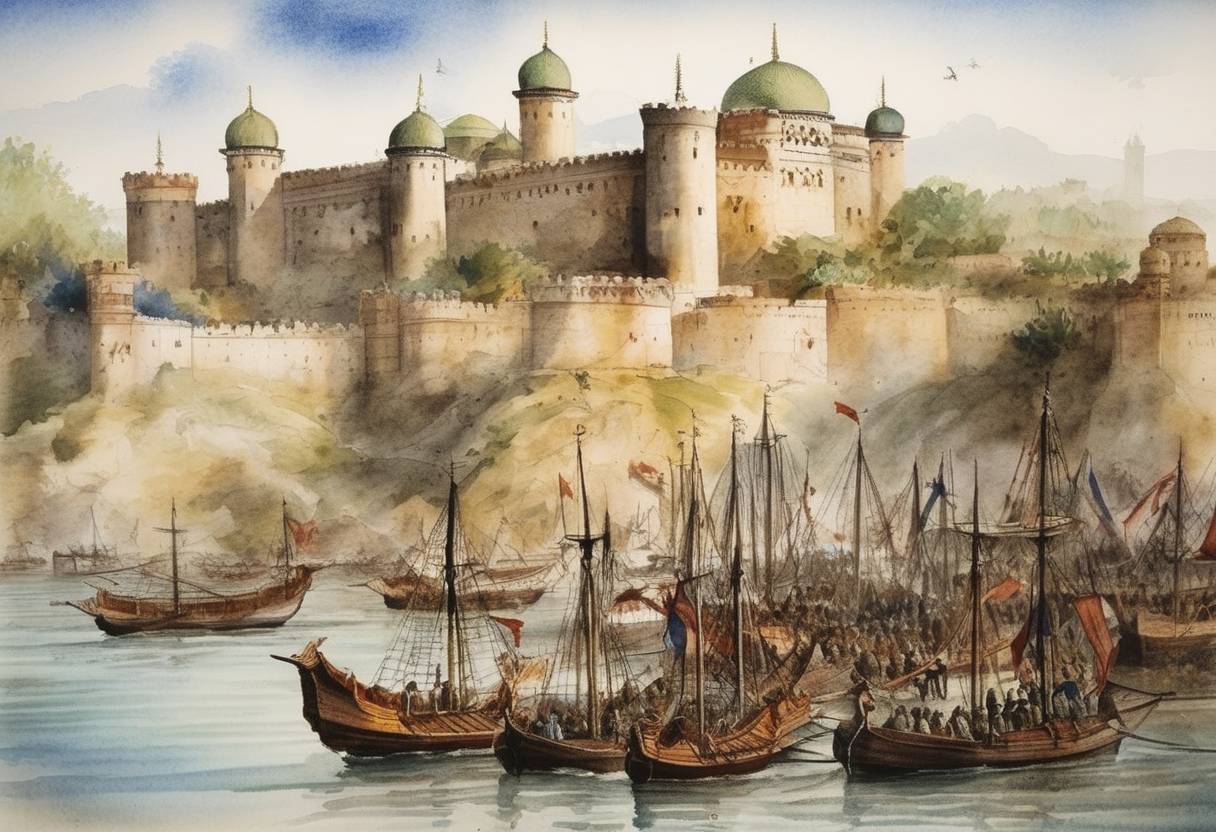
On August 28, 1521, the Ottoman Empire successfully concluded its siege of Belgrade, resulting in the city’s annexation. This occupation marked a significant moment in the ongoing Ottoman expansion into Central Europe during the early 16th century.
Belgrade, strategically positioned at the confluence of the Sava and Danube rivers, was a vital fortified frontier for the Kingdom of Hungary. It served as a primary defense against Ottoman advances into Europe. The city had previously repelled an Ottoman siege in 1456, emphasizing its importance as a military and symbolic stronghold.
The renewed siege was orchestrated by Sultan Suleiman the Magnificent, who ascended to the Ottoman throne in 1520, following the death of his father, Selim I. Determined to expand his empire and secure its borders, Suleiman set his sights on Belgrade as a crucial target.
In July 1521, the Ottoman forces commenced their siege, employing a substantial army and an array of artillery to batter the city’s defenses. The defenders of Belgrade, heavily outnumbered and with limited means of receiving reinforcements from the Hungarian kingdom, were ultimately overwhelmed by the prolonged assault.
By late August, the city’s defenses had been breached, leading to its fall on August 28, 1521. The annexation of Belgrade into the Ottoman Empire marked a pivotal shift in regional power dynamics. The city became a key Ottoman garrison and an important administrative center. The fall of Belgrade also eliminated a significant barrier to further Ottoman incursions into Europe.
The occupation of Belgrade had immediate and lasting consequences. It solidified Ottoman control over Serbia and paved the way for further advances into Hungarian territory, culminating in the pivotal Battle of Mohács in 1526, which resulted in a catastrophic defeat for the Kingdom of Hungary. The event underscored the emerging dominance of the Ottoman Empire in Eastern Europe, reshaping the continent’s political landscape.
The loss of Belgrade was a significant blow to European Christendom and became a catalyst for future military campaigns and alliances against the Ottomans. It also reinforced Suleiman the Magnificent’s reputation as a powerful ruler, committed to expanding the reach and influence of his empire.