Coronation of Pedro I and the Establishment of the Empire of Brazil
1822 · Rio de Janeiro, Brazil
Pedro I was crowned Emperor of Brazil, marking the establishment of the Empire of Brazil.
September 16, 1822
The independence of Brazil was formally recognized by Portugal through the Treaty of Rio de Janeiro.
Rio de Janeiro, Brazil | Kingdom of Portugal
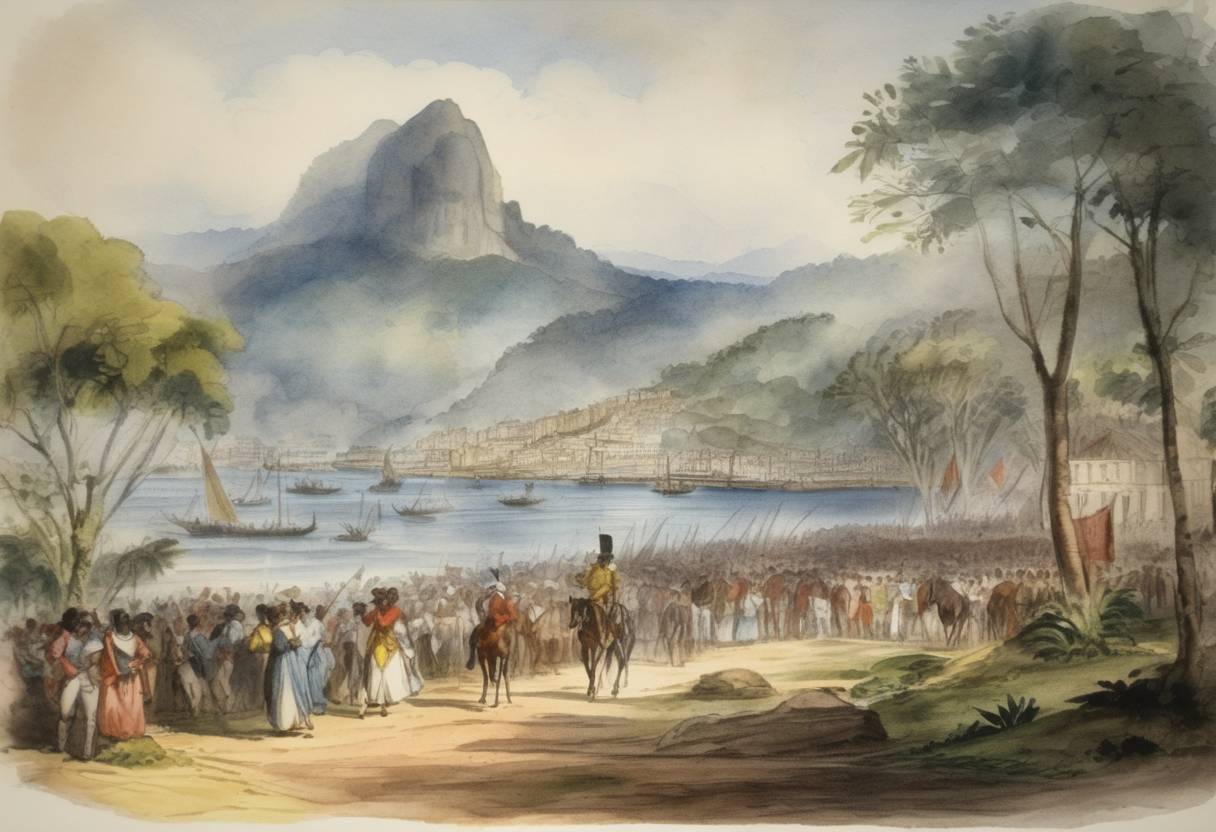
On September 16, 1822, the landmark moment when Brazil’s independence was formally recognized by Portugal indeed played a pivotal role in shaping the nation’s future. However, it’s crucial to note that the actual treaty that marked the formal recognition by Portugal was the Treaty of Rio de Janeiro, which was signed much later, on August 29, 1825. This treaty concluded the process of official recognition and marked a significant step in Brazil’s journey as an independent nation.
Leading up to September 1822, Brazil had been experiencing growing discontent under Portuguese rule. The influence of European Enlightenment ideas and the successful independence movements in neighboring Spanish colonies inspired Brazilian leaders. The decisive moment came on September 7, 1822, when Prince Dom Pedro declared Brazil’s independence from Portugal in an event known as the “Cry of Ipiranga.”
Initially, the independence declared by Dom Pedro was not formally acknowledged by Portugal. This lack of immediate recognition was due in part to political complexities and negotiations required to reach a formal agreement. Tensions continued until the signing of the Treaty of Rio de Janeiro on August 29, 1825, which clearly outlined the terms of recognition.
Provisions: The treaty involved a significant payment from Brazil to Portugal as a compensation for the recognition. Brazil agreed to pay 2 million pounds sterling as a form of indemnity.
Significance: This treaty marked the end of hostilities and recognized the sovereignty of Brazil, allowing it to pursue its own path as a nation free from colonial rule.
The recognition of Brazilian independence had a profound effect on both Brazil and Portugal:
Brazil emerged as a sovereign nation, setting the stage for its subsequent political and economic development. The transition from a colony to an empire established a dynastic rule under Dom Pedro I, who became the first Emperor of Brazil.
Portugal needed to adapt to a reduced colonial presence but focused efforts on retaining influence in other parts of its global empire.
The formal recognition through the Treaty of Rio de Janeiro marked the end of colonial rule and set Brazil on a path towards becoming a major regional power in South America. The process demonstrated the complexities involved in decolonization, underscoring the importance of diplomatic negotiations in achieving peaceful resolutions. This event remains a critical milestone in Brazil’s history, symbolizing its emergence as an independent and sovereign nation.
Source: en.wikipedia.org