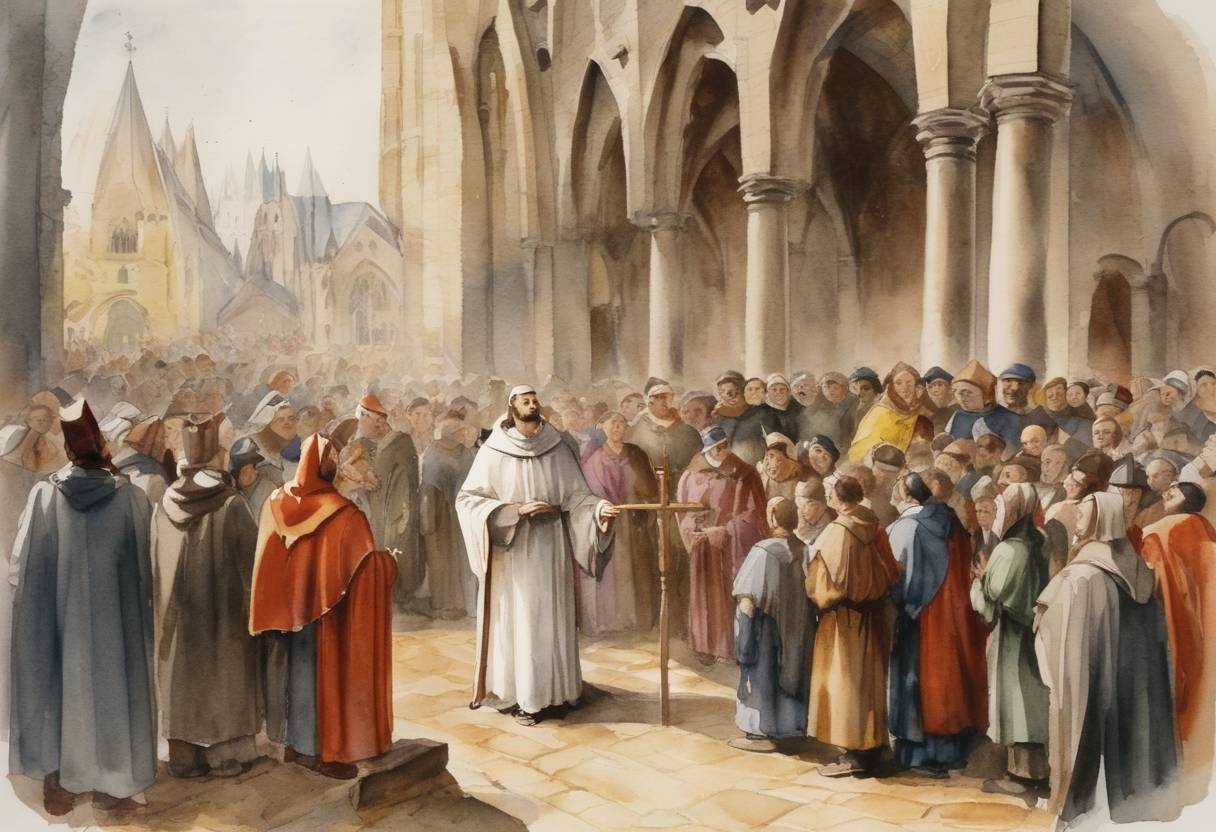
St. Bernard of Clairvaux’s Sermon in Speyer, Germany - September 14, 1146
On September 14, 1146, St. Bernard of Clairvaux, a significant figure of the Cistercian order, delivered an impassioned sermon in Speyer, Germany. This event was part of his extensive campaign to recruit crusaders for the Second Crusade, which had been called by Pope Eugene III in response to the fall of the County of Edessa, a key Crusader state, to the forces of Zengi, the atabeg of Mosul, in 1144.
Context and Background
The Second Crusade: Proclaimed in 1145 by Pope Eugene III, the Second Crusade aimed to recapture Edessa and reinforce the Christian hold on the Holy Land. The loss of Edessa had been a significant blow, diminishing the territorial gains of the First Crusade.
St. Bernard of Clairvaux: As a revered spiritual leader and advisor to the pope, Bernard was instrumental in promoting the Crusade. His charisma and reputation provided a persuasive force to rally support across Europe.
The City of Speyer: A free imperial city in the Holy Roman Empire, Speyer was strategically chosen as a site for Bernard’s preaching due to its political and religious significance and its central location in the empire.
The Sermon and Its Impact
St. Bernard’s sermon in Speyer showcased his exceptional oratory skills, which captivated the large assembly of knights, nobles, and common people. His message was a blend of religious fervor and a call to Christian duty, imploring listeners to take up the cross and join the crusade to reclaim sacred lands.
Religious Zeal: Bernard emphasized the spiritual rewards and penitential benefits of participating in the Crusade, portraying it as a divine service.
Mobilization of Troops: His preaching significantly bolstered recruitment for the Crusade, leading many to take the cross, including notable nobles and leaders of the time.
Aftermath and Historical Significance
Recruitment Success: Bernard’s efforts, including his sermon in Speyer, were crucial in galvanizing widespread support for the Second Crusade across Europe, although the crusade ultimately faced numerous challenges and was deemed largely a failure in achieving its objectives.
Cultural and Religious Influence: Bernard’s campaign underscored the power of religious rhetoric in medieval society and highlighted the influential role of the Church in political and military matters.
Enduring Legacy: Despite the ultimate military failure of the Second Crusade, Bernard of Clairvaux’s role is remembered for its exemplary demonstration of the influential reach of religious figures and the impact of charismatic leadership in the medieval period. His involvement left a lasting mark on the perception and execution of subsequent crusading efforts.
In summary, St. Bernard’s sermon in Speyer represents a significant moment in the history of the Crusades, exemplifying the mobilization of Christendom on spiritual grounds and illustrating the socio-political dynamics of the 12th-century European landscape.