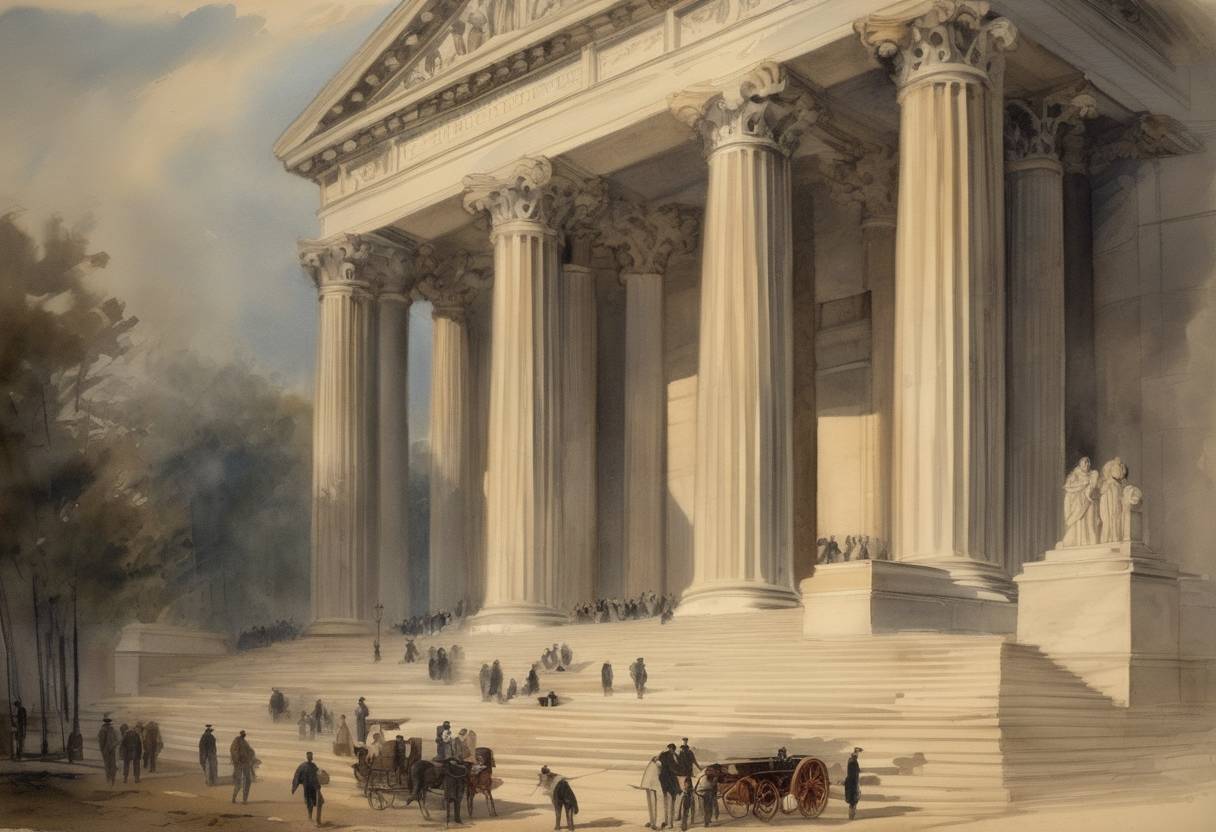
Striking Down of the Civil Rights Act of 1875
On October 15, 1883, the Supreme Court of the United States delivered a landmark decision by declaring certain provisions of the Civil Rights Act of 1875 unconstitutional. The ruling, known collectively as the Civil Rights Cases, comprised five separate cases in which African Americans sued hotels, theatres, and transit companies that had denied them equal access or accommodations.
Background
The Civil Rights Act of 1875 was enacted during the Reconstruction Era. It aimed to guarantee African Americans equal treatment in public accommodations, public transportation, and to prohibit exclusion from jury service. However, the enforcement of this Act faced considerable resistance, particularly in the South.
The 1883 Decision
The Supreme Court’s ruling did not involve a single case but was an amalgamation of various cases brought under the Civil Rights Act:
- United States v. Stanley
- United States v. Ryan
- United States v. Nichols
- United States v. Singleton
- Robinson v. Memphis & Charleston Railroad
In an 8-1 decision, the Court, under Chief Justice Morrison Waite, concluded that the Fourteenth Amendment only prohibited state discrimination and did not authorize Congress to regulate the conduct of private individuals or businesses. The decision effectively annulled the provisions of the Act that addressed private discrimination.
Majority Opinion
Justice Joseph P. Bradley authored the majority opinion, emphasizing that the Fourteenth Amendment was aimed at state actions and did not cover the discriminatory practices of individuals or private entities. The opinion stressed the importance of a clear distinction between state legislature actions and those of private individuals.
Dissenting Opinion
Justice John Marshall Harlan was the sole dissenter in the decision. He argued that the denial of access to public accommodations was a badge of slavery and, therefore, within Congress’s remedial powers under the Thirteenth and Fourteenth Amendments.
Aftermath and Significance
The 1883 decision had far-reaching implications, effectively nullifying federal protection against racial discrimination in public accommodations. This ruling paved the way for the establishment of Jim Crow laws in Southern states, codifying racial segregation and discrimination until the Civil Rights Movement of the 1950s and 1960s.
The implications underscored the limitations of the Fourteenth Amendment, highlighting the need for future civil rights legislation. These legal precedents remained until the Civil Rights Act of 1964, which explicitly prohibited discrimination in public accommodations and marked a significant federal intervention in civil rights.