The Storming of the Bastille: July 14, 1789
1789 · Paris, France
The Storming of the Bastille occurred in Paris, marking a pivotal event in the French Revolution.
December 19, 1370
Construction of the Bastille began in Paris, France, ordered by King Charles V of France to defend the eastern approach to the city from the English and to act as a fortress and a piece of royal power.
Paris, France | The Kingdom of France
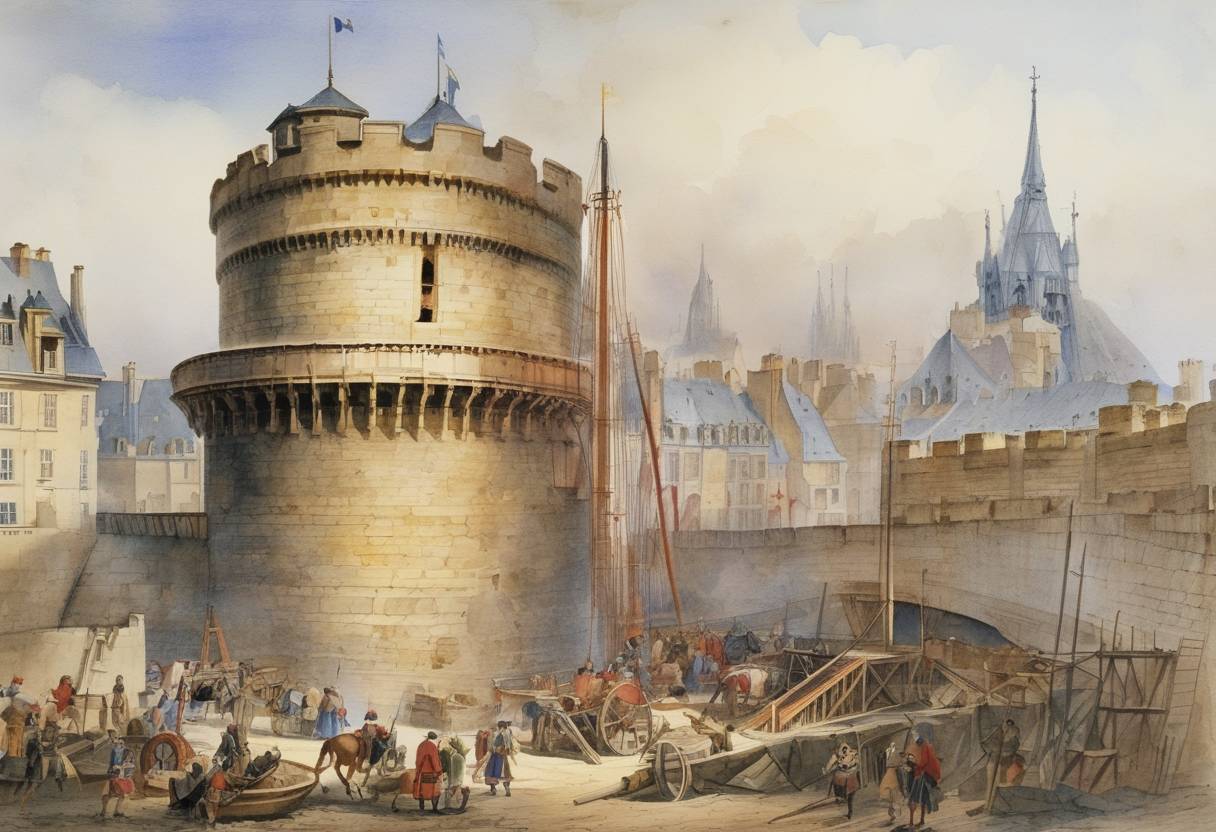
The construction of the Bastille, a symbol that would come to represent royal authority and later revolutionary fervor, officially began on December 19, 1370, in Paris, France. It was commissioned by King Charles V of France as part of his strategic military and urban planning to fortify the city against potential threats, particularly from the English during the Hundred Years’ War.
In the latter half of the 14th century, France was embroiled in the protracted and devastating Hundred Years’ War with England. The conflict, which began in 1337, was driven by territorial disputes and claims to the French throne. The war’s ongoing nature posed a persistent threat to French cities, including Paris, the capital.
The Bastille was conceived as a formidable stronghold, featuring thick walls and multiple towers. The structure was designed by the architect Hugues Aubriot, who was also the Provost of Paris at the time. With its robust design, it could house a substantial garrison intended to defend the city against any invasions.
Following its construction, the Bastille continued to serve various roles aligned with its original design and beyond. While it stood as an icon of control during its operation, its ultimate destruction marked a significant shift in French society towards liberty and republicanism.
The beginning of the Bastille’s construction in 1370 set the stage for its complex and influential role in French history, impacting the cultural and political landscape in ways its founders could scarcely have imagined.
Source: en.wikipedia.org