Siege of Cuddalore Begins - March 13, 1783
1783 · Cuddalore, India
The Siege of Cuddalore begins as part of the American Revolutionary War and ongoing hostilities between the British East India Company and the French.
December 27, 1784
The Battle of Cuddalore took place between British and French forces in the context of the American Revolutionary War in Cuddalore, India, demonstrating the global scope of the conflict.
Cuddalore, India
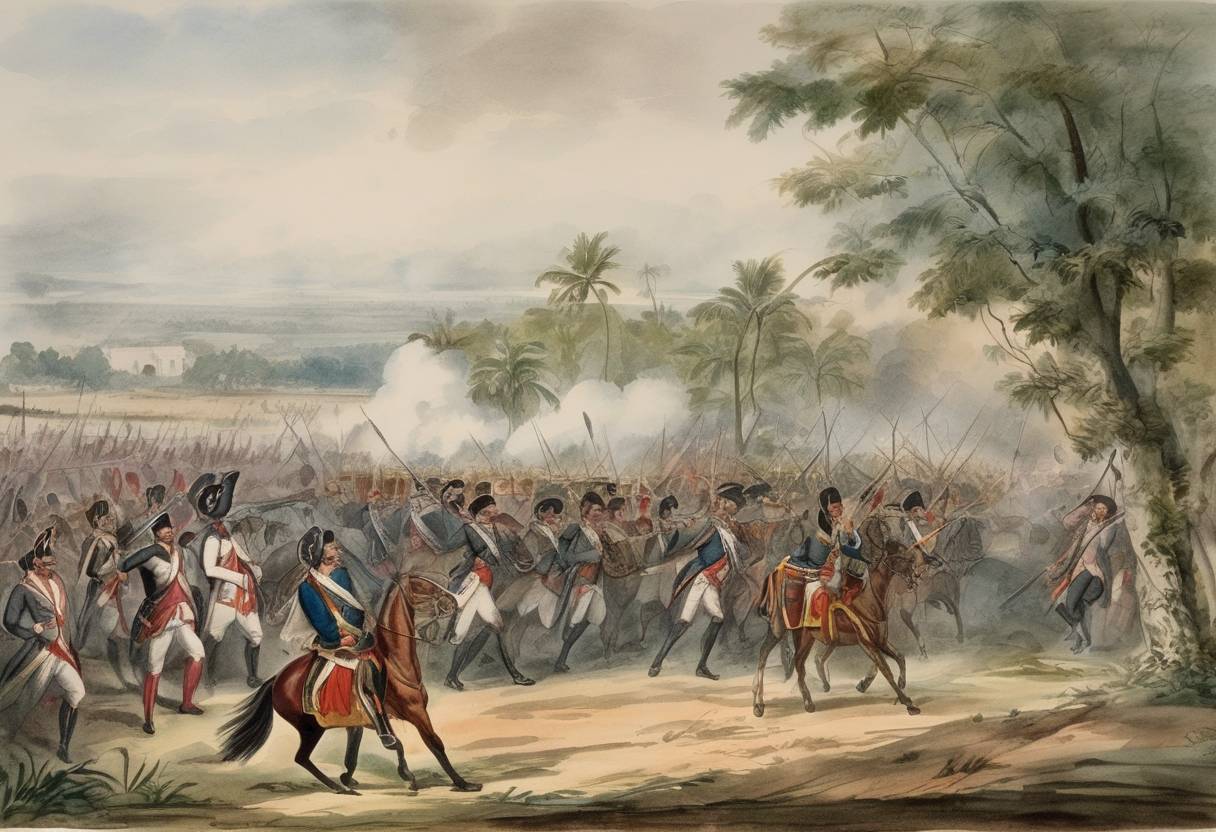
The Battle of Cuddalore, which occurred during the American Revolutionary War, ultimately did not take place on December 27, 1784. Instead, the battle occurred earlier that year, from June 13 to June 25, 1783. The battle took place near Cuddalore, in the Tamil Nadu region of India, highlighting the global reach of the conflict between British and French forces. This engagement was part of a larger struggle for control of territories not only in North America but also across the wider world, including the Indian subcontinent.
In the broader context of the American Revolutionary War, European powers like France, Spain, and the Netherlands allied themselves with the American colonies against Great Britain. In India, this translated into conflicts as part of their colonial ambitions. For France and Britain, dominance in India represented substantial commercial advantages.
Before the Battle of Cuddalore, hostilities between the British and French had been ongoing, as both sought to strengthen their influence in the region. The French had previously captured Cuddalore from the British and were determined to hold onto it.
Admiral Edward Hughes led the British forces, while the French were commanded by the Marquis de Bussy-Castelnau, with naval support from Admiral Pierre André de Suffren. The French aimed to defend their hold on Cuddalore against the superior numbers of the British forces.
The conflict was characterized by land and naval confrontations. On land, British troops attempted to seize the fortress town of Cuddalore but were met with strong resistance from the French and their Indian allies. Despite repeated assaults, the British faced difficulties due to formidable French defenses and increasingly adverse weather conditions.
The battle ended indecisively, with substantial casualties on both sides. However, the broader geopolitical landscape shifted when news of the Treaty of Paris (September 1783)—which formally ended the American Revolutionary War—reached India. This treaty required all hostilities to cease, and as a result, Cuddalore was returned to British control.
The significance of the Battle of Cuddalore lies in its demonstration of the global nature of the American Revolutionary War and the intense rivalry between colonial powers in the 18th century. It underscored the strategic importance of India in global trade routes and empire-building practices of the era.
Although the battle did not result in a decisive victory for either side, it underscored the complexities of colonial warfare and the far-reaching implications of European conflicts. It also highlighted the significance of India as a battleground for European powers, which would continue to be a focal point in the years to come.
The conclusion of hostilities in the region after word of the Treaty of Paris was received marked the end of one chapter of European military engagement in India, though competition for dominance in the region would persist, shaping the future dynamics of British and French colonial ambitions.
Source: en.wikipedia.org