Justinian I Becomes Sole Ruler of the Byzantine Empire
527 · Constantinople, Byzantine Empire
Justinian I becomes the sole ruler of the Byzantine Empire after the death of his uncle, Justin I.
April 11, 0491
Flavius Anastasius I becomes Byzantine Emperor after the death of Zeno.
Constantinople, Byzantine Empire | Byzantine Empire
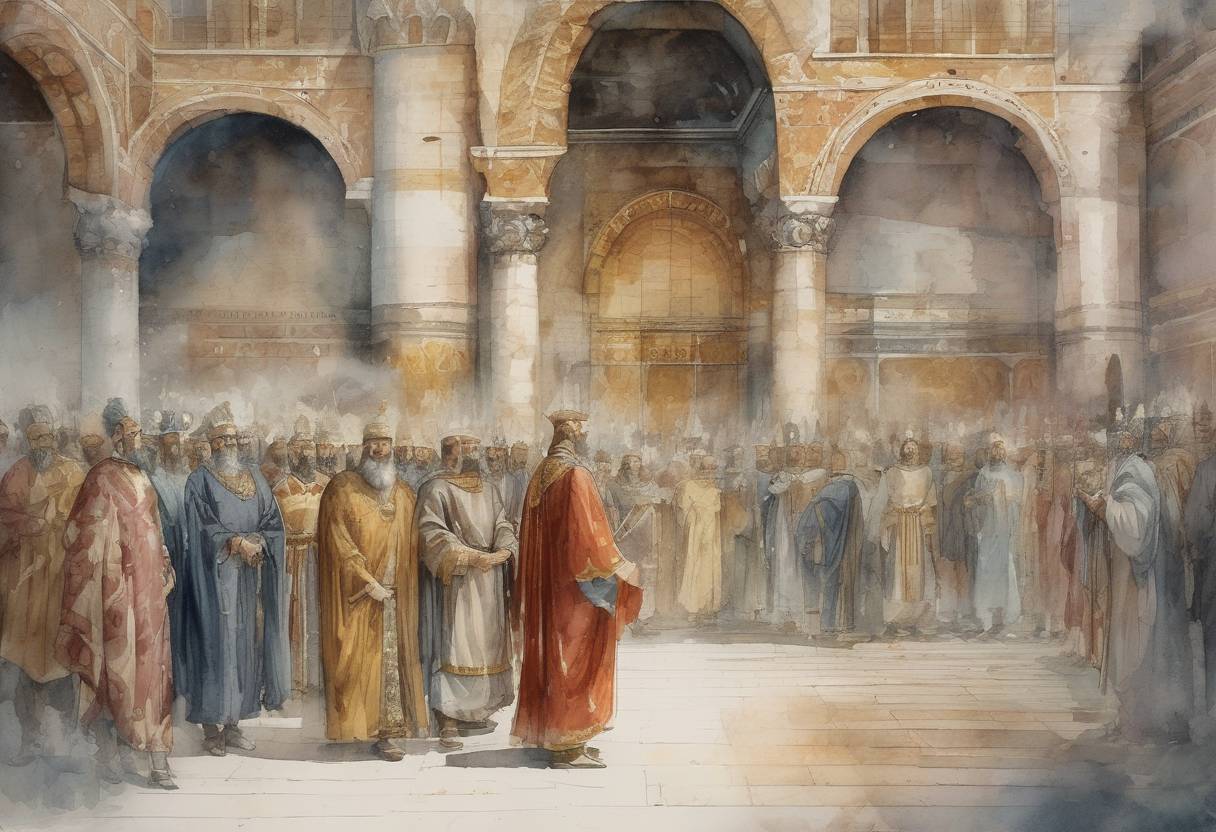
On April 11, 491, Flavius Anastasius I ascended to the throne as the Byzantine Emperor following the death of Emperor Zeno. This transition marked a significant moment in the history of the Byzantine Empire, characterized by both political intrigue and religious tensions.
Emperor Zeno’s Reign (474-491): Zeno’s rule was tumultuous, plagued by internal dissent and external threats. His reign saw the rise of the Ostrogoths under Theodoric the Great and significant religious discord, particularly concerning the Monophysite controversy, which debated the nature of Christ.
Religious Tensions: The religious landscape of the Byzantine Empire was fraught with division. The Monophysite controversy created a schism between those who believed in the single divine nature of Christ and the Chalcedonian definition, which recognized both divine and human natures.
Political Instability: Zeno’s reign was marked by several revolts and challenges to his authority, including the Isaurian War and the rebellion led by Basiliscus. His death left a power vacuum that needed careful navigation.
Selection as Emperor: Anastasius was a senior official in the Byzantine court, known for his administrative skills and moderate stance on religious issues. His selection was influenced by Empress Ariadne, Zeno’s widow, who played a crucial role in the succession process.
Coronation: Anastasius was crowned on April 11, 491, amidst a backdrop of political maneuvering. His ascension was initially met with resistance from the Isaurian faction, loyal to Zeno, leading to the Isaurian War (492-497), which Anastasius eventually quelled.
Administrative Reforms: Anastasius is noted for his fiscal reforms, which stabilized the empire’s economy. He reformed the tax system, introduced a new copper coinage (the follis), and reduced the burden on the peasantry.
Religious Policies: Although initially seen as a moderate, Anastasius’ reign saw increasing support for Monophysitism, which led to tensions with the Chalcedonian majority and the papacy in Rome.
Military and Defense: Anastasius strengthened the empire’s defenses, notably constructing the Anastasian Wall to protect Constantinople from invasions.
Legacy: Anastasius’ reign is often viewed as a period of relative stability and prosperity for the Byzantine Empire. His economic and administrative reforms laid the groundwork for future emperors.
Religious Impact: The religious policies of Anastasius contributed to the ongoing theological debates that would continue to shape the Byzantine Empire’s internal and external relations.
Succession: Anastasius died in 518 without a direct heir, leading to the ascension of Justin I, which marked the beginning of the Justinian dynasty.
Anastasius I’s reign is a testament to the complexities of Byzantine politics and the enduring impact of religious and administrative reforms on the empire’s history.
Source: en.wikipedia.org