Space Shuttle Discovery's Final Mission: STS-133
2011 · Cape Canaveral, United States
The Space Shuttle Discovery completed its final mission, STS-133, and landed at Kennedy Space Center in Florida.
July 26, 2005
The Space Shuttle Discovery was launched on mission STS-114, marking NASA's first return to flight since the Columbia disaster in 2003.
Cape Canaveral, United States | NASA
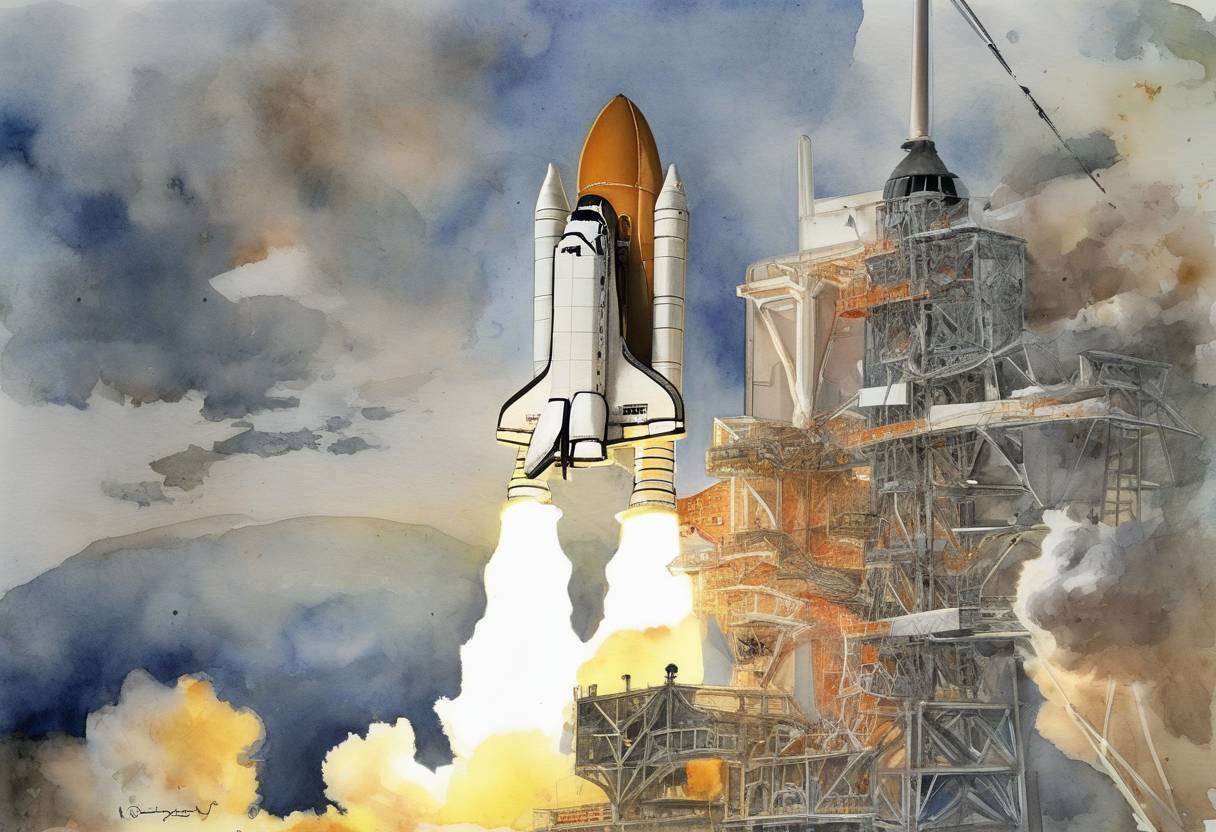
On July 26, 2005, the Space Shuttle Discovery launched on mission STS-114 from Kennedy Space Center in Florida. This mission was particularly significant as it marked NASA’s first “Return to Flight” since the tragic Columbia disaster on February 1, 2003, which resulted in the loss of all seven astronauts aboard.
Columbia Disaster (2003): The Space Shuttle Columbia disintegrated upon re-entry due to damage sustained during launch when a piece of foam insulation broke off from the external tank and struck the left wing. This incident led to a suspension of the shuttle program and a comprehensive investigation by the Columbia Accident Investigation Board (CAIB).
Investigation and Reforms: The CAIB report outlined several safety recommendations and technical improvements needed before shuttle flights could resume. These included enhancements in foam insulation application, improved inspection and repair techniques, and better in-flight imaging.
Testing New Safety Procedures: The mission aimed to test and validate new safety measures, including in-orbit inspection and repair techniques for the shuttle’s thermal protection system.
Resupply and Maintenance of the ISS: Discovery delivered supplies and equipment to the International Space Station (ISS) and performed maintenance tasks.
Spacewalks: The mission included three spacewalks, during which astronauts tested repair techniques and replaced a failed gyroscope on the ISS.
In-Orbit Inspections: For the first time, astronauts used the Orbiter Boom Sensor System, a 50-foot extension equipped with cameras and lasers, to inspect the shuttle’s heat shield for damage.
Successful Repairs: During a spacewalk, astronaut Stephen Robinson successfully removed two protruding gap fillers from Discovery’s heat shield, a critical repair to ensure safe re-entry.
Safety Improvements: The successful completion of STS-114 demonstrated the effectiveness of NASA’s new safety protocols and inspection techniques, restoring confidence in the shuttle program.
Continued Vigilance: Despite the mission’s success, concerns about foam shedding persisted, leading to further refinements in shuttle safety measures.
Legacy: STS-114 paved the way for subsequent shuttle missions and underscored the importance of rigorous safety standards in human spaceflight.
The STS-114 mission was a pivotal moment in NASA’s history, symbolizing resilience and commitment to safety in the pursuit of space exploration.
Source: www.nasa.gov