The Battle of Uhud: October 25, 625
625 · Uhud, present-day Saudi Arabia
The Battle of Uhud took place between the early Muslims led by the Prophet Muhammad and the Quraysh tribe of Mecca.
March 13, 0624
The Battle of Badr, a key battle in early Islamic history, took place. It was the first major battle between the Muslims of Medina, led by the Prophet Muhammad, and the Quraysh of Mecca. The Muslim victory was significant in establishing Islam's presence in the Arabian Peninsula.
Badr, present-day Saudi Arabia | Muslim forces
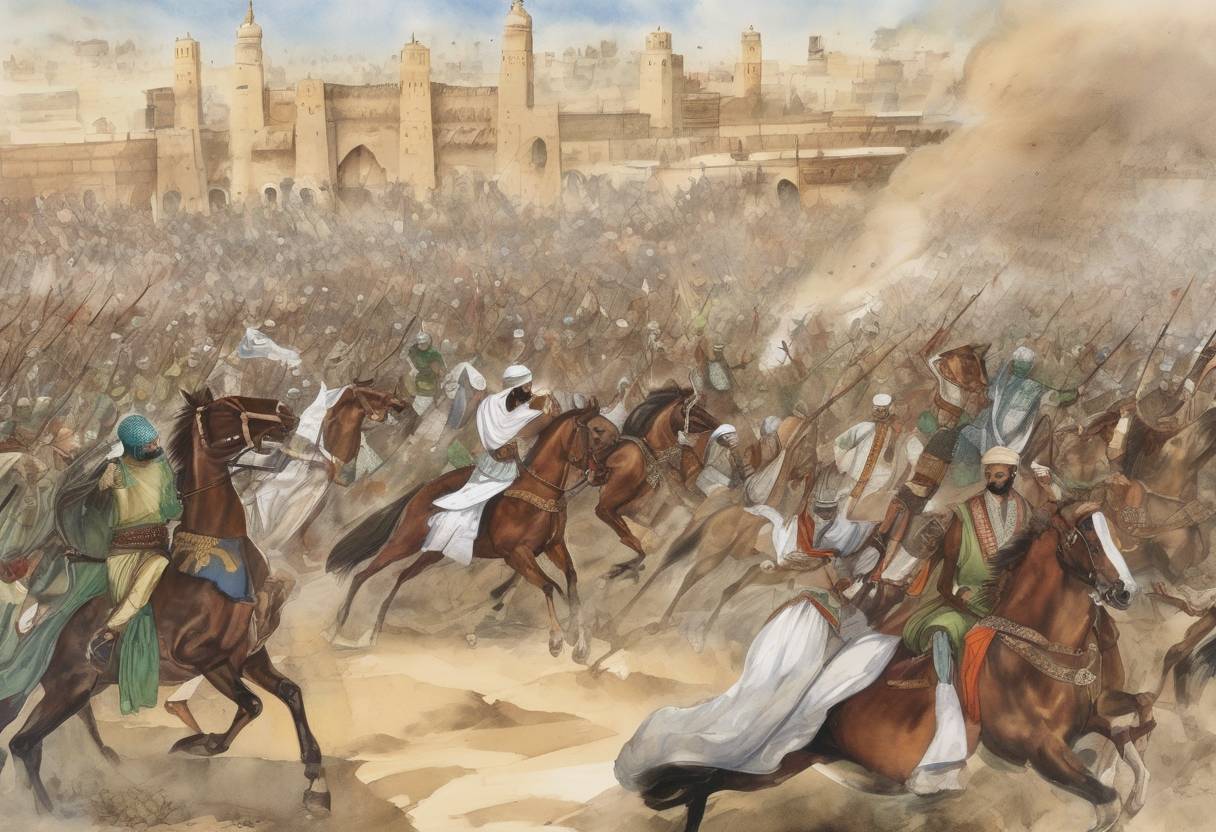
The Battle of Badr, fought on March 13, 624 CE, is one of the most significant events in early Islamic history. It marked the first major military confrontation between the nascent Muslim community of Medina, led by the Prophet Muhammad, and the Quraysh tribe of Mecca. This battle is pivotal not only for its immediate military outcome but also for its profound impact on the spread and establishment of Islam in the Arabian Peninsula.
Migration to Medina: In 622 CE, the Prophet Muhammad and his followers, facing persecution in Mecca, migrated to Yathrib, later known as Medina. This migration, known as the Hijra, was a turning point that allowed the Muslim community to establish a base of support and governance.
Tensions with Quraysh: The Quraysh, a powerful merchant tribe in Mecca, viewed Muhammad’s growing influence as a threat to their economic and religious dominance. The tension between the Muslims and the Quraysh continued to escalate, leading to skirmishes and economic blockades.
Strategic Importance: Control over trade routes was crucial for the economic survival of both Mecca and Medina. The Muslims aimed to intercept a Quraysh caravan returning from Syria, which was laden with goods and wealth.
Forces Involved: The Muslim forces numbered around 313 men, including both Muhajirun (emigrants from Mecca) and Ansar (helpers from Medina). The Quraysh army was significantly larger, with approximately 1,000 well-equipped soldiers.
Location: The battle took place near the wells of Badr, approximately 80 miles southwest of Medina. The location was strategically chosen by the Muslims to control the water supply and force the Quraysh into a disadvantageous position.
Tactics and Outcome: Despite being outnumbered, the Muslims employed strategic tactics, including the use of the terrain and surprise maneuvers. The battle resulted in a decisive victory for the Muslims, with significant losses for the Quraysh, including several of their leaders.
Moral and Political Boost: The victory at Badr was a major morale booster for the Muslim community. It demonstrated that they could stand against the more powerful Quraysh and was seen as a sign of divine support.
Consolidation of Power: The battle solidified Muhammad’s leadership and increased his influence in the region. It also attracted more converts to Islam, strengthening the Muslim community.
Long-term Impact: The victory at Badr set the stage for future confrontations with the Quraysh and other tribes. It was a crucial step in the eventual unification of the Arabian Peninsula under Islam.
The Battle of Badr remains a symbol of faith and perseverance in Islamic tradition, celebrated for its demonstration of strategic acumen and the unity of the Muslim community under the leadership of the Prophet Muhammad.
Source: en.wikipedia.org