The Edict of Worms: May 25, 1521
1521 · Worms, Holy Roman Empire
The Diet of Worms ends with the Edict of Worms, which declared Martin Luther an outlaw and heretic for his refusal to recant his teachings.
May 26, 1521
Martin Luther was declared an outlaw by the Edict of Worms, issued by Emperor Charles V.
Worms, Holy Roman Empire | Holy Roman Empire
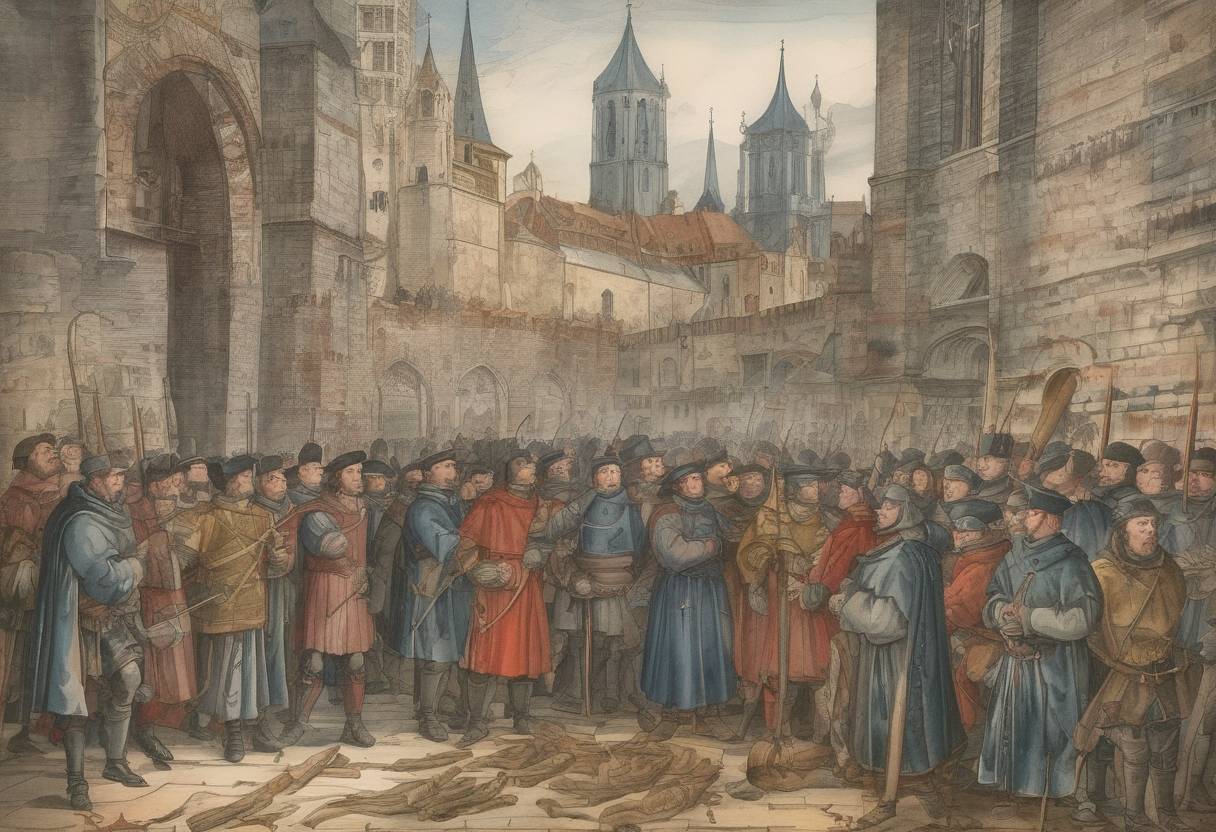
On May 26, 1521, the Edict of Worms was issued by Emperor Charles V, declaring Martin Luther an outlaw within the Holy Roman Empire. This significant event marked a pivotal moment in the Protestant Reformation, a religious movement that sought to reform the Roman Catholic Church and ultimately led to the establishment of Protestantism.
Martin Luther, a German monk and theologian, had become a central figure in the Reformation due to his criticisms of the Catholic Church, particularly the sale of indulgences. His “Ninety-Five Theses,” published in 1517, challenged church practices and doctrines, sparking widespread debate and controversy.
In response to his growing influence and the perceived threat to church authority, Pope Leo X excommunicated Luther in January 1521 through the papal bull “Decet Romanum Pontificem.” Despite this, Luther’s ideas continued to gain traction, leading to his summons to the Diet of Worms, an imperial council convened by Emperor Charles V.
The Diet of Worms took place from January to May 1521, with Luther appearing before the assembly in April. During his appearance, Luther was asked to recant his writings and teachings. He famously refused, stating, “Here I stand, I can do no other,” emphasizing his commitment to his beliefs and conscience.
Following Luther’s refusal to recant, the Edict of Worms was issued on May 26, 1521. The edict declared Luther a heretic and an outlaw, meaning that he could be arrested or killed without legal consequence. It also banned his writings and prohibited anyone from providing him shelter or aid.
Despite the edict, Luther found protection under Frederick the Wise, Elector of Saxony, who arranged for his safe passage to Wartburg Castle. There, Luther continued his work, including translating the New Testament into German, making the scriptures more accessible to the general populace.
The Edict of Worms failed to suppress the Reformation. Instead, it galvanized Luther’s supporters and contributed to the spread of Protestant ideas across Europe. The movement ultimately led to significant religious, political, and cultural changes, reshaping the landscape of Christianity and European society.
The Edict of Worms remains a crucial moment in history, symbolizing the clash between emerging Protestant ideals and established Catholic authority, and highlighting the enduring impact of Martin Luther’s defiance.
Source: en.wikipedia.org