Hawaii Becomes the 50th State of the United States
1959 · Honolulu, United States
Hawaii becomes the 50th state of the United States.
June 14, 1900
Hawaii becomes a United States territory.
Honolulu, United States | United States Congress
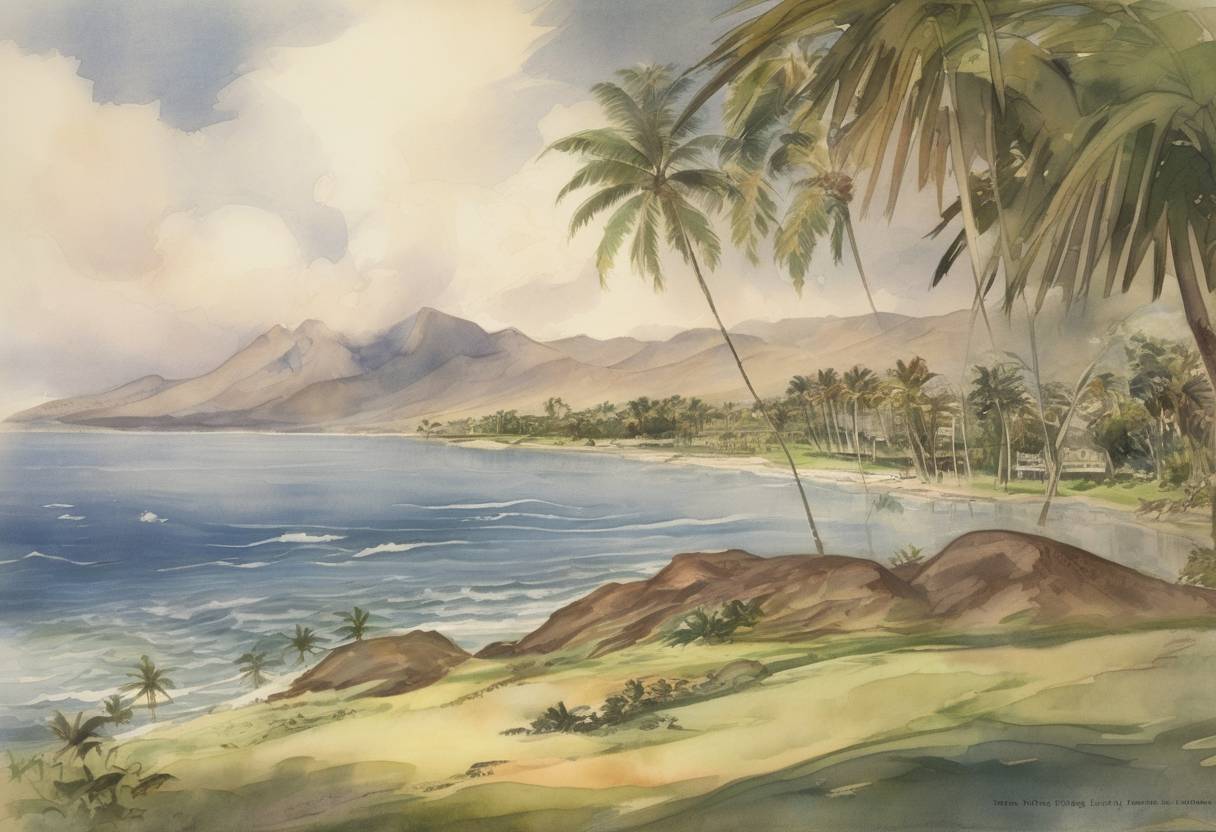
On June 14, 1900, Hawaii officially became a territory of the United States, marking a significant moment in both Hawaiian and American history. This transition was the culmination of a series of events that began with the islands’ strategic and economic importance to the United States.
Strategic Importance: Hawaii’s location in the Pacific Ocean made it a valuable asset for military and trade purposes. The islands served as a critical stopover for ships traveling between the United States and Asia.
Economic Interests: American business interests, particularly in the sugar industry, had been growing in Hawaii since the mid-19th century. The Reciprocity Treaty of 1875 allowed Hawaiian sugar to enter the U.S. market duty-free, further intertwining the economies of Hawaii and the United States.
Overthrow of the Monarchy: In 1893, a group of American and European businessmen, with the support of the U.S. Minister to Hawaii, orchestrated the overthrow of Queen Liliʻuokalani, the last reigning monarch of Hawaii. This led to the establishment of a provisional government.
Annexation: After several years of political maneuvering and debate, Hawaii was annexed by the United States on July 7, 1898, through the Newlands Resolution. This was partly driven by the strategic needs of the U.S. during the Spanish-American War.
Legislation: The Hawaiian Organic Act, passed by the U.S. Congress and signed into law by President William McKinley, established the Territory of Hawaii. This act provided a framework for the territorial government, including a governor appointed by the President, a bicameral legislature, and a judicial system.
Citizenship: The act granted U.S. citizenship to residents of Hawaii, allowing them to participate in the political process and be represented in the U.S. Congress by a non-voting delegate.
Cultural Impact: The transition to territorial status marked a significant shift in Hawaiian society, as American laws and customs increasingly influenced the islands. This period saw a blending and sometimes clashing of Hawaiian and American cultures.
Path to Statehood: The territorial status was a step towards eventual statehood, which Hawaii achieved on August 21, 1959, becoming the 50th state of the United States.
Strategic Role: As a U.S. territory, Hawaii played a crucial role in American military strategy, particularly during World War II, with the attack on Pearl Harbor in 1941 underscoring its strategic importance.
The establishment of Hawaii as a U.S. territory on June 14, 1900, was a pivotal moment that laid the groundwork for its future as an integral part of the United States, while also marking a period of significant change and adaptation for the Hawaiian people.
Source: en.wikipedia.org