Abel Tasman's Discovery of Van Diemen's Land
1642 · Tasmania, Australia
Abel Tasman becomes the first European to discover the island of Van Diemen's Land (later renamed Tasmania).
April 5, 1722
Dutch explorer Jacob Roggeveen discovered Easter Island, known for its monumental statues called moai.
Easter Island, Chile | Dutch East India Company
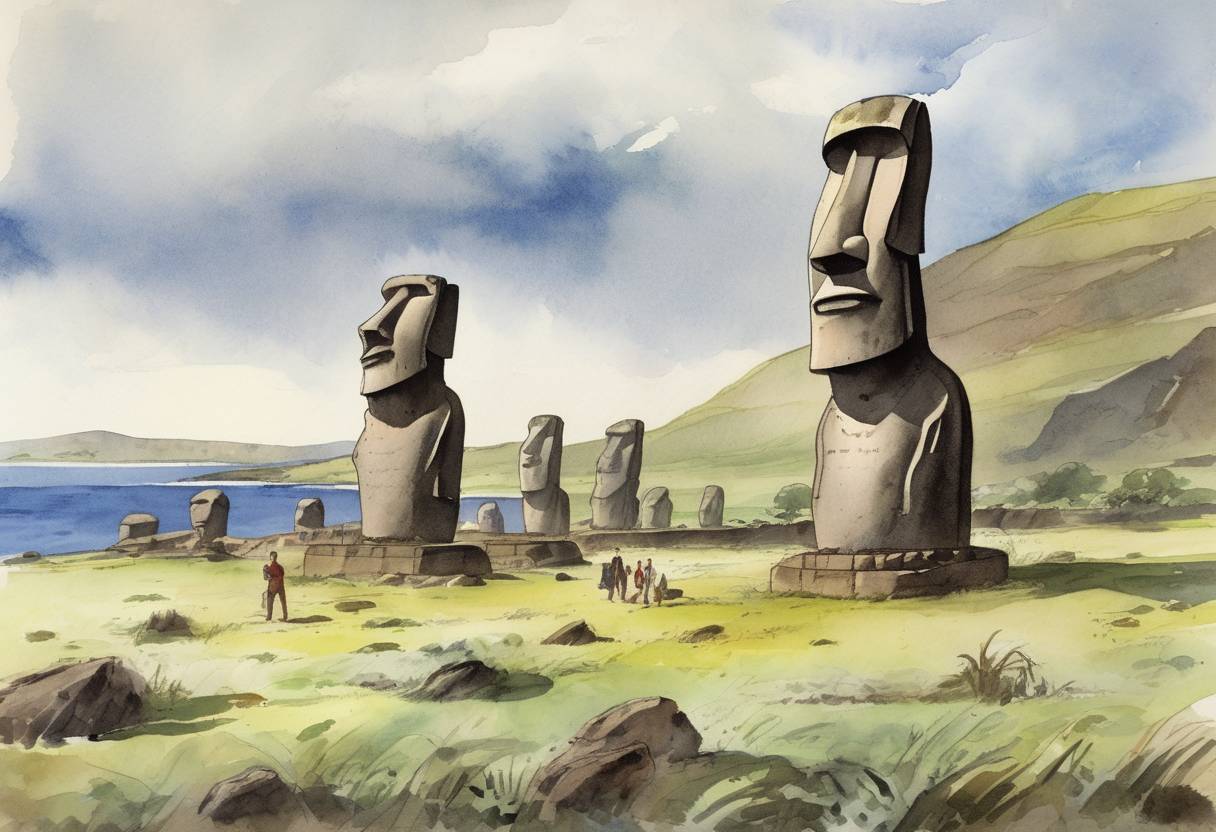
On April 5, 1722, Dutch explorer Jacob Roggeveen became the first European to record the discovery of Easter Island, known for its monumental statues called moai. This event marked a significant moment in the history of European exploration in the Pacific.
Jacob Roggeveen was born in 1659 in Middelburg, Netherlands. He was an experienced navigator and explorer, having previously worked with the Dutch East India Company. In 1721, he set out on an expedition to find Terra Australis, a hypothesized continent in the Southern Hemisphere. Roggeveen’s fleet consisted of three ships: the Arend, the Thienhoven, and the Afrikaansche Galey.
On Easter Sunday, April 5, 1722, Roggeveen’s expedition sighted an isolated island in the southeastern Pacific Ocean. He named it “Paasch-Eyland,” which translates to “Easter Island” in Dutch, in honor of the day of its discovery. The island is known to its indigenous Rapa Nui people as “Rapa Nui.”
Upon landing, Roggeveen and his crew were astonished by the sight of the island’s massive stone statues, known as moai. These statues, carved from volcanic tuff, are believed to have been created by the Rapa Nui people between the 13th and 16th centuries. The moai are characterized by their large heads and torsos, and they are thought to represent the ancestors of the island’s inhabitants.
Roggeveen’s discovery of Easter Island introduced the Western world to the island’s unique culture and monumental architecture. The moai statues have since become iconic symbols of the island and are considered one of the most significant archaeological sites in the world.
Following Roggeveen’s discovery, Easter Island became a point of interest for European explorers and missionaries. However, contact with Europeans eventually led to significant cultural and demographic changes for the Rapa Nui people, including the introduction of diseases and the impact of slave raids in the 19th century.
The discovery of Easter Island by Roggeveen is part of the larger narrative of European exploration and colonization in the Pacific. It highlights the era’s drive for exploration and the subsequent cultural exchanges and conflicts that arose from these encounters.
In summary, Jacob Roggeveen’s discovery of Easter Island on April 5, 1722, is a pivotal moment in the history of exploration, bringing to light the island’s remarkable moai statues and opening a new chapter in the interaction between European explorers and the indigenous peoples of the Pacific.
Source: en.wikipedia.org