Discovery of Kepler-186f: A Milestone in Exoplanet Research
2014 · Mountain View, United States
NASA's Kepler space telescope confirmed the discovery of the first Earth-size planet in the habitable zone of another star, named Kepler-186f.
March 7, 2009
NASA's Kepler Space Telescope was launched from Cape Canaveral, Florida. The mission was designed to discover Earth-like planets orbiting other stars by monitoring the brightness of over 150,000 stars.
Cape Canaveral, United States | NASA
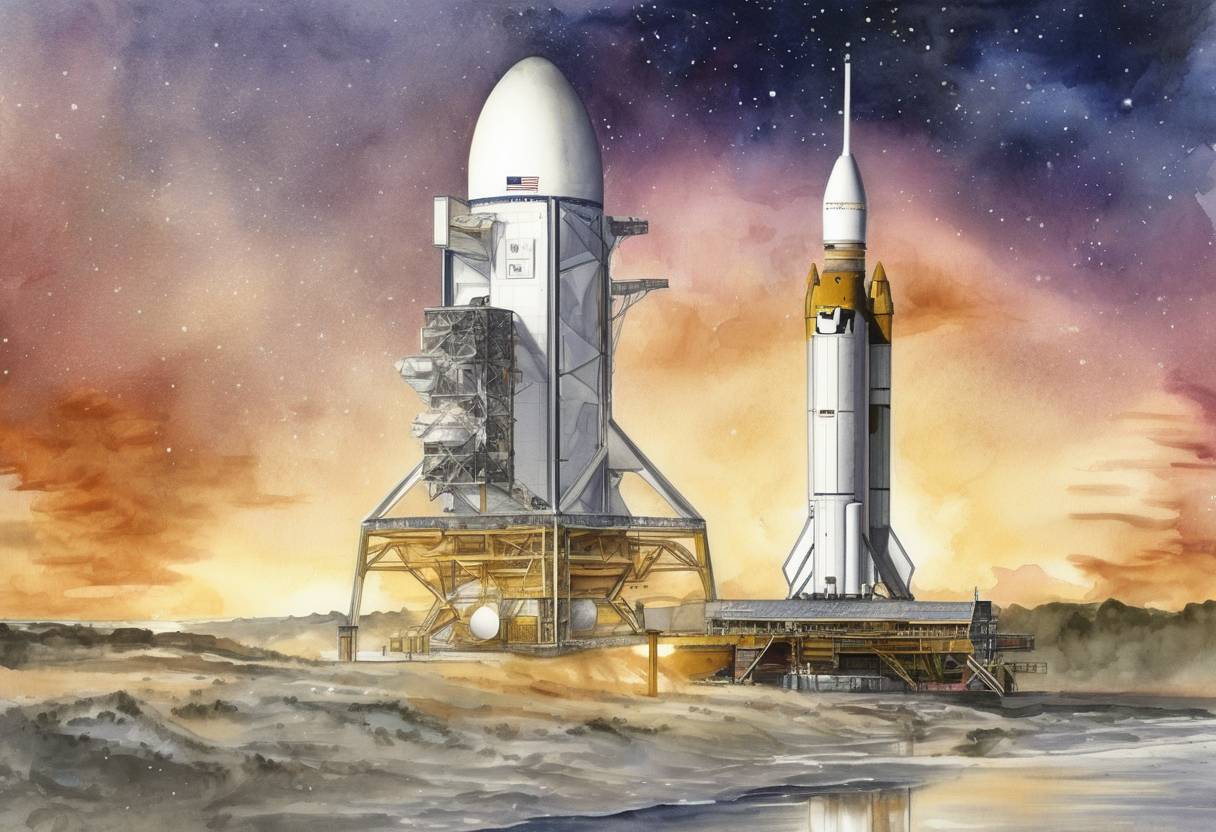
On March 7, 2009, NASA launched the Kepler Space Telescope from Cape Canaveral, Florida, marking a significant milestone in the search for Earth-like planets beyond our solar system. The mission was named after the renowned 17th-century German astronomer Johannes Kepler, who is best known for his laws of planetary motion.
The primary objective of the Kepler mission was to discover Earth-sized planets orbiting other stars in the habitable zone, where conditions might be right for liquid water—and possibly life—to exist. To achieve this, Kepler was equipped with a photometer designed to continuously monitor the brightness of over 150,000 stars in a fixed field of view.
Kepler employed the transit method to detect exoplanets. This involved observing the slight dimming of a star’s light when a planet passed in front of it, known as a transit. By measuring these periodic dips in brightness, scientists could infer the presence of a planet, its size, and its orbital period.
Kepler’s discoveries have profoundly impacted our understanding of the galaxy. It provided the first clear evidence that planets are common in the Milky Way, with many stars hosting their own planetary systems. The data collected by Kepler has been instrumental in advancing the field of exoplanet research and has paved the way for future missions, such as the Transiting Exoplanet Survey Satellite (TESS) and the James Webb Space Telescope.
The Kepler Space Telescope’s mission officially ended on October 30, 2018, when NASA announced that the spacecraft had run out of fuel. Despite this, the wealth of data it collected continues to be analyzed, offering new insights into the universe and inspiring future generations of astronomers and scientists.
Kepler’s legacy endures as a testament to human curiosity and the quest to understand our place in the cosmos.
Source: www.nasa.gov