The Battle of Roncevaux Pass - August 15, 778
778 · Roncevaux Pass, Modern-day Spain
The Battle of Roncevaux Pass occurs, where Basque forces ambush Charlemagne's rear guard. This event is famously romanticized in the epic poem 'The Song of Roland.'
May 12, 0907
The Battle of Pressburg begins, marking a significant conflict between the Frankish Empire and the Hungarian forces.
Pressburg, East Francia | Frankish Empire
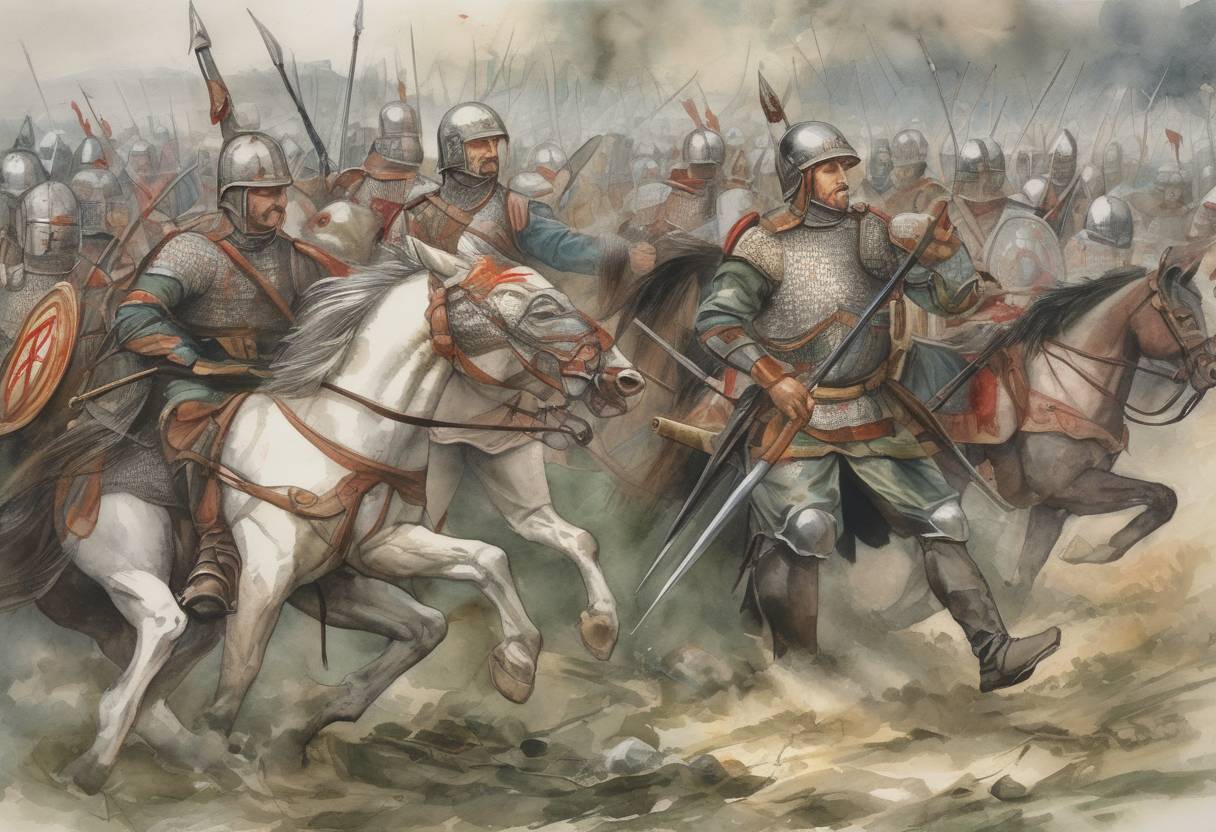
The Battle of Pressburg, which began on May 12, 907, was a pivotal conflict between the forces of the Frankish Empire and the Hungarian tribes. This battle marked a significant moment in the early medieval power struggles in Central Europe.
In the early 10th century, the Carpathian Basin was a region of strategic importance. The Hungarian tribes, having migrated into the area around 895, were establishing their presence and expanding their influence. The Frankish Empire, under the leadership of King Louis the Child, sought to curb this expansion and assert control over the region.
Hungarian Expansion: The Hungarians had been conducting raids across Europe, reaching as far as the Frankish territories. Their mobility and military tactics posed a significant threat to the stability of the region.
Frankish Response: In response to the Hungarian incursions, the Frankish Empire organized a military campaign to decisively defeat the Hungarians and secure their eastern borders.
The Battle of Pressburg, also known as the Battle of Bratislava, took place near the modern-day city of Bratislava, Slovakia. The Frankish forces, led by Luitpold, Margrave of Bavaria, and Archbishop Theotmar of Salzburg, faced the Hungarian army.
Tactics and Strategy: The Hungarians employed their renowned cavalry tactics, utilizing swift and unpredictable maneuvers that overwhelmed the Frankish forces.
Outcome: The battle resulted in a decisive victory for the Hungarians. The Frankish army suffered heavy losses, including the deaths of many high-ranking nobles and military leaders.
Hungarian Dominance: The victory at Pressburg solidified Hungarian control over the Carpathian Basin and allowed them to continue their raids into Western Europe for several decades.
Frankish Decline: The defeat significantly weakened the eastern defenses of the Frankish Empire, contributing to its eventual fragmentation and the rise of regional powers.
Long-term Impact: The battle underscored the effectiveness of Hungarian military tactics and marked a shift in the balance of power in Central Europe. It also set the stage for future interactions between the Hungarians and neighboring states.
The Battle of Pressburg is a crucial event in understanding the dynamics of medieval Europe. It highlights the challenges faced by established empires in dealing with nomadic and semi-nomadic groups and underscores the importance of military innovation and adaptability in medieval warfare.
In summary, the Battle of Pressburg was not just a military engagement but a turning point that influenced the political landscape of Central Europe for years to come.
Source: en.wikipedia.org