1774 · London, United Kingdom
The Quartering Act, part of the Intolerable Acts, is passed by the British Parliament. It requires American colonies to provide housing and supplies to British soldiers stationed in America.
April 27, 1773
The British Parliament passed the Tea Act, which would lead to the Boston Tea Party and escalate tensions between Britain and the American colonies.
London, United Kingdom | British Parliament
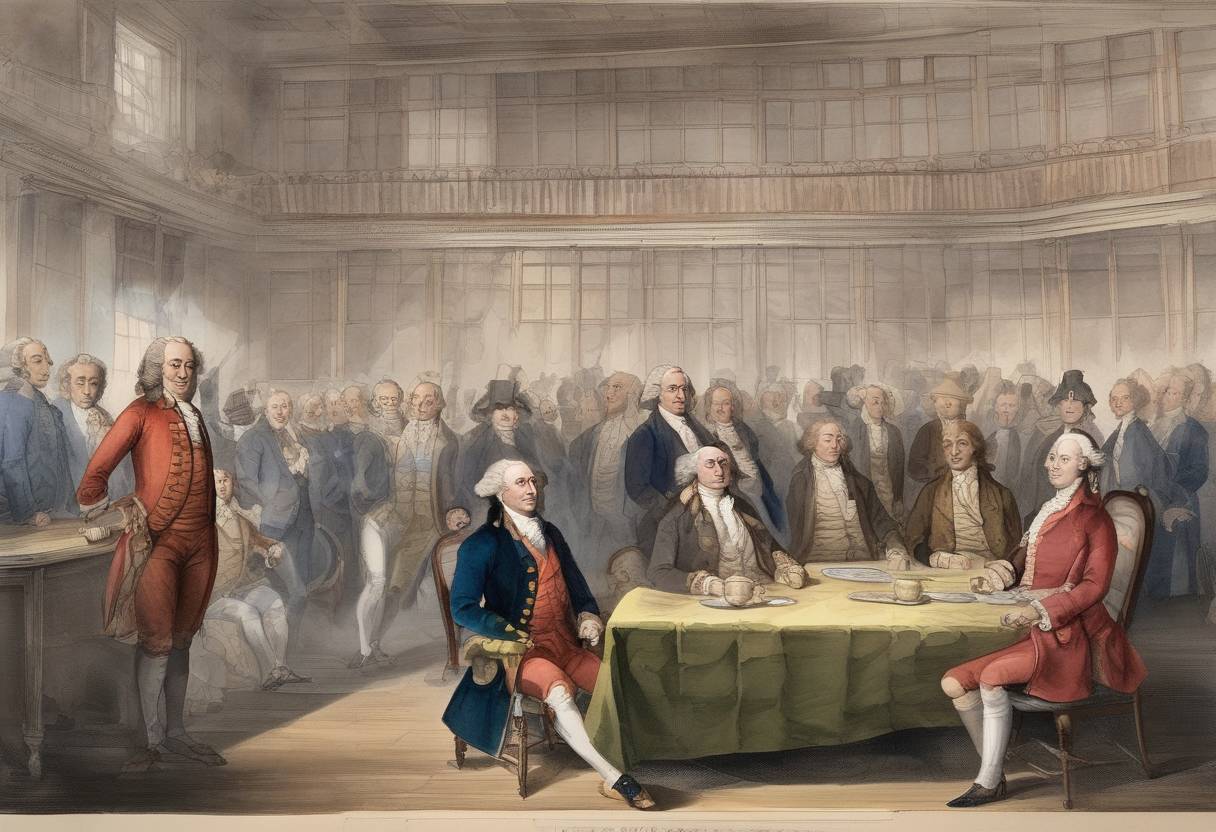
On April 27, 1773, the British Parliament passed the Tea Act, a pivotal piece of legislation that would significantly escalate tensions between Britain and its American colonies, ultimately contributing to the outbreak of the American Revolutionary War. The Tea Act was designed to aid the struggling British East India Company by granting it a monopoly on the American tea trade, allowing the company to sell its surplus tea directly to the colonies without the usual import duties.
The British East India Company was facing severe financial difficulties in the early 1770s. To alleviate these issues, the British government sought to assist the company by passing the Tea Act. This act allowed the East India Company to bypass colonial merchants and sell tea directly to American consumers at a reduced price, even with the existing tax on tea from the Townshend Acts still in place.
The Tea Act was intended to achieve several objectives:
Financial Relief for the East India Company: By allowing the company to sell directly to the colonies, it could offload its surplus tea and improve its financial standing.
Reassertion of Parliamentary Authority: The act was also a means for the British government to reaffirm its right to tax the colonies, following the repeal of most of the Townshend duties except for the tax on tea.
Lowering Tea Prices: By reducing the price of tea, the British hoped to undercut the smuggled Dutch tea that was popular in the colonies, thereby increasing revenue from the tea tax.
The Tea Act was met with fierce opposition in the American colonies. Many colonists viewed it as another example of taxation without representation, a principle they had been protesting since the Stamp Act of 1765. The act was seen not only as an economic threat to colonial merchants but also as a political maneuver to enforce British control over the colonies.
The most famous reaction to the Tea Act was the Boston Tea Party, which occurred on December 16, 1773. In protest, members of the Sons of Liberty, disguised as Mohawk Indians, boarded three British ships in Boston Harbor and dumped 342 chests of tea into the water. This act of defiance was a direct challenge to British authority and galvanized colonial resistance.
The Boston Tea Party prompted the British government to respond with the Coercive Acts (also known as the Intolerable Acts) in 1774, which further restricted colonial autonomy and punished Massachusetts for the destruction of the tea. These acts included the closing of Boston Harbor and the revocation of Massachusetts’ charter, leading to increased unity among the colonies against British rule.
The Tea Act and the subsequent Boston Tea Party were critical in the chain of events that led to the American Revolutionary War. They highlighted the growing divide between Britain and its American colonies and underscored the colonists’ demand for greater autonomy and representation.
In summary, the Tea Act of 1773 was a significant catalyst in the escalating conflict between Britain and the American colonies, setting the stage for the revolutionary movement that would soon follow.
Source: en.wikipedia.org