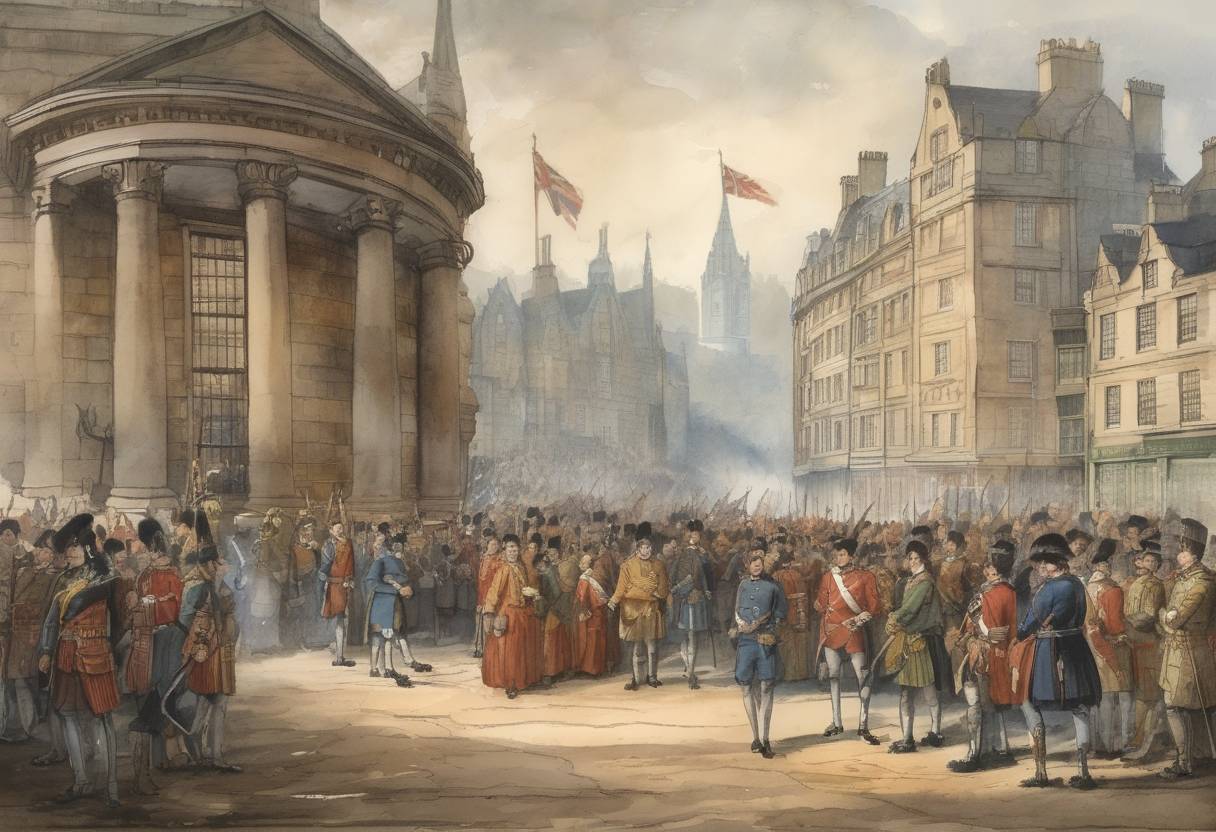
The Treaty of Edinburgh-Northampton: May 1, 1328
The Treaty of Edinburgh-Northampton, signed on May 1, 1328, marked a significant turning point in the history of Scotland and England, effectively ending the First War of Scottish Independence. This treaty was a formal acknowledgment by England of Scotland’s status as an independent kingdom, bringing a temporary halt to the hostilities that had persisted for over three decades.
Historical Context
The First War of Scottish Independence began in 1296, following King Edward I of England’s invasion of Scotland. This conflict was characterized by a series of battles, shifting alliances, and the rise of notable Scottish leaders, such as William Wallace and Robert the Bruce. The war was fueled by Scotland’s resistance to English attempts at domination and control.
Key Events Leading to the Treaty
- Battle of Bannockburn (1314): A decisive Scottish victory under Robert the Bruce, which significantly bolstered Scottish morale and weakened English resolve.
- Diplomatic Efforts: Following years of intermittent warfare, both nations were exhausted. Diplomatic negotiations intensified, particularly after the death of Edward II of England in 1327 and the ascension of his son, Edward III, who was still a minor.
The Treaty Provisions
The Treaty of Edinburgh-Northampton was negotiated between representatives of Robert the Bruce, King of Scots, and the regency government of Edward III of England. The key provisions of the treaty included:
- Recognition of Scottish Independence: England formally recognized Scotland as an independent kingdom, with Robert the Bruce as its rightful king.
- Borders: The treaty established the border between Scotland and England as it existed before the conflict, essentially recognizing the status quo ante bellum.
- Marriage Alliance: To solidify peace, a marriage was arranged between Robert the Bruce’s son, David, and Joan of the Tower, the sister of Edward III.
Aftermath and Significance
The Treaty of Edinburgh-Northampton was a landmark in Scottish history, as it affirmed Scotland’s sovereignty and ended a prolonged period of conflict. However, the peace it established was fragile. The treaty was unpopular in England, where many viewed it as a humiliating concession. This discontent eventually contributed to the outbreak of the Second War of Scottish Independence in 1332.
Despite its temporary nature, the treaty was a crucial step in the long struggle for Scottish independence and set a precedent for future negotiations between the two kingdoms. It underscored the resilience of Scottish resistance and the complexities of medieval diplomacy.
In summary, the Treaty of Edinburgh-Northampton was a pivotal moment in the history of Scotland and England, symbolizing a hard-won recognition of Scottish independence and the temporary cessation of hostilities between the two nations.