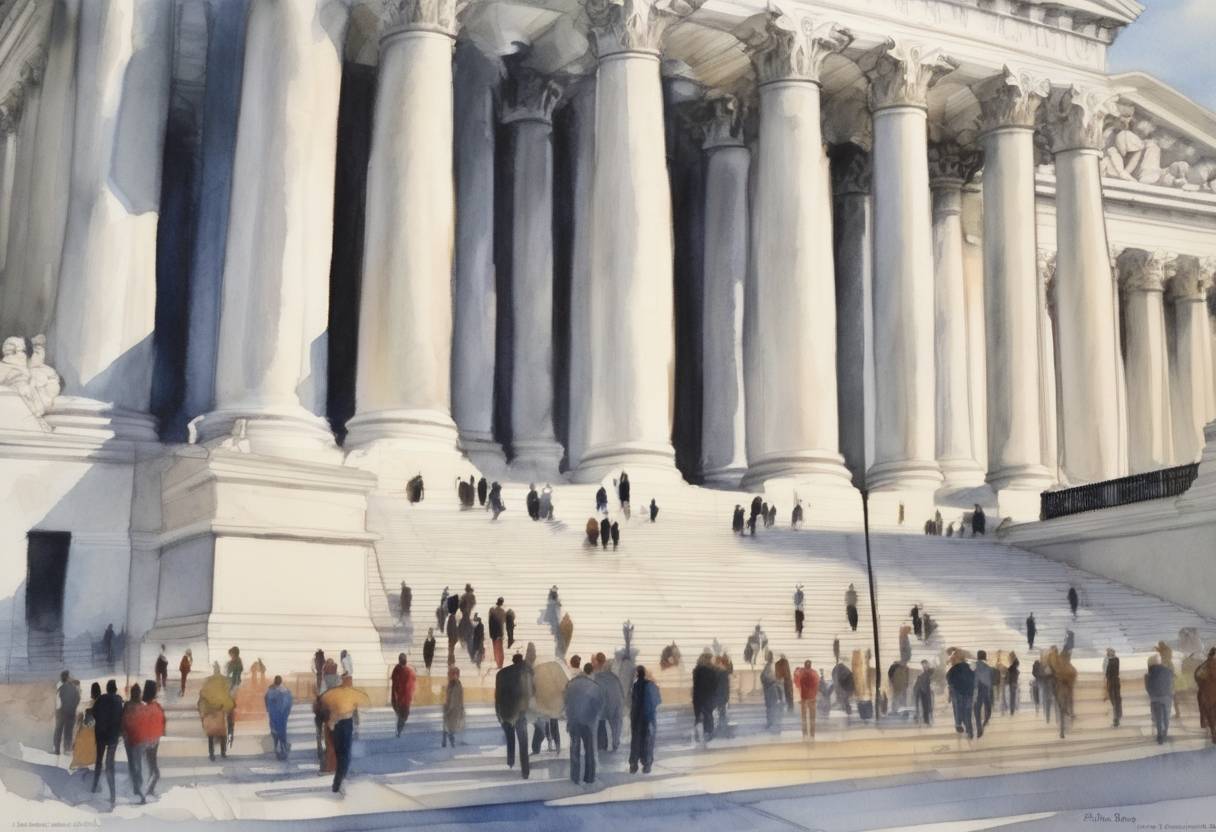
Shelby County v. Holder: Supreme Court Decision on June 25, 2013
On June 25, 2013, the United States Supreme Court issued a landmark decision in the case of Shelby County v. Holder, significantly altering the enforcement of the Voting Rights Act of 1965 (VRA). This decision had profound implications for voting rights and election laws across the United States.
Background
The Voting Rights Act of 1965 was a pivotal piece of civil rights legislation aimed at eliminating racial discrimination in voting. One of its key provisions was Section 5, which required certain jurisdictions, primarily in the South, to obtain federal preclearance before making any changes to their voting laws or practices. This was to ensure that the changes did not discriminate against minority voters.
The jurisdictions subject to this requirement were determined by a formula outlined in Section 4(b) of the VRA. This formula was based on historical voting data, specifically targeting areas with a history of racial discrimination in voting.
The Case
Shelby County, Alabama, challenged the constitutionality of Sections 4(b) and 5 of the VRA, arguing that the preclearance requirement was outdated and imposed an unfair burden on certain states and localities.
The Decision
In a 5-4 decision, the Supreme Court struck down Section 4(b) of the Voting Rights Act. Chief Justice John Roberts wrote the majority opinion, stating that the coverage formula was based on “decades-old data and eradicated practices” and thus was no longer responsive to current conditions. The Court did not rule on the constitutionality of Section 5 itself but rendered it effectively inoperative without the coverage formula provided by Section 4(b).
Implications
The decision in Shelby County v. Holder had immediate and far-reaching consequences:
End of Preclearance: Without a valid coverage formula, the preclearance requirement of Section 5 could no longer be enforced. This allowed jurisdictions previously covered by the VRA to change their voting laws without federal approval.
State Legislation: Following the decision, several states moved quickly to implement changes to their voting laws, including voter ID requirements and changes to early voting procedures, which had previously been blocked or altered under the preclearance requirement.
Ongoing Debate: The ruling sparked a national debate over voting rights, with advocates arguing that it opened the door to voter suppression, while opponents of the preclearance requirement argued it was a necessary update to reflect current realities.
Broader Historical Significance
The Shelby County v. Holder decision is considered a pivotal moment in the history of voting rights in the United States. It underscored ongoing tensions between federal oversight and state sovereignty in election laws and highlighted the evolving nature of racial discrimination in voting. The decision continues to influence discussions and legislative efforts related to voting rights and election integrity across the country.