The Treaty of Versailles: June 28, 1919
1919 · Versailles, France
The Treaty of Versailles was signed, officially ending World War I and imposing heavy reparations and territorial losses on Germany.
November 11, 1918
World War I ended with the signing of the Armistice of Compiègne between the Allies and Germany, marking a victory for the Allies and a defeat for Germany.
Compiègne, France | Allied Powers
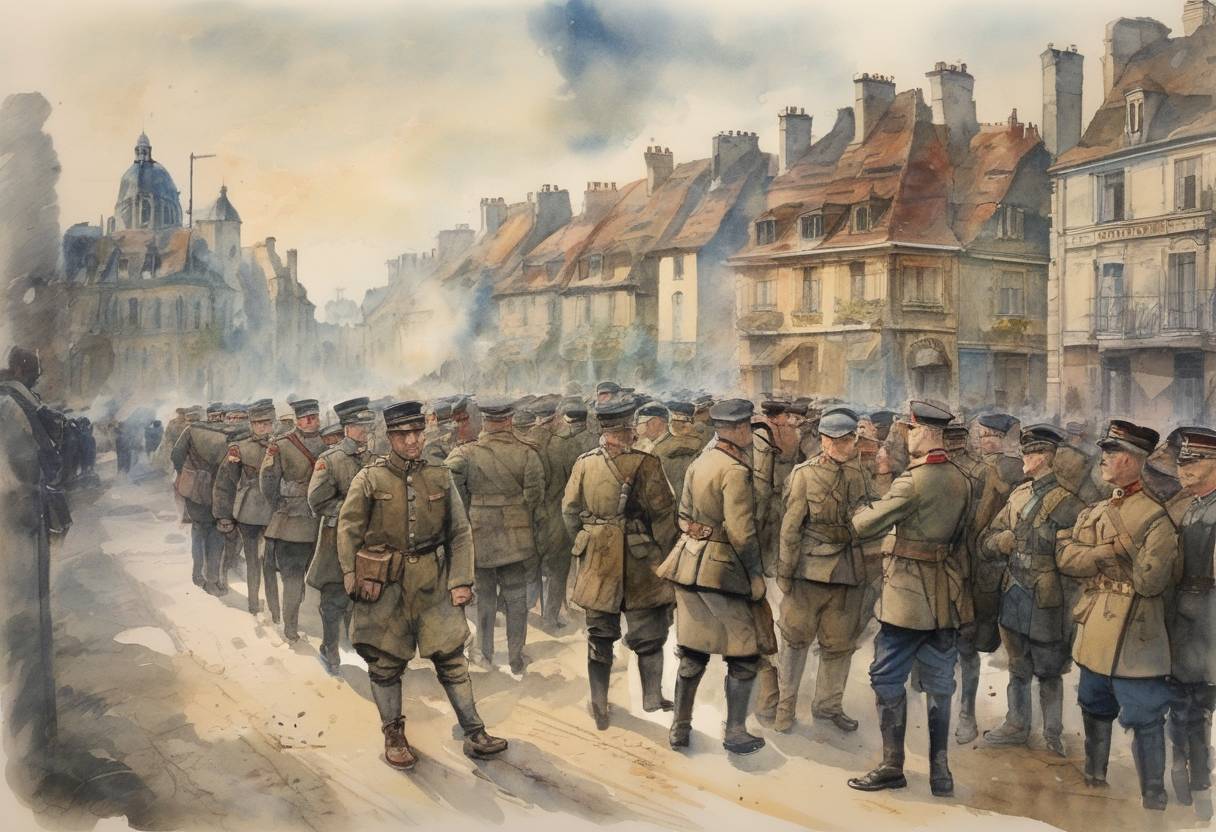
On November 11, 1918, World War I, one of the deadliest conflicts in human history, came to an end with the signing of the Armistice of Compiègne. This agreement marked a victory for the Allies and a defeat for Germany, effectively ceasing hostilities on the Western Front and paving the way for peace negotiations.
World War I, which began in July 1914, involved many of the world’s great powers divided into two opposing alliances: the Allies, including France, the United Kingdom, Russia, Italy, and later the United States, and the Central Powers, led by Germany, Austria-Hungary, the Ottoman Empire, and Bulgaria. The war was characterized by trench warfare, massive casualties, and significant political and social upheaval.
By 1918, the Central Powers were facing severe challenges:
These factors culminated in Germany seeking an armistice to end the fighting.
The Armistice was signed in a railway carriage in the Forest of Compiègne, France. The key figures involved in the negotiations were:
The terms of the armistice were harsh and included:
The armistice took effect at 11 a.m. on November 11, 1918, famously remembered as the “eleventh hour of the eleventh day of the eleventh month.”
The signing of the Armistice of Compiègne marked the end of World War I, but it was not a formal peace treaty. The subsequent Treaty of Versailles, signed on June 28, 1919, officially ended the state of war between Germany and the Allied Powers, imposing heavy reparations and territorial losses on Germany.
The armistice and the Treaty of Versailles had profound consequences:
The Armistice of Compiègne remains a significant moment in history, symbolizing both the end of a devastating conflict and the beginning of a complex and challenging post-war period.
Source: en.wikipedia.org