Naoto Kan Elected as Prime Minister of Japan
2010 · Tokyo, Japan
Naoto Kan was elected as the Prime Minister of Japan, succeeding Yukio Hatoyama. Kan's election came amid political turmoil and economic challenges in Japan.
January 12, 1898
Itō Hirobumi begins his third term as Prime Minister of Japan.
Tokyo, Japan
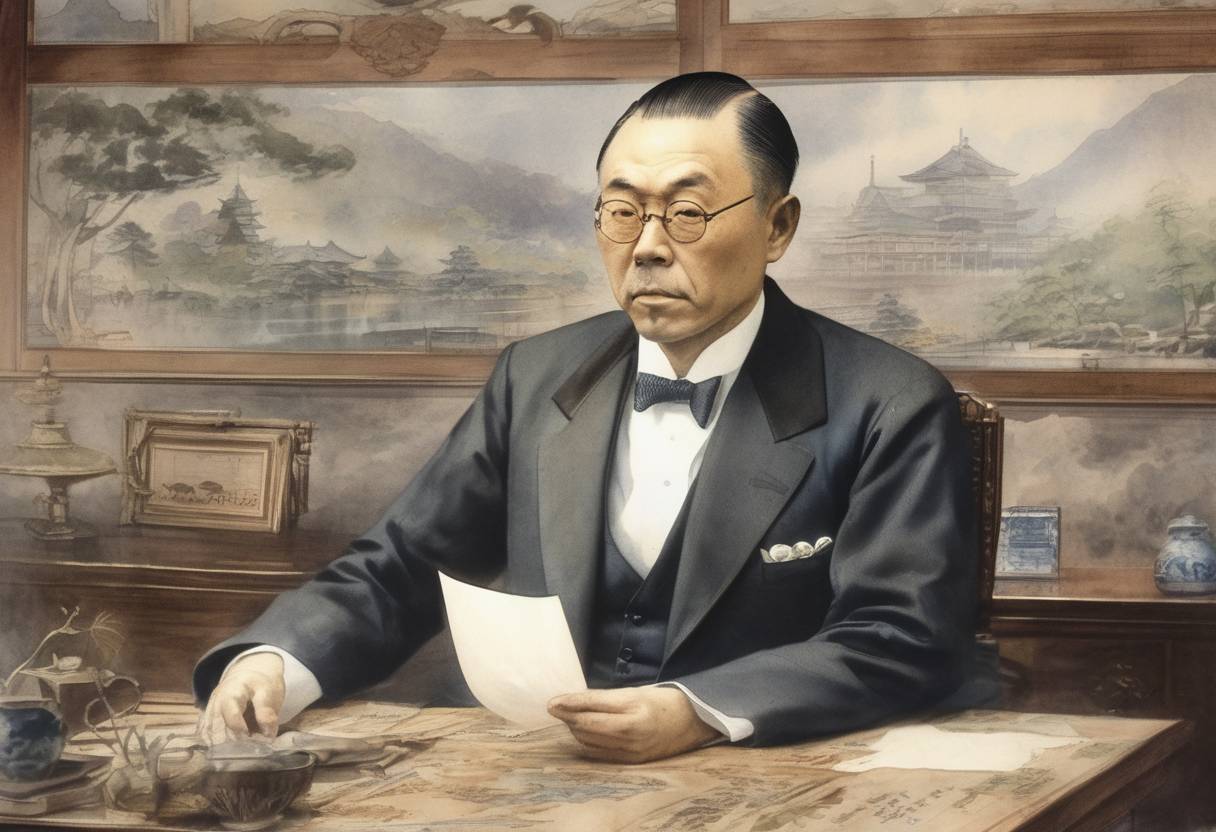
On January 12, 1898, Itō Hirobumi, a prominent Japanese statesman and one of the architects of modern Japan, began his third term as Prime Minister. This event marked a significant moment in Japan’s political history during the Meiji era, a period characterized by rapid modernization and Westernization.
Itō Hirobumi was a key figure in the Meiji Restoration, which restored imperial rule to Japan in 1868 and set the country on a path of modernization and reform. Born in 1841, Itō was instrumental in drafting the Meiji Constitution, which established a constitutional monarchy in Japan. His political career was marked by his efforts to balance Western influences with traditional Japanese values.
Previous Terms as Prime Minister: Itō had already served two terms as Prime Minister, from 1885 to 1888 and from 1892 to 1896. During these terms, he played a crucial role in establishing Japan’s modern governmental structure and promoting industrialization.
Political Instability: The late 1890s were a period of political instability in Japan, with frequent changes in government. This instability was partly due to the challenges of integrating Western political systems with Japanese traditions.
Resignation of Matsukata Masayoshi: Itō’s predecessor, Matsukata Masayoshi, resigned due to political pressures and the inability to maintain a stable government, paving the way for Itō’s return to power.
During his third term, Itō focused on several key issues:
Constitutional Government: Itō continued to refine Japan’s constitutional government, emphasizing the importance of a strong central authority while allowing for limited democratic participation.
Foreign Policy: He navigated complex international relations, particularly with Western powers, as Japan sought to assert itself as a modern nation-state.
Economic Reforms: Itō’s administration worked on economic policies to support Japan’s rapid industrialization, including infrastructure development and financial reforms.
Fourth Term and Assassination: Itō would later serve a fourth term as Prime Minister and continue to influence Japanese politics until his assassination in 1909 by a Korean nationalist, reflecting the tensions in Japan’s imperial ambitions.
Legacy: Itō Hirobumi’s leadership was pivotal in shaping modern Japan. His efforts in establishing a constitutional government and promoting modernization laid the groundwork for Japan’s emergence as a major global power in the 20th century.
Itō’s third term as Prime Minister was a critical period in Japan’s transformation, reflecting both the challenges and successes of integrating Western political and economic models into Japanese society.