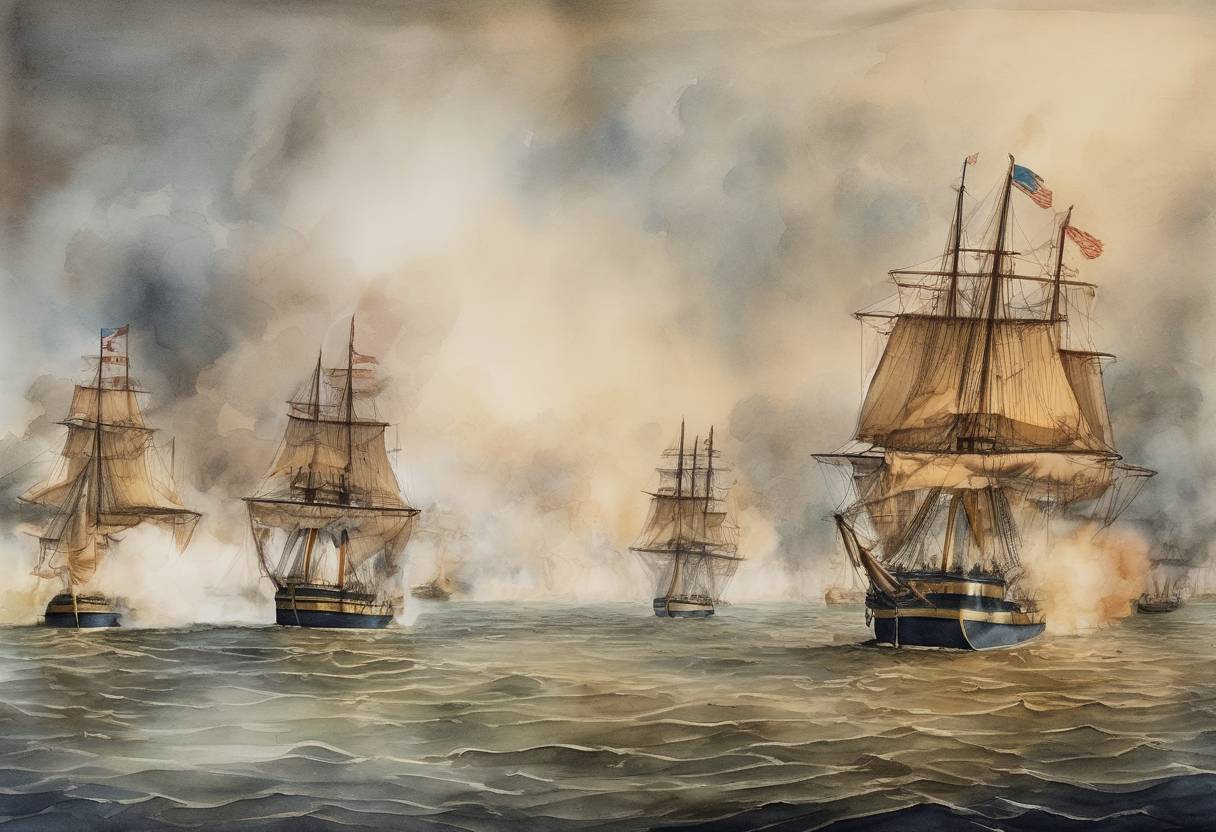
The Battle of Plattsburgh: A Pivotal American Victory
Context
The Battle of Plattsburgh, also known as the Battle of Lake Champlain, was a significant military engagement during the War of 1812. This conflict occurred between the United States and the British Empire, primarily over issues such as trade restrictions and the impressment of American sailors. By 1814, the war had reached a critical juncture, with both sides seeking decisive victories to strengthen their negotiating positions.
Key Events Leading Up to the Battle
In the summer of 1814, British forces, buoyed by their successes in Europe following the defeat of Napoleon, turned their attention to North America. Their strategy involved a three-pronged invasion aimed at capturing key American territories. One of these prongs targeted the northern border of the United States, with the objective of advancing through the Lake Champlain corridor, a vital route for both military and commercial activities.
The Battle
The Battle of Plattsburgh took place from September 6 to September 11, 1814. The American forces, commanded by Brigadier General Alexander Macomb on land and Master Commandant Thomas Macdonough on Lake Champlain, faced a formidable British force led by Lieutenant General Sir George Prevost and Captain George Downie.
Naval Engagement: The naval battle on Lake Champlain was crucial. On September 11, 1814, Macdonough’s fleet engaged the British squadron in Plattsburgh Bay. Despite being outgunned, the Americans utilized strategic positioning and innovative tactics, such as anchoring their ships to allow for quick maneuvering. The battle culminated in the destruction of the British flagship, HMS Confiance, and the capture of the remaining British vessels.
Land Engagement: Concurrently, the British land forces attempted to assault the American defenses at Plattsburgh. However, they were met with stiff resistance from Macomb’s well-fortified troops. The defeat of the British naval forces on the lake forced Prevost to retreat, as control of the waterway was essential for supplying his army.
Aftermath and Significance
The American victory at the Battle of Plattsburgh was a turning point in the War of 1812. It effectively secured the northern border of the United States and thwarted British plans to invade from Canada. The victory bolstered American morale and strengthened the U.S. negotiating position in the peace talks that would culminate in the Treaty of Ghent, signed later that year in December 1814.
The successful defense of Plattsburgh demonstrated the importance of naval power and strategic ingenuity, and it underscored the resilience of American forces in the face of a superior enemy. The battle remains a celebrated example of American tenacity and military strategy during the War of 1812.