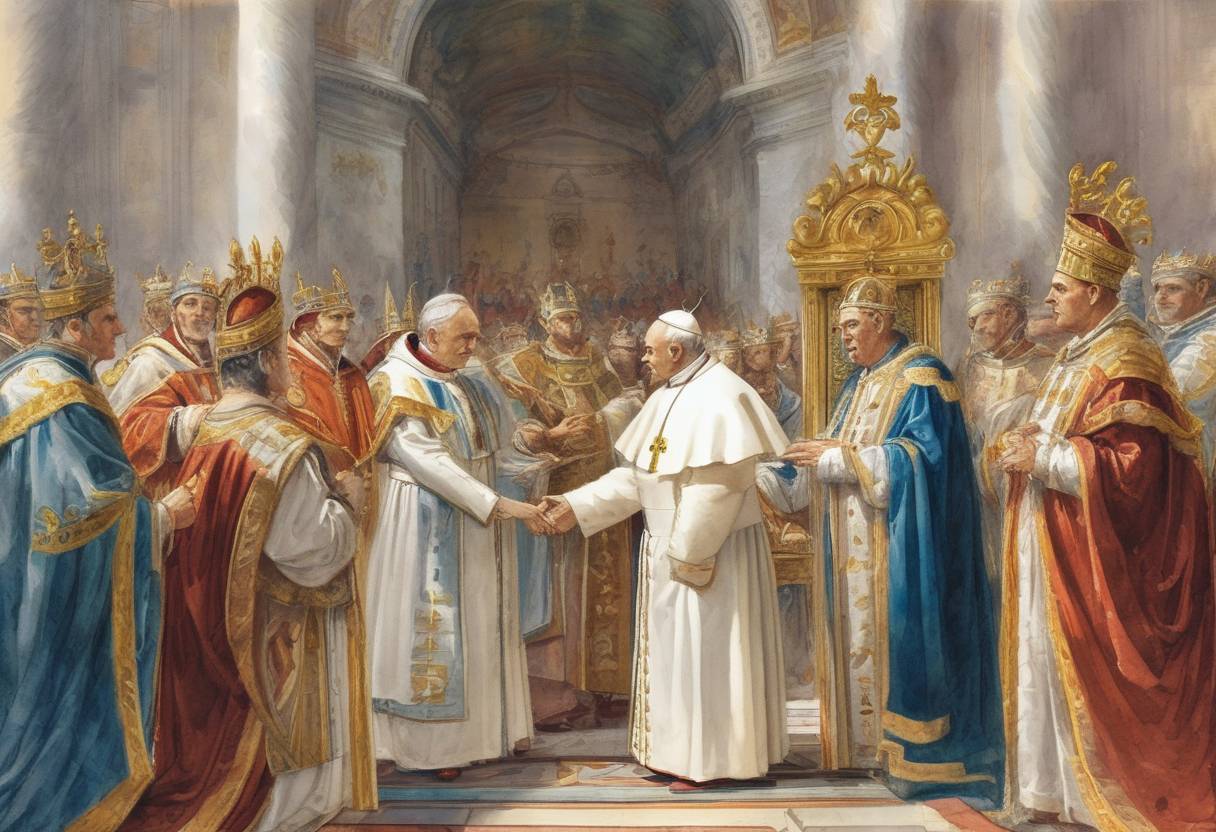
Appointment of Pope Leo VIII on December 6, 963
On December 6, 963, a pivotal event unfolded in the history of the papacy and the Holy Roman Empire when Pope Leo VIII was appointed by Emperor Otto I. This appointment marked a significant moment in the ongoing struggle between secular and ecclesiastical powers during the Middle Ages.
Context and Background
The appointment of Leo VIII must be understood within the broader context of the Investiture Controversy, a period marked by conflicts between the papacy and secular rulers over the appointment of church officials. By the mid-10th century, the papacy was embroiled in political turmoil and corruption, often influenced by powerful Roman families and external political forces.
- Emperor Otto I: Also known as Otto the Great, he was the Holy Roman Emperor who sought to strengthen imperial control over the papacy. His reign marked the revival of the Holy Roman Empire’s influence in Italy.
- Pope John XII: The reigning pope before Leo VIII, John XII was known for his scandalous behavior and political machinations. His tumultuous papacy led to conflicts with Otto I.
Events Leading to Leo VIII’s Appointment
Conflict with Pope John XII: Otto I initially supported John XII, but relations soured as John XII allied with Otto’s enemies. In response, Otto convened a synod in Rome.
Synod of Rome: In November 963, Otto I held a synod that deposed John XII on charges of corruption and misconduct. This synod was a clear demonstration of imperial authority over the papacy.
Appointment of Leo VIII: Following the deposition of John XII, Otto I appointed Leo VIII as pope. Leo was a layman and a member of Otto’s court, highlighting the emperor’s influence over the papal office.
Significance and Consequences
Imperial Influence: Leo VIII’s appointment underscored the extent of imperial influence over the papacy, setting a precedent for future interactions between the Holy Roman Empire and the Church.
Papal Legitimacy: Leo VIII’s papacy was controversial, as many within the Church viewed his appointment as illegitimate due to the lack of canonical election procedures.
Continued Conflict: The deposition of John XII and the appointment of Leo VIII did not resolve tensions. John XII briefly regained the papacy, and the struggle between secular and ecclesiastical powers persisted, eventually leading to the broader Investiture Controversy in the 11th century.
Aftermath
Leo VIII’s papacy was short-lived, and his legitimacy was contested throughout his tenure. The events surrounding his appointment highlighted the fragile balance of power between the papacy and secular rulers, a theme that would continue to shape European politics and church-state relations for centuries.
In conclusion, the appointment of Pope Leo VIII by Emperor Otto I on December 6, 963, was a landmark event that illustrated the complex dynamics between the Holy Roman Empire and the papacy, setting the stage for future conflicts and reforms within the Church.