Brazil's Declaration of Independence: September 7, 1822
1822 · São Paulo, Brazil
Brazil declared its independence from Portugal, marking the beginning of the Empire of Brazil.
October 12, 1822
Brazil was formally declared independent from Portugal, with Dom Pedro I becoming the first Emperor of Brazil.
Rio de Janeiro, Brazil | Empire of Brazil
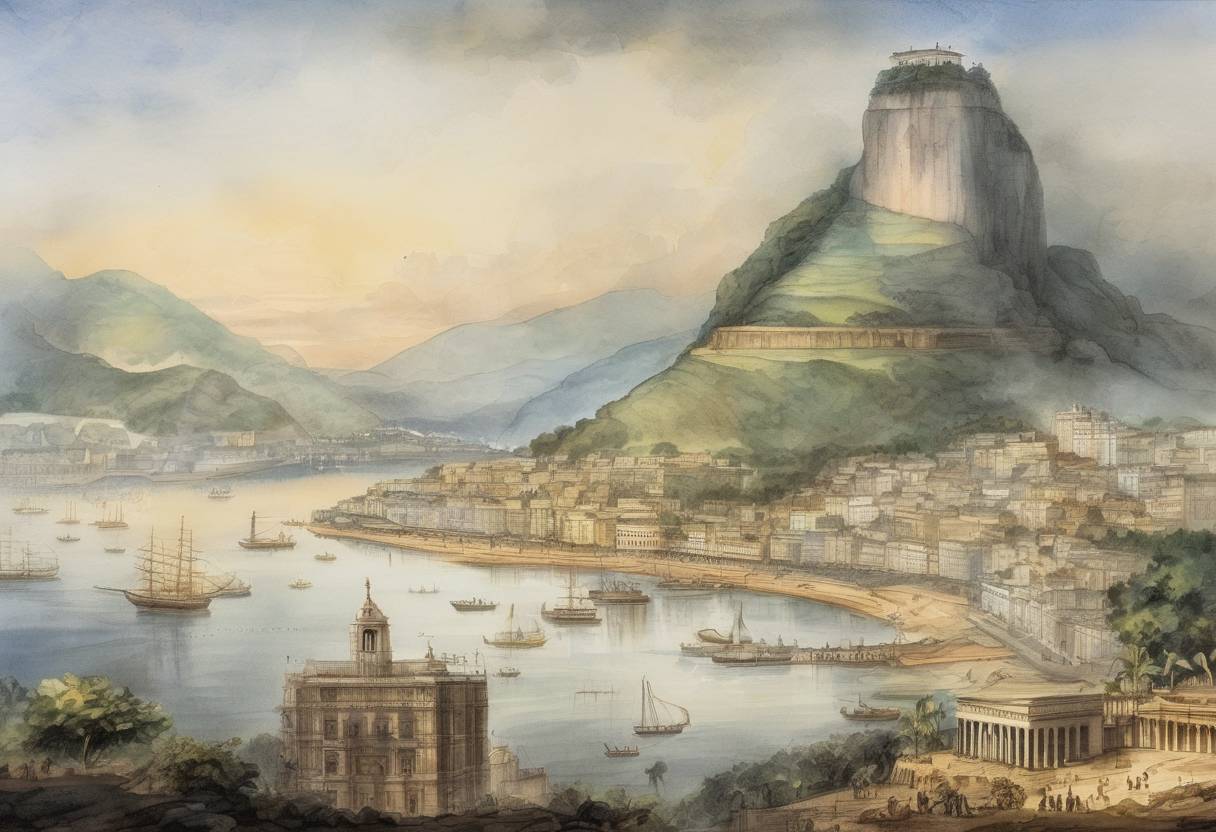
On October 12, 1822, Brazil was formally declared independent from Portugal, marking a pivotal moment in the nation’s history. This event culminated in the establishment of the Empire of Brazil, with Dom Pedro I ascending as its first emperor. The declaration of independence was a significant milestone in the broader context of Latin American independence movements during the early 19th century.
The roots of Brazil’s independence can be traced back to the early 1800s, when the Portuguese royal family fled to Brazil in 1808 to escape Napoleon’s invasion of Portugal. This relocation elevated Brazil’s status within the Portuguese Empire, leading to economic and administrative reforms that fostered a sense of autonomy.
However, after the defeat of Napoleon, the Portuguese government sought to reassert control over Brazil. This move was met with resistance from Brazilian elites who had grown accustomed to the relative independence and economic prosperity experienced during the royal family’s stay.
September 7, 1822: The famous “Cry of Ipiranga” occurred when Dom Pedro, then the Prince Regent, declared Brazil’s independence with the words “Independência ou Morte!” (“Independence or Death!”). This declaration was a response to the Portuguese Cortes’ attempts to diminish Brazil’s autonomy.
October 12, 1822: Dom Pedro was officially proclaimed Emperor of Brazil. This date was chosen to coincide with his birthday, symbolizing a new era for the nation.
The declaration of independence led to a brief but intense conflict known as the Brazilian War of Independence, which lasted until 1824. The war involved skirmishes between Brazilian forces and Portuguese loyalists, primarily in the northern and northeastern regions of Brazil.
Dom Pedro I’s reign as emperor was marked by efforts to consolidate the new nation’s independence and stabilize its political landscape. His leadership laid the foundation for Brazil’s transition from a colony to a sovereign empire, distinct from its colonial past.
Brazil’s peaceful transition to independence, compared to the violent struggles seen in Spanish America, set a unique precedent in the region. The establishment of the Empire of Brazil under Dom Pedro I also contributed to the shaping of a national identity distinct from Portugal, fostering a sense of unity among the diverse Brazilian population.
In summary, the formal declaration of Brazil’s independence on October 12, 1822, was a defining moment that not only altered the nation’s trajectory but also influenced the broader geopolitical landscape of the Americas. Dom Pedro I’s role as the first emperor was instrumental in navigating the challenges of nation-building and securing Brazil’s place as a sovereign state.
Source: en.wikipedia.org