Establishment of the Irish Free State: December 6, 1922
1922 · Dublin, Ireland
The Irish Free State was established as a self-governing dominion of the British Commonwealth of Nations.
November 21, 1920
Bloody Sunday occurred in Dublin during the Irish War of Independence, with 31 people killed in a day of violence.
Dublin, Ireland | Irish Republican Army
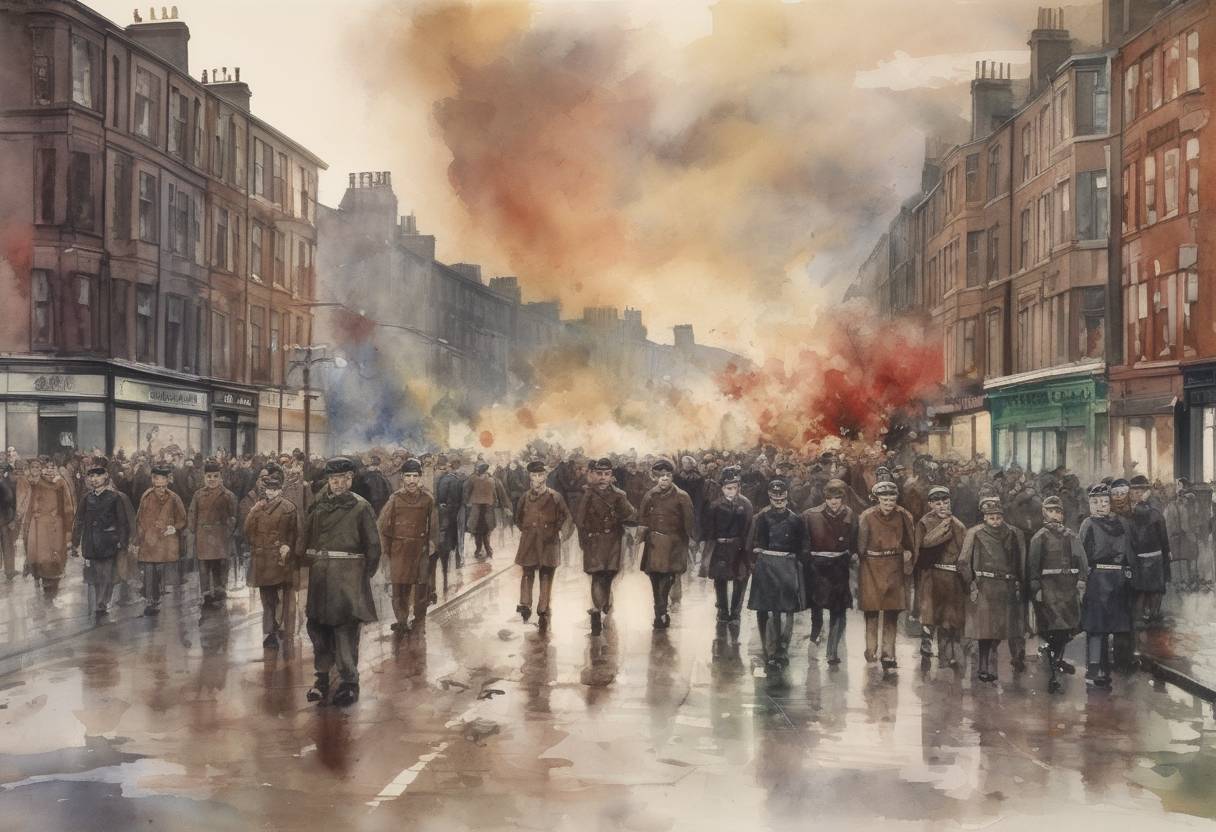
Bloody Sunday, which took place on November 21, 1920, in Dublin, was a pivotal and violent day during the Irish War of Independence. This conflict was a guerrilla war between the Irish Republican Army (IRA) and British forces, aimed at ending British rule in Ireland and establishing an independent Irish Republic.
The Irish War of Independence began in January 1919, following the 1918 general election in which Sinn Féin, the political party advocating for Irish independence, won a significant majority of Irish seats. The party’s elected members refused to take their seats in the British Parliament and instead formed the Dáil Éireann, an Irish parliament. The IRA, acting as the military arm of the Dáil, engaged in a campaign of guerrilla warfare against British forces.
Bloody Sunday unfolded in three distinct phases:
Bloody Sunday marked a significant escalation in the Irish War of Independence. The day’s events highlighted the brutality of the conflict and the lengths to which both sides would go to achieve their aims. The violence further galvanized Irish public opinion against British rule and increased support for the IRA.
The events of Bloody Sunday also drew international attention to the Irish struggle for independence, contributing to mounting pressure on the British government to seek a political solution. This pressure eventually led to the negotiation of the Anglo-Irish Treaty in December 1921, which resulted in the establishment of the Irish Free State.
Bloody Sunday remains a poignant and somber chapter in Irish history, symbolizing both the struggle for independence and the tragic cost of conflict.
Source: en.wikipedia.org