The Siege of San Antonio Begins: October 3, 1835
1835 · San Antonio, Mexico
The Siege of San Antonio begins as part of the Texas Revolution, where Texan settlers start a campaign against Mexican forces.
October 2, 1835
The Texas Revolution began with the Battle of Gonzales, where Texian settlers resisted Mexican troops attempting to retrieve a cannon, symbolized by the "Come and Take It" flag.
Gonzales, Mexico | Texian rebels
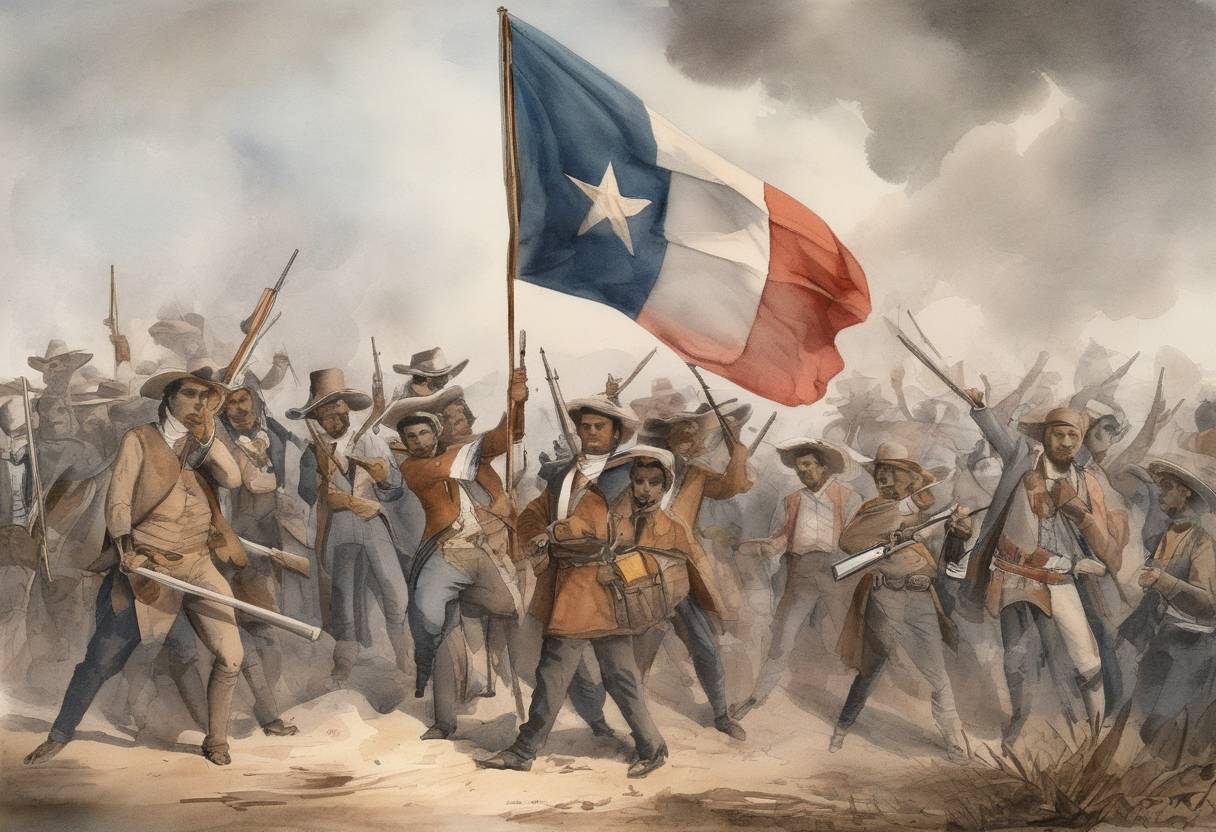
On October 2, 1835, the Texas Revolution began with the Battle of Gonzales, a pivotal moment in the struggle for Texian independence from Mexican rule. This confrontation marked the first military engagement of the revolution and set the stage for a series of events that would eventually lead to the creation of the Republic of Texas.
In the early 1830s, tensions were rising between the Mexican government and the settlers in Texas, known as Texians. The Mexican government, under President Antonio López de Santa Anna, had become increasingly centralized and authoritarian, causing unrest among the settlers who were accustomed to a degree of autonomy.
The immediate cause of the Battle of Gonzales was a small cannon. In 1831, Mexican authorities had given the settlers of Gonzales a cannon for protection against Native American raids. By 1835, as tensions escalated, the Mexican government sought to disarm the Texians and ordered the retrieval of the cannon.
When Mexican troops arrived in Gonzales to reclaim the cannon, the Texians refused to surrender it. Instead, they raised a flag emblazoned with the defiant slogan “Come and Take It,” symbolizing their resistance. On October 2, 1835, a skirmish broke out between the Texian settlers and the Mexican forces. Although the battle was relatively small, with only a few casualties, it was significant as the first armed conflict of the Texas Revolution.
The Battle of Gonzales galvanized the Texian settlers and inspired further resistance against Mexican authority. It marked the beginning of a series of battles that would eventually lead to the Texians declaring independence from Mexico on March 2, 1836.
The Texas Revolution ultimately resulted in the establishment of the Republic of Texas, which existed as an independent nation until it joined the United States in 1845. The events at Gonzales and the subsequent revolution had lasting implications for the territorial expansion of the United States and the complex relations between the U.S. and Mexico.
The “Come and Take It” flag remains a powerful symbol of defiance and independence, reflecting the spirit of the Texian settlers who stood their ground at Gonzales.
Source: en.wikipedia.org