U.S. Federal Court Ruling on Pan Am Flight 103
1992 · New York, United States
A U.S. Federal Court finds Pan Am guilty of willful misconduct and responsible for the terrorist bombing of Flight 103 over Lockerbie, Scotland, in 1988.
December 4, 1991
Pan American World Airways ceases operations after 64 years due to financial difficulties.
New York City, United States | Pan American World Airways
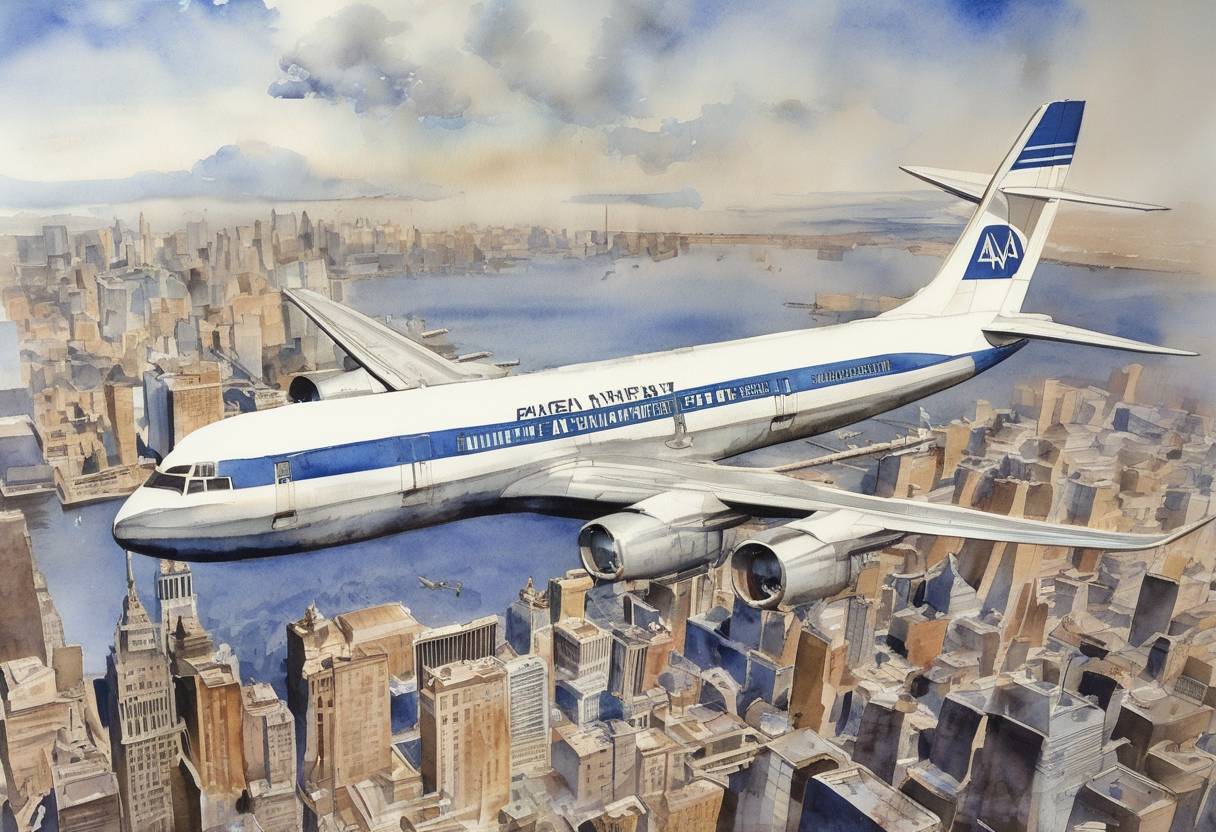
On December 4, 1991, Pan American World Airways, commonly known as Pan Am, ceased operations after 64 years of service. This marked the end of an era for one of the most iconic airlines in aviation history, which had been a pioneer in international air travel.
Founded in 1927, Pan Am was initially established as a mail carrier between Key West, Florida, and Havana, Cuba. Over the decades, it expanded its routes and became synonymous with international travel, innovation, and luxury. The airline was instrumental in developing new aircraft technologies and routes, including the first commercial use of the Boeing 747.
Financial Struggles: Pan Am faced significant financial difficulties in the 1980s, exacerbated by rising fuel costs, increased competition from domestic and international carriers, and the economic downturn.
Operational Challenges: The airline struggled with operational inefficiencies and high overhead costs. Its extensive international network became a financial burden rather than an asset.
Lockerbie Disaster: The 1988 bombing of Pan Am Flight 103 over Lockerbie, Scotland, severely damaged the airline’s reputation and financial standing. The disaster led to costly legal battles and settlements.
Asset Sales: In attempts to stay afloat, Pan Am sold off valuable assets, including its Pacific routes to United Airlines and its iconic New York City terminal to Delta Air Lines.
Failed Merger Attempts: Efforts to merge with other airlines to stabilize operations were unsuccessful, further compounding its financial woes.
By the early 1990s, Pan Am was a shadow of its former self. On December 4, 1991, the airline officially ceased operations after declaring bankruptcy. The last flight, Pan Am Flight 436 from Bridgetown, Barbados, to Miami, marked the end of its storied history.
Impact on Employees: The shutdown left thousands of employees jobless and marked a significant shift in the aviation industry.
Cultural Icon: Despite its financial collapse, Pan Am remains a cultural icon, symbolizing the golden age of air travel. Its legacy continues to influence aviation design and marketing.
Industry Changes: The fall of Pan Am highlighted the challenges of operating a global airline and prompted changes in how airlines managed international operations and competition.
Pan Am’s story is a testament to the dynamic and often volatile nature of the aviation industry, reflecting both the heights of innovation and the depths of financial peril.
Source: en.wikipedia.org