October 23, 1965: Ford Mustang's First Trial Run
1965 · Dearborn, United States
The first trial run of the Ford Mustang took place, further cementing the car's iconic status following its successful launch earlier that year.
April 17, 1964
The Ford Mustang was officially unveiled by the Ford Motor Company at the New York World's Fair.
New York City, United States | Ford Motor Company
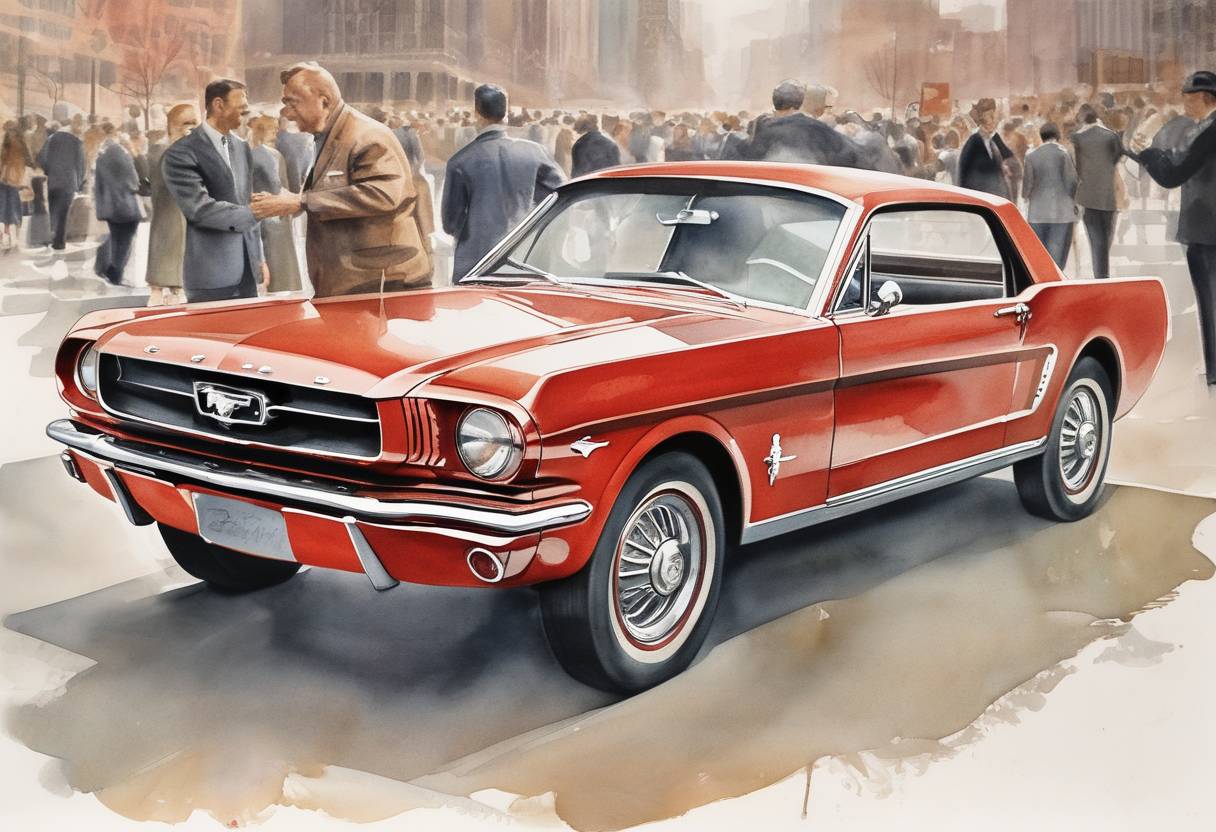
On April 17, 1964, the Ford Motor Company officially unveiled the Ford Mustang at the New York World’s Fair. This event marked a significant moment in automotive history, as the Mustang would go on to become one of the most iconic and enduring models in the American car industry.
The early 1960s were a time of cultural change and economic growth in the United States. The post-war boom had led to increased consumer spending, and there was a growing demand for cars that were not only functional but also stylish and affordable. Ford recognized this opportunity and aimed to capture the youth market with a new kind of vehicle.
The Mustang was conceived as a “pony car,” a term that would come to define a new class of automobiles characterized by sporty styling, compact size, and affordable pricing. The project was spearheaded by Lee Iacocca, then the general manager of Ford’s division, who envisioned a car that would appeal to young drivers and embody the spirit of freedom and adventure.
The New York World’s Fair, held in Queens, was a fitting venue for the Mustang’s debut. The fair was a showcase of innovation and modernity, attracting millions of visitors from around the world. Ford’s decision to unveil the Mustang at this event was strategic, ensuring maximum exposure and media coverage.
The Mustang was introduced to the public with great fanfare. It was displayed alongside other futuristic exhibits, capturing the imagination of attendees. The car’s sleek design, long hood, short rear deck, and distinctive grille made an immediate impression. It was available as a coupe or convertible, with a variety of customization options, allowing buyers to tailor the car to their preferences.
The Mustang was an instant success. On the day of its release, Ford dealerships across the United States were inundated with customers eager to see and purchase the new car. In its first year, Ford sold over 400,000 Mustangs, far exceeding expectations.
The Mustang’s popularity was not just due to its design and affordability; it also benefited from a clever marketing campaign that positioned it as a symbol of youthful rebellion and independence. The car quickly became a cultural icon, appearing in movies, music, and television, further cementing its status in American culture.
The success of the Mustang prompted other automakers to develop their own versions of the pony car, leading to increased competition and innovation in the automotive industry. The Mustang itself has undergone numerous redesigns and updates over the decades, maintaining its popularity and relevance.
The unveiling of the Ford Mustang on April 17, 1964, was more than just the introduction of a new car; it was the beginning of a cultural phenomenon. The Mustang’s impact on the automotive industry and American culture is profound, and its legacy continues to influence car design and marketing strategies to this day.
Source: en.wikipedia.org